Showing posts with label Privileges. Show all posts

Thursday, November 19, 2009

State Secrets Privilege - Should The Alleged Victim Be Compensated When the Government Chooses to Exercise the Privilege ?

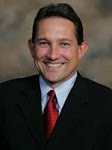
Here is an interesting NLJ article on the state secrets privilege from a law professor and dean with an impressive background in both public interest litigation and academics. The law professor, Alan B. Morrison, currently is the Lerner Family Associate Dean for Public Interest and Public Service Law at the George Washington University School of Law. In short, he suggests that the price for exercising the privilege should be that the government pays for the harm caused. Here are two key paragraphs:

"The problem to date has been that the arguments have all been about whether the claims of secrecy are actually justified and who should decide that. The best way around that debate is for Congress to pass a law saying to the intelligence community, "You can keep your secrets, but you (the U.S. Treasury) must pay the claimant's damages if you won't allow the case to be tried in the ordinary fashion." That's what the law says will happen if the government wants to take my land to build a military base, and that same principle should apply in these cases as well.

Here's how such a law might work. Cases would be filed in the usual way, and if the government contended that state secrets might have to be divulged if the case were tried, it would make whatever efforts it could to dismiss the case on nonstate secrets grounds. But if that failed, the attorney general could formally invoke the state secrets privilege. At that point, the case would be transferred to the Court of Federal Claims, which hears claims against the government that it has taken someone's property without compensation. However, once the government invoked the state secrets defense, it would lose its right to contest its liability: The only issue remaining would be the proper amount of actual, but not punitive, damages."

Thursday, September 24, 2009

United States to Limit Use of the State Secrets Privilege for Civil Litigation ?

This September 23 NYT article by Charlie Savage describes Obama administration plans to deploy rules that limit the use of the state secrets privilege to block civil litigation. The article also briefly discusses legislative efforts to limit invocation of the privilege.

The existing use of privilege has significantly limited past lawsuits. For an example, see this prior post from this blog regarding civil claims against Saudi entities regarding the September 11 attacks. Make sure to click through to the linked NYT article and its internal links.

Key excerpts follow from the recent article:

Under the new policy, if an agency like the National Security Agency or the Central Intelligence Agency wanted to block evidence or a lawsuit on state secrets grounds, it would present an evidentiary memorandum describing its reasons to the assistant attorney general for the division handling the lawsuit in question.

If that official recommended approving the request, it would be sent on to a review committee made up of high-level Justice Department officials, and then to Deputy Attorney General David W. Ogden and Mr. Holder. All those officials would be charged with deciding whether the disclosure of information would risk “significant harm” to national security, and they would be instructed to seek a way to avoid shutting down the entire lawsuit if possible.

If the Justice Department signed off on asserting the privilege, the head of the agency controlling the information would sign a classified memorandum to be filed with a court explaining in detail the government’s reasoning. A judge could request access to particular pieces of underlying evidence.

The policy is silent on whether the government would comply, and officials said such requests would be evaluated on a case-by-case basis. One of the controversies surrounding the privilege is that sometimes judges accept executive assertions about classified evidence without independently examining it.