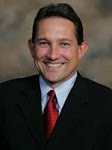
(Caveat - the following includes shameless self-promotion.)
Asbestos litigation, and asbestos trust issues, are no longer uniquely American issues. To the contrary, asbestos litigation and asbestos trusts are growing rapidly outside the US.
Really ? Yes. Due to soaring mesothelioma rates that will not peak until 2020 or so, asbestos litigation is climbing rapidly across the EU (especially in the UK) and in Australia. There also are a close to a couple of hundred asbestos claims pending in Japan and a handful starting in Korea. Future claims are a certainty because asbestos use has for years been rising rapidly across Asia and Russia, not to mention ship-breaking and other activities in which asbestos is often removed in terribly primitive and unsafe conditions.
Asbestos trusts also are global, in at least three way. First, Manville and other trusts take claims from around the world and are receiving materially increasing amounts of claims. Second, as part of the Federal-Mogul bankruptcy, a trust was set up under UK law for claims arising from Turner & Newall. Third, private trusts have been set up by entities hoping to limit or avoid litigation. The trusts take claims arising from Cape, James Hardie and Eternit, among others.
Multinationals, insurers, Wall Street and lawyers are missing a significant part of the asbestos picture if less than a global view is being taken. The answer? Attend the Lexis/Nexis seminar on 29 and 30 September in London on International Asbestos Claiming. Yours truly is chairing the seminar. I think an excellent panel of lawyers is on tap from around the world, including David Miller, an authority on asbestos litigation in Australia, and Rod Freeman, an authority on product liability and asbestos litigation in the EU. And, because the US litigation s part of the world view, Motley Rice's Anne Kearse and Shook Hardy's Mark Behrens will speak from their divergent perspectives. I will speak on international asbestos trust issues and hopefully will challenge other speakers with some good questions. And, finally, Selvyn Seidel of Burford Advsiors will speak about third-party litigation funding - a topic everyone should know about because it's going to change the world of litigation in a big way.
The general website for the seminar is here, the agenda is here, and the roster of speakers is here.
Thursday, August 13, 2009


Want More on the Interplay Between Asbestos Trusts and Judicial Proceedings ? Go to the HB Asbestos Seminar in San Francisco 9/23-9/25
As posts on this blog reflect, there are in my view enormous issues out there regarding the interplay between asbestos trusts (mainly chapter 11 trusts) and the state court tort system. Happily, asbestos litigation seminars are paying an increasing amount of attention to the issues arising from the two parallel compensation systems. Two upcoming seminars offer great opportunities to learn more about the asbestos bankruptcy issues and much more.
Here are some specifics for the first of the two seminars:
1) HB Asbestos Litigation Conference Sept. 23-25 in San Francisco
The HB group took over from Mealey's and is running an upcoming 3 day asbestos litigation seminar. The program in general is excellent and is of special interest to me because of its focus on asbestos bankruptcy issues and because one of the chairs is fomer Chicagoan, Joe O'Hara, a lawyer who has tried asbestos cases for years for Owens-Illinois. Joe is now the Asssociate General Counsel for Owens-Illinois and a great lawyer I've known for more years than I want to admit. Joe and OI are very tuned in to the asbestos bankruptcy issues, and so the seminar program includes two Sept. 23 sessions focused on asbestos trusts and asbestos bankruptcy issues. In addition, numerous state court judges will be there and will end up hearing and/or saying a lot about these issues. Despite lots of other competing life events at that time, the sessions look so good to me that I'm flying out for just that day.
The specifics for the two asbestos trust and bankruptcy sessions are as follows; the speakers are quite knowledgeable:
2:30 Asbestos Claims Processing
•What bankruptcy trusts are operating and what are they paying?
• Timing of claims filing
• Best Practices – efficient methods for claim submissions
• Avoiding mistakes – areas of concern for claimant processing & payment
• W-9 forms, tax issues, 1099’s to clients
• TDP’s and processes within that may benefi t defendants
• Accounting for the money still in trust, the value of average mesothelioma claims & future projections on claims vs. assets and funds availability in trust
Francis McGovern, Esq., Professor of Law, Duke University School of Law
Larry Haden, President, Claims Resolution
Nicholas Vari, Esq., K&L Gates
3:45 The Surge in Bankruptcy Trust Payouts: Can You Make Everyone Happy? Maximizing Recoveries and Creating Fair Credit Allocation
• What adjustments should be made in the tort system to account for the bankruptcy payouts?
• What disclosure obligation should exist regarding pending trust claims, actual payouts, and expected future trust fi lings?
• Should the tort system encourage or leverage plaintiffs to file claims with the Trusts before the claims leave the system?
• Third party practice and the Defendants’ interaction with the Trusts
Moderator: Joseph O’Hara, Jr., Esq., V.P. & Associate G.C., Owens-Illinois
Hon. Richard Aulisi, Supreme Court Justice, 4th Judicial District of New York
Hon. Ken Kawaichi, (Ret.), JAMS
Hon. James McBride, Superior Court of California
Joseph Belluck, Esq., Belluck & Fox LLP
To register, the HB home page is here. The entire asbestos agenda is here. In this tough yuear for budgets, note that inside counsel from corporations and insurers are invited to attend free of charge.
Here are some specifics for the first of the two seminars:
1) HB Asbestos Litigation Conference Sept. 23-25 in San Francisco
The HB group took over from Mealey's and is running an upcoming 3 day asbestos litigation seminar. The program in general is excellent and is of special interest to me because of its focus on asbestos bankruptcy issues and because one of the chairs is fomer Chicagoan, Joe O'Hara, a lawyer who has tried asbestos cases for years for Owens-Illinois. Joe is now the Asssociate General Counsel for Owens-Illinois and a great lawyer I've known for more years than I want to admit. Joe and OI are very tuned in to the asbestos bankruptcy issues, and so the seminar program includes two Sept. 23 sessions focused on asbestos trusts and asbestos bankruptcy issues. In addition, numerous state court judges will be there and will end up hearing and/or saying a lot about these issues. Despite lots of other competing life events at that time, the sessions look so good to me that I'm flying out for just that day.
The specifics for the two asbestos trust and bankruptcy sessions are as follows; the speakers are quite knowledgeable:
2:30 Asbestos Claims Processing
•What bankruptcy trusts are operating and what are they paying?
• Timing of claims filing
• Best Practices – efficient methods for claim submissions
• Avoiding mistakes – areas of concern for claimant processing & payment
• W-9 forms, tax issues, 1099’s to clients
• TDP’s and processes within that may benefi t defendants
• Accounting for the money still in trust, the value of average mesothelioma claims & future projections on claims vs. assets and funds availability in trust
Francis McGovern, Esq., Professor of Law, Duke University School of Law
Larry Haden, President, Claims Resolution
Nicholas Vari, Esq., K&L Gates
3:45 The Surge in Bankruptcy Trust Payouts: Can You Make Everyone Happy? Maximizing Recoveries and Creating Fair Credit Allocation
• What adjustments should be made in the tort system to account for the bankruptcy payouts?
• What disclosure obligation should exist regarding pending trust claims, actual payouts, and expected future trust fi lings?
• Should the tort system encourage or leverage plaintiffs to file claims with the Trusts before the claims leave the system?
• Third party practice and the Defendants’ interaction with the Trusts
Moderator: Joseph O’Hara, Jr., Esq., V.P. & Associate G.C., Owens-Illinois
Hon. Richard Aulisi, Supreme Court Justice, 4th Judicial District of New York
Hon. Ken Kawaichi, (Ret.), JAMS
Hon. James McBride, Superior Court of California
Joseph Belluck, Esq., Belluck & Fox LLP
To register, the HB home page is here. The entire asbestos agenda is here. In this tough yuear for budgets, note that inside counsel from corporations and insurers are invited to attend free of charge.
Wednesday, August 12, 2009
AWI Asbestos Personal Injury Trust Selling Shares Under Prepaid Variable Forward Sales Contract - Is This The Way a Court-Ordered Trust Should Work ?
When and how does an asbestos trust own enough shares of the company for which it assumed "asbestos liabilities" ? And, should chapter 11 trusts be involved in transactions of a type that some say are sometimes tax dodges?
These questions are posed for several reasons. One is that under bankruptcy code section 524(g), a chapter 11 asbestos trust is required to own prescribed amounts of shares of stock of the company for which it assumed asbestos obligations. That rule, some say, is mainly honored in the breach.
Another reason for posing the questions is that it is interesting to watch the ways in which the trusts sometimes act much like, if not exactly like, the corporate financiers that plaintiff's lawyers often trash in the course of jury trials. How so? Below are the facts and links regarding the AWI Trust recently using a prepaid variable forward sales contract to cause the more or less sale of shares of AWI.
What is a prepaid variable forward sales contract? It is one of the many exotic financial paper created by Wall Street to create new ways to own and sell shares of stock without, they say, selling shares. (One is reminded of Humpty Dumpty's scornful proclamation " When I use a word, it means just what I choose it to mean -- neither more nor less." )
The IRS has declared a war of at least strict scrutiny on these transactions as potentially or actually illegal tax shelter transactions, as described here by the TaxProfBlog and here by the NYT. This WSJ article explains that the transactions also have been attacked as tools used by executives to sell shares ahead of price drops without really selling shares, they say.
Call me naive, but doesn't it seem odd that trusts operating under the aegis of federal courts would engage in transactions of a type the IRS deems dubious ? No doubt the trustees and the trust advisory committee would counter that they have a fiduciary duty to make money for claimants. Maybe true, but that sounds an awful lot like the corporate argument that we have a duty to our shareholders to make money. In personal injury jury trials involving risks and cost benefit analysis, plaintiffs love to attack the corporate duty to make money argument as putting profits ahead of people, or profits ahead of morals.
On the subject of the AWI Trustees and the Trust Advisory Committee (TAC ) wouldn't you think the Trust's website would identify them? If it does, I sure can't find the names anywhere despite using the search box on the website to search for names including Kazan, Weitz and Cooney. I dropped the trust an email this morning asking for the names and whether I missed them on the website. We will see if an answer comes back.
____________________________________________
On August 11, Armstrong World Industries announced that its Asbestos Trust is raising $ 180 million in cash by selling some shares outright and more shares pursuant to a prepaid variable forward sale contract that is said to be part of reinvigorating AWI. According to the press release from Armstrong World Industries:
"Armstrong World Industries Comments on Sale of Asbestos Trust Shares to TPG
LANCASTER, Pa., Aug. 11 /PRNewswire-FirstCall/ -- TPG Capital ("TPG") announced it has agreed to purchase seven million shares of Armstrong World Industries, Inc. ("Armstrong") (NYSE: AWI), and economic interests in an additional 1,039,777 shares, from the Armstrong World Industries Inc. Asbestos Personal Injury Settlement Trust ("the Trust"). TPG's purchase price per share of $22.31 is the 20-day trailing volume-weighted average price through Friday, August 7. The transaction is expected to be completed during the next several weeks, and will result in approximately $180 million of proceeds for the Trust. (emphasis added). "
A form 4 from the Trust explains the transaction as follows:
"Explanation of Responses:
1. On August 10, 2009, the reporting person entered into a prepaid variable forward sale contract with TPG Partners V, L.P. and TPG Partners VI, L.P. (collectively, "TPG"). The contract obligates the reporting person to deliver to TPG 1,039,777 shares of AWI common stock (or cash as provided in the contract) on the maturity date of the contract. The maturity date is the 20th trading day beginning on November 4, 2013. In exchange for assuming this obligation, the reporting person will receive $23,197,425 at closing of the contract.
2. The reporting person pledged 1,039,777 shares of AWI common stock (the "Pledged Shares") to secure its obligations under the contract. While the reporting person retained dividend and voting rights in the Pledged shares during the term of the pledge, the reporting person is obligated to pay TPG dividends received on such shares and is party to a shareholders agreement with TPG relating to such shares.
3. The settlement price will be based on the 20 day AWI common stock price preceding the settlement transaction date, and the contract can be settled in cash or in the release of sufficient Pledge Shares to satisfy the settlement payment (as determined at the settlement price)."
These questions are posed for several reasons. One is that under bankruptcy code section 524(g), a chapter 11 asbestos trust is required to own prescribed amounts of shares of stock of the company for which it assumed asbestos obligations. That rule, some say, is mainly honored in the breach.
Another reason for posing the questions is that it is interesting to watch the ways in which the trusts sometimes act much like, if not exactly like, the corporate financiers that plaintiff's lawyers often trash in the course of jury trials. How so? Below are the facts and links regarding the AWI Trust recently using a prepaid variable forward sales contract to cause the more or less sale of shares of AWI.
What is a prepaid variable forward sales contract? It is one of the many exotic financial paper created by Wall Street to create new ways to own and sell shares of stock without, they say, selling shares. (One is reminded of Humpty Dumpty's scornful proclamation " When I use a word, it means just what I choose it to mean -- neither more nor less." )
The IRS has declared a war of at least strict scrutiny on these transactions as potentially or actually illegal tax shelter transactions, as described here by the TaxProfBlog and here by the NYT. This WSJ article explains that the transactions also have been attacked as tools used by executives to sell shares ahead of price drops without really selling shares, they say.
Call me naive, but doesn't it seem odd that trusts operating under the aegis of federal courts would engage in transactions of a type the IRS deems dubious ? No doubt the trustees and the trust advisory committee would counter that they have a fiduciary duty to make money for claimants. Maybe true, but that sounds an awful lot like the corporate argument that we have a duty to our shareholders to make money. In personal injury jury trials involving risks and cost benefit analysis, plaintiffs love to attack the corporate duty to make money argument as putting profits ahead of people, or profits ahead of morals.
On the subject of the AWI Trustees and the Trust Advisory Committee (TAC ) wouldn't you think the Trust's website would identify them? If it does, I sure can't find the names anywhere despite using the search box on the website to search for names including Kazan, Weitz and Cooney. I dropped the trust an email this morning asking for the names and whether I missed them on the website. We will see if an answer comes back.
____________________________________________
On August 11, Armstrong World Industries announced that its Asbestos Trust is raising $ 180 million in cash by selling some shares outright and more shares pursuant to a prepaid variable forward sale contract that is said to be part of reinvigorating AWI. According to the press release from Armstrong World Industries:
"Armstrong World Industries Comments on Sale of Asbestos Trust Shares to TPG
LANCASTER, Pa., Aug. 11 /PRNewswire-FirstCall/ -- TPG Capital ("TPG") announced it has agreed to purchase seven million shares of Armstrong World Industries, Inc. ("Armstrong") (NYSE: AWI), and economic interests in an additional 1,039,777 shares, from the Armstrong World Industries Inc. Asbestos Personal Injury Settlement Trust ("the Trust"). TPG's purchase price per share of $22.31 is the 20-day trailing volume-weighted average price through Friday, August 7. The transaction is expected to be completed during the next several weeks, and will result in approximately $180 million of proceeds for the Trust. (emphasis added). "
A form 4 from the Trust explains the transaction as follows:
"Explanation of Responses:
1. On August 10, 2009, the reporting person entered into a prepaid variable forward sale contract with TPG Partners V, L.P. and TPG Partners VI, L.P. (collectively, "TPG"). The contract obligates the reporting person to deliver to TPG 1,039,777 shares of AWI common stock (or cash as provided in the contract) on the maturity date of the contract. The maturity date is the 20th trading day beginning on November 4, 2013. In exchange for assuming this obligation, the reporting person will receive $23,197,425 at closing of the contract.
2. The reporting person pledged 1,039,777 shares of AWI common stock (the "Pledged Shares") to secure its obligations under the contract. While the reporting person retained dividend and voting rights in the Pledged shares during the term of the pledge, the reporting person is obligated to pay TPG dividends received on such shares and is party to a shareholders agreement with TPG relating to such shares.
3. The settlement price will be based on the 20 day AWI common stock price preceding the settlement transaction date, and the contract can be settled in cash or in the release of sufficient Pledge Shares to satisfy the settlement payment (as determined at the settlement price)."
Tuesday, August 11, 2009
Science, Intensive Therapies and Damages - New Issues Ahead ?
More on science and tort law. Suppose medical malpractice destroys a woman's inner ear balance function to the point she can stand up only when supported by a wall or other structure. Suppose you are the insurer for the doctor - how much do you offer to compensate for her inability to work or to live any kind of a normal life? Is the offer a structured settlement worth perhaps $ 10 million over 30 years? If you are the woman, do you accept that offer? Or, do you commit yourself to an experimental but potentially highly successful new approach to restore your balance by going around the destroyed system ?
The experimental approach may well be the better alternative for both the victim and the insurer. What is it? Helping the woman's brain to rewire itself through an intensive therapy process that calls for rebuilding and rewiring the brain and balance system by routing signals up to the brain through a Rube Goldberg hat with wires connected to the tongue. In fact, as is detailed below, this technique worked and restored - fully - "the wobbler's" balance. And, the therapy subsequently has worked repeatedly for other persons with similar problems.
Or, suppose you are the disability insurer for a physician who suffers a stroke in the prime of life and loses significant bodily function. Do you pay out millions in disability over the years or pay hundreds of thousands of dollars for an intensive therapy that may restore function by once again rewiring the brain ? The latter may well be the right choice.
Suppose you are a disability insurer facing the prospect of thousands more Alzheimer's claims than the underwriters had expected. What to do - pay, take the insurance company into "run-off" or pay for "learning software" for which there is objective clinical data indicating that use of the software therapy helps to block or delay the onset of Alzheimer's by helping the brain form new links ?
For all of the above fact patterns, consider some additional questions. Suppose the issues do not arise from insurance policies and instead arise from a lawsuit seeking remedies/damages for an injury caused by negligence ? Suppose the claim is based on strict liability - does that matter? Suppose the victim smoked or took some other action plainly viewed - today - as contributory fault - does that limit the remedy or damages?
Does the insurer get to choose the option or does the insured/victim make the choice? Suppose the insured/victim chooses not to try the intense therapy despite a proven track record of success in "like" patients - should that limit the amount of damages payable ? How "like" does "like" have to be ?
Suppose the therapy is available only at one or two facilities in the US - is there an obligation to pay for the travel and hotel expenses? How nice a hotel? What about paying for food and shelter for a supporting family member? What about paying for a family member or a professional nanny to stay with children while the wife goes through therapy and is supported by her husband? What about paying a supporting family member who goes with the patient to support the patient through the intensive, months-long therapy? What happens when the victim is from country x, speaks language y, and the therapy is - for now- available only in country q where they speak language b?
Excluding the insurance company parts, the examples above are all drawn from real world situations covered in a fantastic book on brain science. The thrust of the book is that brain rewiring principles today are well-accepted and indeed proven by "brain mapping," but 30 or so years ago were considered heresy. The most basic scientific principle? Contrary to conventional medical wisdom, the brain in fact can and will rewire itself IF worked intensely by therapists who know what they are doing. Are the results purely subjective? No - they've been objectively proven by laborious "brain mapping" and by observable results.
The book? The Brain That Changes Itself -- Stories of Personal Triumph from the Frontiers of Brain Science by Dr. Norman Doidge. Who is he? A physician turned researcher who took the time to write a brilliantly readable book explaining for everyone why and how science can cause seemingly miraculous recoveries for victims of strokes, disease, traumatic accidents and even psychological traumas. The book is in part an explanation of the insights of dedicated scientists who rejected conventional thinking about the brain and proved that in fact the brain is a remarkably "plastic" organ that can change and overcome profound injuries to the brain itself. The book also explains how the brain rewires to compensate for and overcome injuries to other parts of the body. The book begins, for example, with the story alluded to above regarding the brilliant new technique for rewiring the brain of the "wobbler" injured by a physician's error. Other chapters describe how intense, out-of-the -ordinary therapies produced virtually complete recoveries for victims of strokes, some birth defects and even some mental health issues.
The book also is a must read for everyone worried about dementia in old age. Pages 70-91 describe demonstrably successful software and exercise programs being developed by a company known as Scientific Learning that has developed a program known as Fast For Word, and other software developed by Posit Science. Also significant is the description of the Aerosmith School at pages 36-44.
Conclusion? New issues lie ahead. Centers of excellence with intensive therapies can and do offer some people wonderful, life-saving opportunities not available anywhere else. Which lawyer among us is good enough to - successfully - argue to a jury why the injured person is not entitled to access the center of excellence when the requested remedy is based on sound logic and science ? And, aren't all sides better off if the intensive therapy succeeds and produces fewer overall costs ?
The experimental approach may well be the better alternative for both the victim and the insurer. What is it? Helping the woman's brain to rewire itself through an intensive therapy process that calls for rebuilding and rewiring the brain and balance system by routing signals up to the brain through a Rube Goldberg hat with wires connected to the tongue. In fact, as is detailed below, this technique worked and restored - fully - "the wobbler's" balance. And, the therapy subsequently has worked repeatedly for other persons with similar problems.
Or, suppose you are the disability insurer for a physician who suffers a stroke in the prime of life and loses significant bodily function. Do you pay out millions in disability over the years or pay hundreds of thousands of dollars for an intensive therapy that may restore function by once again rewiring the brain ? The latter may well be the right choice.
Suppose you are a disability insurer facing the prospect of thousands more Alzheimer's claims than the underwriters had expected. What to do - pay, take the insurance company into "run-off" or pay for "learning software" for which there is objective clinical data indicating that use of the software therapy helps to block or delay the onset of Alzheimer's by helping the brain form new links ?
For all of the above fact patterns, consider some additional questions. Suppose the issues do not arise from insurance policies and instead arise from a lawsuit seeking remedies/damages for an injury caused by negligence ? Suppose the claim is based on strict liability - does that matter? Suppose the victim smoked or took some other action plainly viewed - today - as contributory fault - does that limit the remedy or damages?
Does the insurer get to choose the option or does the insured/victim make the choice? Suppose the insured/victim chooses not to try the intense therapy despite a proven track record of success in "like" patients - should that limit the amount of damages payable ? How "like" does "like" have to be ?
Suppose the therapy is available only at one or two facilities in the US - is there an obligation to pay for the travel and hotel expenses? How nice a hotel? What about paying for food and shelter for a supporting family member? What about paying for a family member or a professional nanny to stay with children while the wife goes through therapy and is supported by her husband? What about paying a supporting family member who goes with the patient to support the patient through the intensive, months-long therapy? What happens when the victim is from country x, speaks language y, and the therapy is - for now- available only in country q where they speak language b?
Excluding the insurance company parts, the examples above are all drawn from real world situations covered in a fantastic book on brain science. The thrust of the book is that brain rewiring principles today are well-accepted and indeed proven by "brain mapping," but 30 or so years ago were considered heresy. The most basic scientific principle? Contrary to conventional medical wisdom, the brain in fact can and will rewire itself IF worked intensely by therapists who know what they are doing. Are the results purely subjective? No - they've been objectively proven by laborious "brain mapping" and by observable results.
The book? The Brain That Changes Itself -- Stories of Personal Triumph from the Frontiers of Brain Science by Dr. Norman Doidge. Who is he? A physician turned researcher who took the time to write a brilliantly readable book explaining for everyone why and how science can cause seemingly miraculous recoveries for victims of strokes, disease, traumatic accidents and even psychological traumas. The book is in part an explanation of the insights of dedicated scientists who rejected conventional thinking about the brain and proved that in fact the brain is a remarkably "plastic" organ that can change and overcome profound injuries to the brain itself. The book also explains how the brain rewires to compensate for and overcome injuries to other parts of the body. The book begins, for example, with the story alluded to above regarding the brilliant new technique for rewiring the brain of the "wobbler" injured by a physician's error. Other chapters describe how intense, out-of-the -ordinary therapies produced virtually complete recoveries for victims of strokes, some birth defects and even some mental health issues.
The book also is a must read for everyone worried about dementia in old age. Pages 70-91 describe demonstrably successful software and exercise programs being developed by a company known as Scientific Learning that has developed a program known as Fast For Word, and other software developed by Posit Science. Also significant is the description of the Aerosmith School at pages 36-44.
Conclusion? New issues lie ahead. Centers of excellence with intensive therapies can and do offer some people wonderful, life-saving opportunities not available anywhere else. Which lawyer among us is good enough to - successfully - argue to a jury why the injured person is not entitled to access the center of excellence when the requested remedy is based on sound logic and science ? And, aren't all sides better off if the intensive therapy succeeds and produces fewer overall costs ?
Cancer Cures and Tort Law - Where Is Science and Where Is It Going ?
Today, more on science, cancer and law. Why do I think these topics are worth writing about for tort lawyers and perhaps some policy-makers around the world? Because science brings us a fast arriving future, as is detailed below. And, if the US actually achieves health care reform and more sophisticated rules at the FDA, cures will arrive even sooner. The results for lawyers, cancer victims and persons at risk ? Over the next few years, we will see more highly specific lawsuits seeking specific kinds of medical monitoring (tests for proteins, specific types of scans) and specific leading-edge clinical treatments. You can read here a summary of the cases Phillip Morris is fighting and note that two (in New York and Massachusetts ) are medical monitoring cases seeking CT scans for certain groups of smokers. More such suits are sure to come as science moves ahead. And, damages claims are going to increase around the world as even the poorest persons from any nation seek what they will argue is the fundamental human right to funds for and access to a meaningful chance for a cure for cancer. Thus, the financial and human stakes will continue to rise for parties to litigation and national policy-makers.
To start with, consider some numbers regarding cancer. About 2,4oo hundred or so annual mesothelioma cancer deaths in the US have caused the payment of hundreds of billions of dollars in settlement payments and legal fees. The mesothelioma rate is exploding over seas, especially in Australia and Europe where amphibole use was rampant and continued far longer than it did in the US. Meanwhile, many nations are increasing the use of asbestos, including some use of chrysotile that contains amphiboles.
Now look outside asbestos and see how small mesothelioma is in the grand scheme. Per statistics from the American Cancer Society, over 1.4 million new cancers will be diagnosed this year just in the US and 4% of Americans are cancer survivors. Every two days, more people in the US die of cancer than died on 9/11/01. Mesothelioma is a modest problem in that scale (a statement which is not to minimize the horrible and almost always fatal nature of mesothelioma.)
Now, think about another form of cancer, such as non-Hodgkin's lymphoma. The annual rate used to be over 50,000 per year (in just the US) but now has climbed to well over 60,000 diagnoses per year. Please see this prior post for links to the American Cancer Society data and for Gina Kolata's prior article summarizing the slow pace of generating cures.
In view of those numbers, consider where science is on research. Ms. Kolata last week published this important new article detailing the moribund pace and utility of clinical trials for new cancer drugs. It's depressing reading as she details multiple problems, including lack of volunteers for the trials, and design flaws that require too many participants. Yet another problem - highly relevant today - is that most existing insurance reimbursement plans financially and practically discourage doctors from helping patients find and join appropriate clinical trials. So, for policy-makers and voters, here is proof that our present system is exactly backwards as it discourages clinical trials needed to find and prove cures for cancer. Thus, we now have further objective proof that our existing health care insurance system is built to generate revenues instead of cures, and so is deeply flawed for persons with serious diseases, which of course is the group that most needs health care and insurance. Hopefully a revised system will include some clever economic choice Nudges from the conservative and creative new regulatory czar, Cass Sunstein ( go here for the blog tied to the recent and wonderful book Nudge by Messrs. Sunstein and Thaler).
But, despite those flaws, is science now at a point to make real progress and actually put in place cures for at least several cancers? Some say yes. Who says so? Nobel Prize winner Dr. James Watson, one of the two leaders of the team that explained DNA's double-helix. Go here for his powerful article explaining that mapping the genome and other advances mean that science has made enough progress so that there is now a scientific tool kit that can actually work for some people with some cancers and can be applied to an increasingly wide range of cancers. Here's the opening paragraph of his article:
"THE National Cancer Institute, which has overseen American efforts on researching and combating cancers since 1971, should take on an ambitious new goal for the next decade: the development of new drugs that will provide lifelong cures for many, if not all, major cancers. Beating cancer now is a realistic ambition because, at long last, we largely know its true genetic and chemical characteristics." (emphasis added).
Go here for Dr. Wendy Harpham's full post on Dr. Watson's article, but here is Dr. Harpham's summary of his recommendations:
"Watson believes :
The new signal-blocking drugs (e.g., Herceptin) will lead only to improved lengths of survival.
Most anticancer drugs can reach their full potential only if given in combination with other drugs.
We must change F.D.A. regulations to allow testing in combination new drugs that, when given alone, have proved ineffective.
The NCI should provide funds to smaller biotech companies doing innovative work and to major research-oriented cancer centers doing low probability-high payoff projects."
Do clinical trials and science actually translate into lives saved even while science is ongoing? Yes, sometimes. Want proof ? Go to this blog (On Healthy Survivorship) to read Dr. Harpham's personal success story. She is a physic an who was forced to give up her patient treatment practice back in the early 1990s due to repeated onsets of non-Hodgkins lymphoma. Thwarted, she refocused to writing a great series of books and a blog about cancer and healthy survivorship. Today, she is a healthy survivor because of clinical trials and monoclonal antibodies, and healthy, realistic hope, as she describes in this post in particular and her blog and books in general.
Conclusion ? I'd say defense lawyers and corporations face future waves of claims based on new science and new lawsuits seeking new remedies. Specific causation and other defenses of course will continue to exist, but when the plaintiffs can invoke names of credible scientists such as Dr. Watson, the defense side will start to see one aspect of the whittling back of science as major weapon against tort claims.
To start with, consider some numbers regarding cancer. About 2,4oo hundred or so annual mesothelioma cancer deaths in the US have caused the payment of hundreds of billions of dollars in settlement payments and legal fees. The mesothelioma rate is exploding over seas, especially in Australia and Europe where amphibole use was rampant and continued far longer than it did in the US. Meanwhile, many nations are increasing the use of asbestos, including some use of chrysotile that contains amphiboles.
Now look outside asbestos and see how small mesothelioma is in the grand scheme. Per statistics from the American Cancer Society, over 1.4 million new cancers will be diagnosed this year just in the US and 4% of Americans are cancer survivors. Every two days, more people in the US die of cancer than died on 9/11/01. Mesothelioma is a modest problem in that scale (a statement which is not to minimize the horrible and almost always fatal nature of mesothelioma.)
Now, think about another form of cancer, such as non-Hodgkin's lymphoma. The annual rate used to be over 50,000 per year (in just the US) but now has climbed to well over 60,000 diagnoses per year. Please see this prior post for links to the American Cancer Society data and for Gina Kolata's prior article summarizing the slow pace of generating cures.
In view of those numbers, consider where science is on research. Ms. Kolata last week published this important new article detailing the moribund pace and utility of clinical trials for new cancer drugs. It's depressing reading as she details multiple problems, including lack of volunteers for the trials, and design flaws that require too many participants. Yet another problem - highly relevant today - is that most existing insurance reimbursement plans financially and practically discourage doctors from helping patients find and join appropriate clinical trials. So, for policy-makers and voters, here is proof that our present system is exactly backwards as it discourages clinical trials needed to find and prove cures for cancer. Thus, we now have further objective proof that our existing health care insurance system is built to generate revenues instead of cures, and so is deeply flawed for persons with serious diseases, which of course is the group that most needs health care and insurance. Hopefully a revised system will include some clever economic choice Nudges from the conservative and creative new regulatory czar, Cass Sunstein ( go here for the blog tied to the recent and wonderful book Nudge by Messrs. Sunstein and Thaler).
But, despite those flaws, is science now at a point to make real progress and actually put in place cures for at least several cancers? Some say yes. Who says so? Nobel Prize winner Dr. James Watson, one of the two leaders of the team that explained DNA's double-helix. Go here for his powerful article explaining that mapping the genome and other advances mean that science has made enough progress so that there is now a scientific tool kit that can actually work for some people with some cancers and can be applied to an increasingly wide range of cancers. Here's the opening paragraph of his article:
"THE National Cancer Institute, which has overseen American efforts on researching and combating cancers since 1971, should take on an ambitious new goal for the next decade: the development of new drugs that will provide lifelong cures for many, if not all, major cancers. Beating cancer now is a realistic ambition because, at long last, we largely know its true genetic and chemical characteristics." (emphasis added).
Go here for Dr. Wendy Harpham's full post on Dr. Watson's article, but here is Dr. Harpham's summary of his recommendations:
"Watson believes :
The new signal-blocking drugs (e.g., Herceptin) will lead only to improved lengths of survival.
Most anticancer drugs can reach their full potential only if given in combination with other drugs.
We must change F.D.A. regulations to allow testing in combination new drugs that, when given alone, have proved ineffective.
The NCI should provide funds to smaller biotech companies doing innovative work and to major research-oriented cancer centers doing low probability-high payoff projects."
Do clinical trials and science actually translate into lives saved even while science is ongoing? Yes, sometimes. Want proof ? Go to this blog (On Healthy Survivorship) to read Dr. Harpham's personal success story. She is a physic an who was forced to give up her patient treatment practice back in the early 1990s due to repeated onsets of non-Hodgkins lymphoma. Thwarted, she refocused to writing a great series of books and a blog about cancer and healthy survivorship. Today, she is a healthy survivor because of clinical trials and monoclonal antibodies, and healthy, realistic hope, as she describes in this post in particular and her blog and books in general.
Conclusion ? I'd say defense lawyers and corporations face future waves of claims based on new science and new lawsuits seeking new remedies. Specific causation and other defenses of course will continue to exist, but when the plaintiffs can invoke names of credible scientists such as Dr. Watson, the defense side will start to see one aspect of the whittling back of science as major weapon against tort claims.
Monday, August 10, 2009
Decisions on Efforts to Press Legal Malpractice Claims Against Class Counsel and the Scope of the Legal Duties
DRI's blog includes this post by Shari Claire Lewis providing a concise summary of two recent appellate decisions involving attempted legal malpractice claims against class counsel by absent class members. One decision is by the New York Court of Appeals and one is from California's intermediate appellate court. Both decisions protected class counsel.
The New York decision precluded discovery into class counsel's files. This could be an important precedent so many collateral estoppel and class action cases are won or lost based on whether class counsel provided adequate representation for a group of claimants. The issues may be even more complex when global class actions are involved.
The New York decision precluded discovery into class counsel's files. This could be an important precedent so many collateral estoppel and class action cases are won or lost based on whether class counsel provided adequate representation for a group of claimants. The issues may be even more complex when global class actions are involved.
Sunday, August 9, 2009
Tort Claim Damages - The Impact of Immigration Possibilities and Claims for Lost Wages
With respect to tort claiming around the world, one frequent comment is that claiming will not increase very much because persons from developing nations may well have very limited claims for lost wages. That may be true in some cases, but the plaintiff's bar of course seeks ways to move by that barrier. One way to do that is to focus on the prospect that the claimant might have been able to or perhaps planned to immigrate to a more developed country and would have been gainfully employed in the new country. Reposted below is a Mondaq article on that topic from the Kennedys law firm. The article provides a useful example of the arguments being advanced to support and oppose claims of that sort.
_________________________________________________________
United Kingdom: Kennedys’ Settlement Of Claim Involving A Polish Citizen Highlights Tactics For Defending Claims By Migrant Workers For Loss Of The Chance Of A UK Earnings Model
28 July 2009Article by Mark Burton, Partner
Kennedys has recently settled a claim by a Polish citizen for a fraction of the amount claimed by raising arguments in relation to the assessment of loss of a chance and making use of our network of international offices to gather relevant evidence.
In 2004, the Claimant in this case was studying for a business degree in Poland. She was the victim of a very unpleasant assault by an employee of a bus company whilst on holiday in London. Kennedys was instructed by the bus company.
Liability was not in dispute but significant issues arose in relation to quantum. In particular, the Claimant alleged that from the summer of 2005 she would have come to England and found employment at the average UK graduate starting salary and remained in employment here, receiving regular salary increases
Loss Of A Chance
Kennedys argued that the career model put forward heaped speculation upon speculation to the point where the Claimant failed to satisfy the threshold test of a "real or substantial chance" as required by law on loss of a chance. The numerous imponderables thrown up by the facts of the case included:
The fact that she might have decided to stay in Poland with her family.
She might have come over to the UK, not liked it or failed to find suitable work and returned home.
She might have worked in the UK for a while, then lost her job due to the recession or started a family and opted not to go back to work.
Following the approach adopted by the Court of Appeal in Langford v Hebran [2001] Kennedys advanced a model comprising 5 career options in descending order of likelihood. We proposed that the most likely option was that the Claimant would have worked as an estate agent in Poland, in line with her pre-accident work experience. We then assigned percentages to the chances of her obtaining additional income from better paid careers in both countries. Only a 10% chance was applied to the likelihood of her spending the whole of her working career in the UK.
Importantly, we argued that the Poles who did prosper by coming to the UK were those with a trade to fill a vacuum in the British market during the boom years, especially in the construction sector between 2004 and 2007. We did not accept there was a co-existing vacuum in the graduate sector or that Polish qualifications would necessarily be sufficiently competitive in the UK graduate market.
Kennedys' London office worked on this case with our associated Warsaw office, which assisted with assessing the likely levels of income the Claimant might have attained in Poland and the significantly lower Polish rates for residual care and therapy.
Comment
The latest Government statistics show that over half a million people arrived to live in the UK in 2007. The highest inflow of any individual citizenship was from Poland, with an estimated 96,000 Polish citizens migrating into the UK that year. In this context it is not surprising that defendants and their insurers are seeing increasing numbers of claims involving migrant workers.
Invariably many of these claimants will seek to maximise their claims by alleging that their careers would have progressed in the UK. As the above case shows, it is important that defendants adopt a strong and careful approach to these claims. They should break down the possible career options and consider the realistic prospects of the claimant achieving these. If the claimant has returned home, evidence may be needed as to local rates for any residual claims. The financial difference between the two countries can often be quite striking. By these means, settlements at much more reasonable levels will be achieved
_________________________________________________________
United Kingdom: Kennedys’ Settlement Of Claim Involving A Polish Citizen Highlights Tactics For Defending Claims By Migrant Workers For Loss Of The Chance Of A UK Earnings Model
28 July 2009Article by Mark Burton, Partner
Kennedys has recently settled a claim by a Polish citizen for a fraction of the amount claimed by raising arguments in relation to the assessment of loss of a chance and making use of our network of international offices to gather relevant evidence.
In 2004, the Claimant in this case was studying for a business degree in Poland. She was the victim of a very unpleasant assault by an employee of a bus company whilst on holiday in London. Kennedys was instructed by the bus company.
Liability was not in dispute but significant issues arose in relation to quantum. In particular, the Claimant alleged that from the summer of 2005 she would have come to England and found employment at the average UK graduate starting salary and remained in employment here, receiving regular salary increases
Loss Of A Chance
Kennedys argued that the career model put forward heaped speculation upon speculation to the point where the Claimant failed to satisfy the threshold test of a "real or substantial chance" as required by law on loss of a chance. The numerous imponderables thrown up by the facts of the case included:
The fact that she might have decided to stay in Poland with her family.
She might have come over to the UK, not liked it or failed to find suitable work and returned home.
She might have worked in the UK for a while, then lost her job due to the recession or started a family and opted not to go back to work.
Following the approach adopted by the Court of Appeal in Langford v Hebran [2001] Kennedys advanced a model comprising 5 career options in descending order of likelihood. We proposed that the most likely option was that the Claimant would have worked as an estate agent in Poland, in line with her pre-accident work experience. We then assigned percentages to the chances of her obtaining additional income from better paid careers in both countries. Only a 10% chance was applied to the likelihood of her spending the whole of her working career in the UK.
Importantly, we argued that the Poles who did prosper by coming to the UK were those with a trade to fill a vacuum in the British market during the boom years, especially in the construction sector between 2004 and 2007. We did not accept there was a co-existing vacuum in the graduate sector or that Polish qualifications would necessarily be sufficiently competitive in the UK graduate market.
Kennedys' London office worked on this case with our associated Warsaw office, which assisted with assessing the likely levels of income the Claimant might have attained in Poland and the significantly lower Polish rates for residual care and therapy.
Comment
The latest Government statistics show that over half a million people arrived to live in the UK in 2007. The highest inflow of any individual citizenship was from Poland, with an estimated 96,000 Polish citizens migrating into the UK that year. In this context it is not surprising that defendants and their insurers are seeing increasing numbers of claims involving migrant workers.
Invariably many of these claimants will seek to maximise their claims by alleging that their careers would have progressed in the UK. As the above case shows, it is important that defendants adopt a strong and careful approach to these claims. They should break down the possible career options and consider the realistic prospects of the claimant achieving these. If the claimant has returned home, evidence may be needed as to local rates for any residual claims. The financial difference between the two countries can often be quite striking. By these means, settlements at much more reasonable levels will be achieved
Subscribe to:
Posts (Atom)

 Posts
Posts