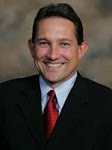
Todd Brown is a former defense-side lawyer (Wilmer Hale and Jones Day) now teaching law in Buffalo after a stint at Temple. Mr. Brown has written pretty extensively and astutely on deep flaws in asbestos bankruptcies (see my post here regarding his prior law review on section 524(g)). Mr. Brown has been guest blogging and commented here on Pointoflaw on two aspects of the 2d Circuit's Chrysler opinion. As it pertains to tort claimants, Mr Brown said the following:
" Second, the panel addressed the various arguments that the Chrysler assets could not be sold free and clear of successor liability for various personal injury type claims. Here, the panel adopted a fairly broad reading of the "interests" that can be cleansed in a Section 363 sale, reasoning that this interpretation is more consistent with the purpose of this section and the priority scheme of the Bankruptcy Code.
The panel refused to weigh in on the question of whether a Section 363 sale can cleanse future claims (such as those that might arise from asbestos exposure). This not only makes sense in the abstract; it is the right approach for future claimants. As we have seen in the 524(g) context (which requires setting aside funds to pay current and future asbestos claims, among other things), future claimants' interests are often sacrificed by those currently asserting asbestos claims against bankruptcy estates. Now that courts have started taking a harder line against these schemes, it is easy to see how the 363 sale approach might be viewed as a possible end-run around 524(g)'s limitations on front-loading recoveries. Until the "free and clear" sale's applicability to future claimants is clarified, however, such an end-run remains, at best, extremely risky for most asbestos defendants." (emphasis added).
Todd certainly is correct that the the interests of future claimants have repeatedly been been sacrificed in the asbestos chapter 11 cases. To go further, recognize that future claimants are NOT just the personal injury claimants, and instead there are multiple types of future claimants against the debtor's estate. Future claimants may be, for example, state agencies that want to recoup expenses from a debtor that caused personal injuries or created an environmental mess. Future claimants also include underlying case co-defendants which want to pursue cross-claims against former co-defendants now hiding behind chapter 11 injunctions The same applies to those insurers with subrogation and indemnity rights. against debtors.
Bankruptcy judges and plan proponents may in the future rue the day they did not 1) give due process notice to these groups of future claimants, and 2) did not cause appointment of a futures representative who actually intended to and actually did represent the interests of these other groups of "future claimants."
Tuesday, August 25, 2009


Monday, August 24, 2009
Plaintiff's Bar and US Chamber of Commerce Agree - Let's Make It Easier to Sue Non-US Manufacturers
Catching up on things I missed while on vacation. PointofLaw includes this interesting post on a draft federal statute to require overseas manufacturers of many consumer products to appoint registered agents in the US for service of process. The point is to make it equally easy to sue overseas companies. According to pointoflaw, the bill amazingly produced harmony between the plaintiff's bar and the US Chamber of Commerce- - now that's quite a feat:
"The bill follows on the footsteps of a Senate Judiciary subcommittee hearing in May, "Leveling the Playing Field and Protecting Americans." As the sponsors show, the issue crosses partisan lines. General support is also broad: Witnesses at the hearing included a representative of the trial lawyer lobby, AAJ, as well as Victor Schwartz, testifying on behalf of the U.S. Chamber."
"The bill follows on the footsteps of a Senate Judiciary subcommittee hearing in May, "Leveling the Playing Field and Protecting Americans." As the sponsors show, the issue crosses partisan lines. General support is also broad: Witnesses at the hearing included a representative of the trial lawyer lobby, AAJ, as well as Victor Schwartz, testifying on behalf of the U.S. Chamber."
W.R. Grace, Solvency Findings, Asbestos Liability Estimates, and Injunctions that Bind Others
Today's post follows up on this August 13 post regarding asbestos plaintiff's lawyers asking the Court to order the rest of the world not give any effect to whatever the Court finds on Grace's solvency, and item 4 of this prior post of May 12 regarding Nobel prize winner James Heckman's expert report in Grace in which he and the non-asbestos creditors indicted bankruptcy court estimation proceedings as having no scientific validity.
The topic today is Grace's August 7 trial brief asserting that it is impossible for the Court to determine whether Grace is solvent or insolvent, and that instead it should just find that Grace will be solvent and viable if the plan is confirmed. Grace's brief [Docket 22732] is available through PACER or here.
Key quotes from the Grace brief are below. The gist is that estimates of its "personal injury liability" range from a low end of $ 200 million (from Grace's expert, Tom Florence) to $ 6.2 billion (plaintiff's expert Mark Peterson). In addition, its "property damage liability" is estimated by some at about $ 3-5 billion, with one calculation suggesting $ 82 billion. The facts, as argued by Grace, are set out below. The question I pose is this:
In tort cases, we say that good science must be applied. In business litigation, the general rules is that damages must be proved with reasonable certainty. Given those rules, why would it be socially useful and/or constitutional for bankruptcy courts to issue world-wide injunctive orders without making actual factual findings on key issues when the factual claims are so extremely different as they are in the Grace case, and the answer on solvency plainly could come out on either side of the solvency question?
In posing that question, I recognize that Grace and others will and do say that what we need most are deals that end litigation and that courts should accept deals. But, isn't it also fair to say that individual case settlements are much different because, unlike Grace's desired confirmation order, those other settlements do not include sweeping injunctions purporting to bar and limit the manner of future prosecution of tens or hundreds of thousands of present or future claims to be asserted by personal injury claimants, and that also will enjoin cross-claims or subrogation claims to be asserted by underlying case co-defendants and/or insurers in those same hundreds or thousands of future personal injury claims?
The Grace brief states the following, at 12-14:
"Among the most significant hurdles that the Committee and the Lenders must overcome
before they even get to the analysis under section 1129 is the requirement that they prove the Debtors are solvent. This they cannot do. The most significant component of Debtors' liabilities, the Asbestos PI Claims, has never been agreed upon or adjudicated. The estimation proceeding, which was designed specifically to estimate the value of the Asbestos PI Claims,was not completed. And there has never been an agreed upon or adjudicated resolution of Debtors' potential property damage asbestos claims. Without such adjudication, the liabilities cannot be established, and the Lenders and Committee cannot prove that the Debtors are solvent.
The incomplete estimation proceeding only highlights the fact that, absent the Plan, there is an enormously wide range of estimated values of the Debtors' asbestos liabilities. For example, the Debtors' estimation expert, Dr. Tom Florence, estimated that value of Debtors'asbestos personal injury claims ranged between $200 million and $989 million with a median value of $468 million. But Dr. Denise Martin, another one of Debtors' experts, determined that at the standard 95% confidence interval for scientific reliability, Dr. Florence's estimates could range from $4.6 million to $6.3 billion. The PI Committee's expert, Dr. Mark Peterson, could
offer no more definite estimates of Debtors' asbestos liabilities. He opined that Debtors' potential liabilities for asbestos personal injury claims were "between $4.7 and $6.2 billion and most likely between $5.4 and $6.2 billion." See Expert Report of Dr. Mark Peterson in Connection with the Asbestos Personal Injury Estimation Hearing, dated June 20, 2007 at ES-5 (Dkt. 16113, Ex. A).
Likewise, the value of the Zonolite Attic Insulation ("ZAI") claims is also highly
uncertain and disputed. While the Plan provides between $54.5 million and $58 million to ZAI (and potential additional contract payments), ZAI made substantially higher demands. For example, ZAI claimants have previously stated that ZAI could potentially be in 11 million homes5 with a value of$5,000 to $7,500 per home,6 for a total of up to $82.5 billion. Even using the claimants' lower estimates of 1 million homes7 at a value of $3,000 to $5,000 per home, the total liability would be $3 billion to $5 billion. The range of non-ZAI Propert Damage liability is also entirely uncertain. While the Plan provides $ 49.3 million for non-ZAI Property
Damage claims, the potential claim was much greater. Together, the total potential Property Damage liability, absent a Plan, reaches at least $3.149 billion to $5.149 billion and may be much greater.
B. The liability disputes foreclose any demonstration of solvency. The Plan
disposes of that liability and therefore cannot be relied on to prove solvency.
As described above, there has never been an adjudication of Debtors' asbestos liabilities, and estimates of those liabilities vary greatly. There is simply no estimation method that can accurately measure the Debtors' asbestos liabilities. Without a binding determination of Debtors' potential asbestos liabilities, there cannot be a final and binding determination that Debtors are solvent. Zily Aff. ~ 4.9
As discussed infra, the Lenders' new expert, Robert 1. Frezza, relies on estimates from the never-completed estimation hearing to attempt to "determine" Debtors' solvency. This attempt is unavailing. Indeed, the only way that Mr. Frezza can even begin to argue Debtors' solvency is by relying upon the Plan, the very one to which the Committee and the Lenders now object. Absent the Plan, there is no cap on Debtors' asbestos liabilities. As already noted, the Proposed Asbestos Settlement, which forms the basis of the Plan, does not represent an adjudication of the Debtors' asbestos liabilities. Rather, it represents a compromise that disposes
of the need to adjudicate those liabilities. Without the Plan, all that is left are potentially enormous amounts of asbestos liabilities, the adjudication of which would determine whether Debtors are solvent. In other words, the Plan does not prove solvency; it paves the way for solvency from and after the Effective Date."
The topic today is Grace's August 7 trial brief asserting that it is impossible for the Court to determine whether Grace is solvent or insolvent, and that instead it should just find that Grace will be solvent and viable if the plan is confirmed. Grace's brief [Docket 22732] is available through PACER or here.
Key quotes from the Grace brief are below. The gist is that estimates of its "personal injury liability" range from a low end of $ 200 million (from Grace's expert, Tom Florence) to $ 6.2 billion (plaintiff's expert Mark Peterson). In addition, its "property damage liability" is estimated by some at about $ 3-5 billion, with one calculation suggesting $ 82 billion. The facts, as argued by Grace, are set out below. The question I pose is this:
In tort cases, we say that good science must be applied. In business litigation, the general rules is that damages must be proved with reasonable certainty. Given those rules, why would it be socially useful and/or constitutional for bankruptcy courts to issue world-wide injunctive orders without making actual factual findings on key issues when the factual claims are so extremely different as they are in the Grace case, and the answer on solvency plainly could come out on either side of the solvency question?
In posing that question, I recognize that Grace and others will and do say that what we need most are deals that end litigation and that courts should accept deals. But, isn't it also fair to say that individual case settlements are much different because, unlike Grace's desired confirmation order, those other settlements do not include sweeping injunctions purporting to bar and limit the manner of future prosecution of tens or hundreds of thousands of present or future claims to be asserted by personal injury claimants, and that also will enjoin cross-claims or subrogation claims to be asserted by underlying case co-defendants and/or insurers in those same hundreds or thousands of future personal injury claims?
The Grace brief states the following, at 12-14:
"Among the most significant hurdles that the Committee and the Lenders must overcome
before they even get to the analysis under section 1129 is the requirement that they prove the Debtors are solvent. This they cannot do. The most significant component of Debtors' liabilities, the Asbestos PI Claims, has never been agreed upon or adjudicated. The estimation proceeding, which was designed specifically to estimate the value of the Asbestos PI Claims,was not completed. And there has never been an agreed upon or adjudicated resolution of Debtors' potential property damage asbestos claims. Without such adjudication, the liabilities cannot be established, and the Lenders and Committee cannot prove that the Debtors are solvent.
The incomplete estimation proceeding only highlights the fact that, absent the Plan, there is an enormously wide range of estimated values of the Debtors' asbestos liabilities. For example, the Debtors' estimation expert, Dr. Tom Florence, estimated that value of Debtors'asbestos personal injury claims ranged between $200 million and $989 million with a median value of $468 million. But Dr. Denise Martin, another one of Debtors' experts, determined that at the standard 95% confidence interval for scientific reliability, Dr. Florence's estimates could range from $4.6 million to $6.3 billion. The PI Committee's expert, Dr. Mark Peterson, could
offer no more definite estimates of Debtors' asbestos liabilities. He opined that Debtors' potential liabilities for asbestos personal injury claims were "between $4.7 and $6.2 billion and most likely between $5.4 and $6.2 billion." See Expert Report of Dr. Mark Peterson in Connection with the Asbestos Personal Injury Estimation Hearing, dated June 20, 2007 at ES-5 (Dkt. 16113, Ex. A).
Likewise, the value of the Zonolite Attic Insulation ("ZAI") claims is also highly
uncertain and disputed. While the Plan provides between $54.5 million and $58 million to ZAI (and potential additional contract payments), ZAI made substantially higher demands. For example, ZAI claimants have previously stated that ZAI could potentially be in 11 million homes5 with a value of$5,000 to $7,500 per home,6 for a total of up to $82.5 billion. Even using the claimants' lower estimates of 1 million homes7 at a value of $3,000 to $5,000 per home, the total liability would be $3 billion to $5 billion. The range of non-ZAI Propert Damage liability is also entirely uncertain. While the Plan provides $ 49.3 million for non-ZAI Property
Damage claims, the potential claim was much greater. Together, the total potential Property Damage liability, absent a Plan, reaches at least $3.149 billion to $5.149 billion and may be much greater.
B. The liability disputes foreclose any demonstration of solvency. The Plan
disposes of that liability and therefore cannot be relied on to prove solvency.
As described above, there has never been an adjudication of Debtors' asbestos liabilities, and estimates of those liabilities vary greatly. There is simply no estimation method that can accurately measure the Debtors' asbestos liabilities. Without a binding determination of Debtors' potential asbestos liabilities, there cannot be a final and binding determination that Debtors are solvent. Zily Aff. ~ 4.9
As discussed infra, the Lenders' new expert, Robert 1. Frezza, relies on estimates from the never-completed estimation hearing to attempt to "determine" Debtors' solvency. This attempt is unavailing. Indeed, the only way that Mr. Frezza can even begin to argue Debtors' solvency is by relying upon the Plan, the very one to which the Committee and the Lenders now object. Absent the Plan, there is no cap on Debtors' asbestos liabilities. As already noted, the Proposed Asbestos Settlement, which forms the basis of the Plan, does not represent an adjudication of the Debtors' asbestos liabilities. Rather, it represents a compromise that disposes
of the need to adjudicate those liabilities. Without the Plan, all that is left are potentially enormous amounts of asbestos liabilities, the adjudication of which would determine whether Debtors are solvent. In other words, the Plan does not prove solvency; it paves the way for solvency from and after the Effective Date."
Sunday, August 23, 2009
Glaxo, Sponsored Writing and Paxil
This article from the Associated Press in the August 19, 2009 issue of the NYT reports on Glaxo's program in which "ghostwriters" were hired to assist doctors in writing medical journal articles regarding Paxil. The information provided is rather skimpy in terms of trying to evaluate the scope and influence of the ghost-writing and whether it actually produced incorrect statements. The article states:
August 19, 2009
Glaxo Used Ghostwriting Program to Promote Paxil
By THE ASSOCIATED PRESS
Filed at 5:07 p.m. ET
WASHINGTON (AP) -- Drugmaker GlaxoSmithKline used a sophisticated ghostwriting program to promote its antidepressant Paxil, allowing doctors to take credit for medical journal articles mainly written by company consultants, according to court documents obtained by The Associated Press.
An internal company memo instructs salespeople to approach physicians and offer to help them write and publish articles about their positive experiences prescribing the drug.
Known as the CASPPER program, the paper explains how the company can help physicians with everything from ''developing a topic,'' to ''submitting the manuscript for publication.''
The document was uncovered by the Baum Hedlund PC law firm of Los Angeles, which is representing hundreds of former Paxil users in personal injury and wrongful death suits against GlaxoSmithKline. The firm alleges the company downplayed several risks connected with its drug, including increased suicidal behavior and birth defects.
A spokeswoman for London-based Glaxo said the published articles noted any assistance to the main authors.
''The program was not heavily used and was discontinued a number of years ago,'' said Mary Anne Rhyne.
According to the memo, which dates from April 2000, the CASPPER program was designed to ''strengthen the product positioning and overcome competitive issues.''
At the time, Paxil was competing with rival antidepressant blockbusters like Eli Lilly's Prozac and Pfizer's Zoloft. Paxil has since lost its patent protection and competes against cheaper generic versions. Sales of Paxil last year totaled $849 million.
Drug companies frequently hire outside firms to draft a manuscript touting a company's drug, retain a physician to sign off as the author and then find a publisher to unwittingly publish the work.
But the use of ghostwriting by drug companies has come under increased scrutiny by members of Congress, including Sen. Charles Grassley, R-Iowa, a longtime critic of the industry's influence over physicians. Grassley and Sen. Herb Kohl, D-Wis., are pushing a bill that would require companies to disclose all payments to physicians over $100.
According to ghostwriting expert Dr. Leemon McHenry, Glaxo's program was unusually intertwined with its internal sales and marketing department.
''We know that GSK has engaged in ghostwriting for many years,'' said McHenry, who works as a research consultant for Baum Hedlund. ''But to create an internal ghostwriting program and have the gall to name it after a cartoon ghost demonstrates their juvenile attitude and careless disregard for patients.''
McHenry acknowledged that ghostwriting is legal in principal, but said it could contribute to illegal activity if the information is misleading and causes harm.
''If these ghostwritten publications are contributing to the harm of patients because they're making false claims, then that's illegal,'' McHenry said.
Articles from the company's program appeared in five journals between 2000 and 2002, including the American Journal of Psychiatry and the Journal of the American Academy of Child and Adolescent Psychiatry.
Drug company salespeople often present medical journal articles to physicians as independent proof that their drugs are safe and effective.
Publication in a medical journal also is a point of prestige for physicians, a fact Glaxo's memo seems to acknowledge: ''Physicians will be eager to participate in CASPPER regardless of their professional stature,'' the brief notes.
(This version CORRECTS spelling of 'Baum' in graf 4.)
August 19, 2009
Glaxo Used Ghostwriting Program to Promote Paxil
By THE ASSOCIATED PRESS
Filed at 5:07 p.m. ET
WASHINGTON (AP) -- Drugmaker GlaxoSmithKline used a sophisticated ghostwriting program to promote its antidepressant Paxil, allowing doctors to take credit for medical journal articles mainly written by company consultants, according to court documents obtained by The Associated Press.
An internal company memo instructs salespeople to approach physicians and offer to help them write and publish articles about their positive experiences prescribing the drug.
Known as the CASPPER program, the paper explains how the company can help physicians with everything from ''developing a topic,'' to ''submitting the manuscript for publication.''
The document was uncovered by the Baum Hedlund PC law firm of Los Angeles, which is representing hundreds of former Paxil users in personal injury and wrongful death suits against GlaxoSmithKline. The firm alleges the company downplayed several risks connected with its drug, including increased suicidal behavior and birth defects.
A spokeswoman for London-based Glaxo said the published articles noted any assistance to the main authors.
''The program was not heavily used and was discontinued a number of years ago,'' said Mary Anne Rhyne.
According to the memo, which dates from April 2000, the CASPPER program was designed to ''strengthen the product positioning and overcome competitive issues.''
At the time, Paxil was competing with rival antidepressant blockbusters like Eli Lilly's Prozac and Pfizer's Zoloft. Paxil has since lost its patent protection and competes against cheaper generic versions. Sales of Paxil last year totaled $849 million.
Drug companies frequently hire outside firms to draft a manuscript touting a company's drug, retain a physician to sign off as the author and then find a publisher to unwittingly publish the work.
But the use of ghostwriting by drug companies has come under increased scrutiny by members of Congress, including Sen. Charles Grassley, R-Iowa, a longtime critic of the industry's influence over physicians. Grassley and Sen. Herb Kohl, D-Wis., are pushing a bill that would require companies to disclose all payments to physicians over $100.
According to ghostwriting expert Dr. Leemon McHenry, Glaxo's program was unusually intertwined with its internal sales and marketing department.
''We know that GSK has engaged in ghostwriting for many years,'' said McHenry, who works as a research consultant for Baum Hedlund. ''But to create an internal ghostwriting program and have the gall to name it after a cartoon ghost demonstrates their juvenile attitude and careless disregard for patients.''
McHenry acknowledged that ghostwriting is legal in principal, but said it could contribute to illegal activity if the information is misleading and causes harm.
''If these ghostwritten publications are contributing to the harm of patients because they're making false claims, then that's illegal,'' McHenry said.
Articles from the company's program appeared in five journals between 2000 and 2002, including the American Journal of Psychiatry and the Journal of the American Academy of Child and Adolescent Psychiatry.
Drug company salespeople often present medical journal articles to physicians as independent proof that their drugs are safe and effective.
Publication in a medical journal also is a point of prestige for physicians, a fact Glaxo's memo seems to acknowledge: ''Physicians will be eager to participate in CASPPER regardless of their professional stature,'' the brief notes.
(This version CORRECTS spelling of 'Baum' in graf 4.)
Saturday, August 22, 2009
New Science - Observable Brain Changes in Rats Subjected to Stress
More on brain rewiring and damages potentially recoverable in current or future tort litigation. This prior post provided some fact patterns and legal issues on future damages issues as drawn from research breakthroughs described in a wonderful book on brain plasticity - The Brain That Changes Itself -- Stories of Personal Triumph from the Frontiers of Brain Science, by Dr. Norman Doidge.
Now, here's more to think about as both individuals and as tort lawyers who end up in arguments about what is "harm," how it is proved and measured, and how it is compensated. Specifically, yet more news on brain rewiring is out and indicates that stress does produce physical changes in the brain, thus providing possible evidentiary support for claims that stress is indeed a physical injury.
This August 17, 2009 NYT article by Natalie Angier summarizes new research on brain plasticity as it relates to stress. The gist is that scientists in Portugual this summer published an article in a prestigious medical journal regarding their findings on brain changes when rats were subjected to stress. The not so good news is that stress does indeed destroy brain wiring. The better news is that the brain can rewire and return to "normal" when the stress is reduced back to normal levels. Here are key quotes:
"Reporting earlier this summer in the journal Science, Nuno Sousa of the Life and Health Sciences Research Institute at the University of Minho in Portugal and his colleagues described experiments in which chronically stressed rats lost their elastic rat cunning and instead fell back on familiar routines and rote responses, like compulsively pressing a bar for food pellets they had no intention of eating.
Moreover, the rats’ behavioral perturbations were reflected by a pair of complementary changes in their underlying neural circuitry. On the one hand, regions of the brain associated with executive decision-making and goal-directed behaviors had shriveled, while, conversely, brain sectors linked to habit formation had bloomed. (emphasis added).
****
But with only four weeks’ vacation in a supportive setting free of bullies and Tasers, the formerly stressed rats looked just like the controls, able to innovate, discriminate and lay off the bar. Atrophied synaptic connections in the decisive regions of the prefrontal cortex resprouted, while the overgrown dendritic vines of the habit-prone sensorimotor striatum retreated."
If I were a plaintiff's lawyer, the NYT and Science article would be dropped into my bag of citations and evidence to argue for a broader range of treatment after, for example, suffering a trauma from a one time physical event or after cancer has been countered via surgery, chemotherapy or other means. As a defense lawyer, I'm probably going to argue this is not (yet) accepted science and try to keep it out of evidence under the Daubert rules. But, one might also ask what makes sense for the long term - perhaps injured people should receive some paid for r & r to get them into good patterns and a better recovery that may save money in the long run. Then we lawyers can argue about who should pay for it - the health insurer, the Comphrehensive General Liability insurer, the tort defendant or some government agency.
Now, here's more to think about as both individuals and as tort lawyers who end up in arguments about what is "harm," how it is proved and measured, and how it is compensated. Specifically, yet more news on brain rewiring is out and indicates that stress does produce physical changes in the brain, thus providing possible evidentiary support for claims that stress is indeed a physical injury.
This August 17, 2009 NYT article by Natalie Angier summarizes new research on brain plasticity as it relates to stress. The gist is that scientists in Portugual this summer published an article in a prestigious medical journal regarding their findings on brain changes when rats were subjected to stress. The not so good news is that stress does indeed destroy brain wiring. The better news is that the brain can rewire and return to "normal" when the stress is reduced back to normal levels. Here are key quotes:
"Reporting earlier this summer in the journal Science, Nuno Sousa of the Life and Health Sciences Research Institute at the University of Minho in Portugal and his colleagues described experiments in which chronically stressed rats lost their elastic rat cunning and instead fell back on familiar routines and rote responses, like compulsively pressing a bar for food pellets they had no intention of eating.
Moreover, the rats’ behavioral perturbations were reflected by a pair of complementary changes in their underlying neural circuitry. On the one hand, regions of the brain associated with executive decision-making and goal-directed behaviors had shriveled, while, conversely, brain sectors linked to habit formation had bloomed. (emphasis added).
****
But with only four weeks’ vacation in a supportive setting free of bullies and Tasers, the formerly stressed rats looked just like the controls, able to innovate, discriminate and lay off the bar. Atrophied synaptic connections in the decisive regions of the prefrontal cortex resprouted, while the overgrown dendritic vines of the habit-prone sensorimotor striatum retreated."
If I were a plaintiff's lawyer, the NYT and Science article would be dropped into my bag of citations and evidence to argue for a broader range of treatment after, for example, suffering a trauma from a one time physical event or after cancer has been countered via surgery, chemotherapy or other means. As a defense lawyer, I'm probably going to argue this is not (yet) accepted science and try to keep it out of evidence under the Daubert rules. But, one might also ask what makes sense for the long term - perhaps injured people should receive some paid for r & r to get them into good patterns and a better recovery that may save money in the long run. Then we lawyers can argue about who should pay for it - the health insurer, the Comphrehensive General Liability insurer, the tort defendant or some government agency.
Monday, August 17, 2009
Transparency - Another Effort to Force PACER to Become Free
This article from Wired, also pasted below, describes clever computer people devising a way to push harder towards forcing the federal courts to stop using court records in PACER to generate money, thereby limiting transparency. In essence, new software on Firefox tells you if a document you want already is in a free database, and also picks up copies of documents pulled out of PACER and adds them to the free database. Through this and other steps, perhaps some day even bankruptcy courts will be transparent.
Firefox Plug-In Frees Court Records, Threatens Judiciary Profits
By Ryan Singel
August 14, 2009
2:07 pm
Categories: The Courts
Access to the nation’s federal law proceedings just got a public interest hack, thanks to programmers from Princeton, Harvard and the Internet Archive, who released a Firefox plug-in designed to make millions of pages of legal documents free.
Free as in beer and free as in speech.
The Problem: Federal courts use an archaic, document-tracking system known as PACER as their official repository for complaints, court motions, case scheduling and decisions. The system design resembles a DMV computer system, circa 1988 — and lacks even the most basic functionality, such as notifications when a case gets a new filing. But what’s worse is that PACER charges 8 cents per page (capped at $2.40 per doc) and even charges for searches — an embarrassing limitation on public access to information, especially when the documents are copyright-free.
The Solution: RECAP, a Firefox-only plugin, that rides along as one usually uses PACER — but it automatically checks if the document you want is already in its own database. The plug-in’s tagline, ‘Turning PACER around,’ alludes to the fact that its name comes from spelling PACER backwards. RECAP’s database is being seeded with millions of bankruptcy and Federal District Court documents, which have been donated, bought or gotten for free by open-government advocate Carl Malamud and fellow travelers such as Justia.
And if the document you request isn’t already in the public archive, then RECAP adds the ones you purchase to the public repository.
The plug-in was released by Princeton’s Center for Information Technology Policy, coded by Harlan Yu and Tim Lee, under the direction of noted computer science professor Ed Felten.
That’s a pretty good hack, but it’s still just a stop-gap measure until the federal courts figure out that in the age of the internet, charging citizens to search and read public documents should be a federal crime.
Using it should not cause journalists, lawyers or law students (PACER’s main customers) any legal trouble. After all, court documents are never copyrightable.
But you never know how the justice system might react. Last fall, the federal court system shut down a pilot program that offered free PACER access at a few libraries around the country after it figured out that Malamud and hacker Aaron Swartz took them at their word and started downloading court decisions by the gigabyte.
That got Malamud 20 percent of the fed’s court filings and an interrogation by FBI agents earlier this year.
Hopefully RECAP will get a friendlier reception from the U.S. Federal Court System.
Firefox Plug-In Frees Court Records, Threatens Judiciary Profits
By Ryan Singel
August 14, 2009
2:07 pm
Categories: The Courts
Access to the nation’s federal law proceedings just got a public interest hack, thanks to programmers from Princeton, Harvard and the Internet Archive, who released a Firefox plug-in designed to make millions of pages of legal documents free.
Free as in beer and free as in speech.
The Problem: Federal courts use an archaic, document-tracking system known as PACER as their official repository for complaints, court motions, case scheduling and decisions. The system design resembles a DMV computer system, circa 1988 — and lacks even the most basic functionality, such as notifications when a case gets a new filing. But what’s worse is that PACER charges 8 cents per page (capped at $2.40 per doc) and even charges for searches — an embarrassing limitation on public access to information, especially when the documents are copyright-free.
The Solution: RECAP, a Firefox-only plugin, that rides along as one usually uses PACER — but it automatically checks if the document you want is already in its own database. The plug-in’s tagline, ‘Turning PACER around,’ alludes to the fact that its name comes from spelling PACER backwards. RECAP’s database is being seeded with millions of bankruptcy and Federal District Court documents, which have been donated, bought or gotten for free by open-government advocate Carl Malamud and fellow travelers such as Justia.
And if the document you request isn’t already in the public archive, then RECAP adds the ones you purchase to the public repository.
The plug-in was released by Princeton’s Center for Information Technology Policy, coded by Harlan Yu and Tim Lee, under the direction of noted computer science professor Ed Felten.
That’s a pretty good hack, but it’s still just a stop-gap measure until the federal courts figure out that in the age of the internet, charging citizens to search and read public documents should be a federal crime.
Using it should not cause journalists, lawyers or law students (PACER’s main customers) any legal trouble. After all, court documents are never copyrightable.
But you never know how the justice system might react. Last fall, the federal court system shut down a pilot program that offered free PACER access at a few libraries around the country after it figured out that Malamud and hacker Aaron Swartz took them at their word and started downloading court decisions by the gigabyte.
That got Malamud 20 percent of the fed’s court filings and an interrogation by FBI agents earlier this year.
Hopefully RECAP will get a friendlier reception from the U.S. Federal Court System.
Sunday, August 16, 2009
Differences In Legal Systems - Mexico and the US On Criminal Law
How different is the Mexican legal system from the US system? The article pasted below provides a glimpse in to the current signficant differences between the US crininal law system and the Mexican criminal law system. The article is from the August 14, 2009 issue of the Chicago Daily Law Bulletin.
School helps Mexico change trial process
By Jerry Crimmins Law Bulletin staff writer
Chicago-Kent College of Law is playing a role in the sweeping reform of the ancient criminal justice system of Mexico.
For hundreds of years criminal trials in Mexico — if you could call them that — have been hidden, according to David A. Erickson, associate director of Chicago-Kent's Trial Advocacy Program.
They were seen by neither the victims, the defendants, the witnesses nor the public.
"There was nothing to watch,'' he said. "There was no trial in our sense. The entire system for the last 500 years has been written….
"The prosecutor writes up all his evidence," Erickson said. "The defense attorney writes up all his evidence…. The lawyers stood in front of a judge and handed the stuff to his secretary, and that was it.
"A year or two later, the judge writes his decision,'' and sometimes the delay in the verdict is longer than that, Erickson continued. "They never put on a witness, and a defendant in this system never gets to see his judge.''
The Mexican criminal justice system is "inquisitorial,'' Erickson said, because the judge asks all of the questions.
But now, pushed by President Felipe Calderon, Mexico is moving toward nationwide adoption of an accusatorial, oral trial system like the one in the United States.
This eventually will mean public trials, public questioning of witnesses, defendants sitting at their own trial who get to see their accusers and the judge, and the presence of the public and news media, Erickson said.
"This is a total, 180-degree change for them. It takes a lot of courage for them to do this,'' he said.
The reforms are expected to take eight years. They are intended, according to Chicago-Kent, to fight corruption and instill public confidence in the judicial system.
Chicago-Kent's job, with a $1.2 million grant from the U.S. government, is to train judges, lawyers, law professors and students on how to conduct open trials.
"We've been down there twice, the first time for a planning session in January,'' Erickson said. "Our partner law school [Technologico de Monterrey in Mexico City] built a million-dollar courtroom in its law school for us to train.''
In June, Erickson, along with Chicago-Kent Professsor William Douglas Godfrey, Adjunct Professor Ljubica D. Popovic, and student Mariana Munoz, went to Mexico again to teach lawyers and judges how to try a case in the open.
Godfrey and Popovic are former prosecutors. Erickson has wide experience in criminal law. He started out as a prosecutor and became first assistant state's attorney of Cook County. He also has served as a Criminal Courts judge, a Juvenile Court judge and justice of the Illinois Appellate Court.
Munoz' father is from Mexico and her mother from the U.S., and she is fluent in Spanish.
"I had Mexican lawyers on their feet doing direct examinations, cross-examinations, opening arguments, closing statements,'' Erickson said. "They did it just like we did here in the United States.''
Until recently, he said, Mexicans' only knowledge of open trials came from movies and TV. "They think everything is like 'Law and Order.'
"First we taught their entire faculty of 26, all the professors,'' Erickson continued, "then about 20 lawyers. I lectured 16 judges."
Ten students from the law school also came and watched. Although they hadn't been invited. Erickson insisted that they be allowed to stay.
"The younger the lawyer, the more they're in favor of this,'' he said. "Judges are more reticent.''
Partly they are afraid that, if they are known, they may be killed due to the widespread violence perpetrated by drug gangs, he said.
Erickson said one judge told him, "I can go to a coffee shop now and nobody knows I'm a judge. In this new system everybody knows.''
Prosecutors and police are often opposed to open trials in Mexico, Erickson continued. "The current president ramrodded this through.''
As part of widespread reforms approved by the Mexican government a year ago, Mexico copied and adopted the Fourth, Fifth, and Sixth amendments to the U.S. Constitution.
In the U.S., the Fourth Amendment guards against unreasonable searches and seizures; the Fifth prohibits double jeopardy and forced self-incrimination, and provides for due process and property rights; the Sixth provides for speedy public trials, the right to confront accusers, the right to bring one's own witnesses and the right to a lawyer.
The Mexican criminal justice amendments are expanded, Erickson said. "They mandate in the constitution a federal defender program, and also a victims' bill of rights…. It allows the victim of a crime to retain a private attorney and to sit at the counsel table and participate in the trial.''
Mexico has started to use open trials in a few locations. The training program conducted by Chicago-Kent and Technologico de Monterrey will educate lawyers in Nuevo Leon, Baja California and Morelos. The program is also intended to train Mexican law professors who will then teach others.
A few Mexican lawyers, including two this coming school year, will attend Chicago-Kent to study international law, with an emphasis on criminal law, and earn LLM degrees.
The Mexican reforms do not include jury trials. Judges still will decide verdicts.
Erickson said Mexico also has hired Americans from New Mexico and Arizona to build crime labs for them.
"They realize they have no concept of forensic evidence the way we do,'' he said.
And although Mexico does have a criminal appellate court, "they are going to have to embrace the concept of precedent and stare decisis,'' Erickson said, although the reforms have not yet gone that far.
jcrimmins@lbpc.com
Subscribe to:
Posts (Atom)

 Posts
Posts