I'm setting aside James Hardie and Australia for a few days. News on Friday provides a great springboard for some comments in the same general area of what's new in mass tort resolution thinking, and some points related to corporate actions to cope with/avoid/limit the corporate damage from mass tort claims.
_____________________________________________________________________________
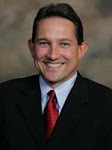
How does big tobacco admit it faces massive global tort warfare ahead ? By hiring David Bernick away from Kirkland & Ellis, as was announced Friday - see article at the bottom.
Why is hiring Mr. Bernick so telling ? Look at what he has done. K & E teams headed up by Mr. Bernick have often (but not always) won some of the most difficult battles in mass tort litigation, and have included various creative and massive efforts to buy time and/or survival for corporate defendants. For example, his team successfully defended Grace executives in a criminal trial involving asbestos regulations and "tremolite contamination" in mined products; that trial would have been easy to lose due to asbestos hysteria. The team also was winning the W. R. Grace asbestos bankruptcy trial by thoroughly discrediting the seamy side of asbestos claiming by the not sick, and so they capitalized by reaching a fantastic mid-trial settlement in the bankruptcy. Bernick and others also did a business-saving (albeit unconstitutional) deal in chapter 11 to free Asea Brown (ABB ) from its Combustion Engineering asbestos liabilities, and obtained that result despite the stench from ABB's $ 20 million payment to plaintiff's counsel. Mr. Bernick and others also undertook an ill-fated but brilliant effort on behalf of car companies to use the Federal-Mogul bankruptcy to convene one massive Daubert hearing in federal court regarding whether brake linings with asbestos actually cause cancers. Even though the latter effort did not succeed on the merits; it bought much needed time for car companies at a time when asbestos litigation was at one of its most frenzied points.
One cannot help but wonder the price. If Mr. Bernick can do for PM what he has done for other entities, the financial dividend for PM shareholders will be huge. Indeed, Mr. Bernick actually will add real value to the bottom line with actual creative thinking and hard work. That said, perpetuating smoking is anything but the work of angels.
What issues are out there to keep Mr. Bernick busy and challenged ? A recent example arises from the disastrous $294 million verdict entered last fall in one of the thousands of pending post-Engle tobacco cases that are being set for trials in Florida. If one took that verdict into bankruptcy court and handed it to the "liability estimators," they could generate a future liability range of numbers that probably would include numbers in the trillions of dollars. Those numbers also could be offered in bankruptcy court to support fraudulent conveyance claims involving various corporate moves by tobacco companies. Recall, for example, that Asarco was hit this past year with a $ 6 billion dollar bankruptcy court judgment based on fraudulent conveyance claims tied to corporate activities undertaken in anticipation of tort and environmental claims.
That said, the bankruptcy liability estimation process is not even close to scientific, as Mr. Bernick well knows. Indeed, the Grace bankruptcy included one of the strongest indictments issued to date regarding the lack science and due process in bankruptcy proceedings, That indictment is set out in the testimony of Professor Heckman, a University of Chicago economist and Nobel prize winner, as described in item 4 of this prior post.
Meanwhile, there is global cigarette litigation. In Nigeria, the tobacco companies are the subject of $ 45 billion government cost recovery claims, as described, for example, here and here. And, as noted on Saturday, there have even been tobacco claims in Japan, which are not noteworthy for any success but are note worthy for the statistics regarding the continuing smoking patterns in Asia.
Perhaps most significantly, the tobacco industry recently suffered a resounding loss as the Massachusetts Supreme Court endorsed in sweeping terms a medical monitoring class action case against tobacco companies. Due to Congressional hearings and the tobacco settlements, it's very plain that the cigarette manufacturing industry very closely follows science, and so its senior executives undoubtedly are aware of the indicators that their companies soon enough will face a wave of expensive medical monitoring and therapy claims arising from new scientific discoveries. Soon enough, it will be routine to provide effective screening examinations to find cancers when they are still microscopic. Incredible new devices and techniques will be used to create innovative therapies that will be developed to "cure" or manage the tumors, all at some significant amount of expense. See generally the many papers of Professor Gary Marchant, most of which are collected on his law school's website at the page which is here. Those developments will make it practical for plaintiff's lawyers to bring claims on behalf of persons in developing countries for which the opportunity for expensive life-saving treatment will create enough economic value to incentivize litigating cases that will have significant emotional appeal to any judge or jury.
My bet? Mr. Bernick's will architect and oversee an effective defense across the broad range of pending cases, all while planning for future efforts to obtain absurdly favorable settlements that promote continuing tobacco use by sharing revenues with governments and lawyers, not to mention, litigation funders, to produce securitized cash flows. The settlement also produced ancillary litigation over access to information from state attorney's general on why and how they settled. Certainly Mr. Bernick is well suited by experience to lead PM through the issues ahead.
Mr. Bernick will have plenty of new challenges because more and more commentators are speaking out on the myriad problems with the handling of mass tort claims. Indeed, new commentators are emerging. Commentators include Prof. Erichson on "The Trouble With All or Nothing Settlements" and others who last year spoke on whether more mass tort claims need to be litigated instead of settled. Prof. Burch wrote a post this past Friday on Prof. Redish's new book arguing that many mass tort class action procedures are unconstitutional (an issue I've been litigating and arguing since the late 1980s.) She also links to a summary of contra papers by Prof. Issacharoff, who also is a paid partisan and advocate in asbestos litigation, including (among others) the THAN bankruptcy (click by the first screen and then you should land at the page for In re T H Agriculture & Nutrition, L.L.C., Case No. 08-14692 (REG). The THAN case is the asbestos bankruptcy that produced a declaration from an asbestos plaintiff's lawyer regarding his understandings from chapter 11 plan negotiations regarding his firm's clients being paid an average of over 700k per claimant for future claims against the THAN trust.
Challenges also will arise due to commentary and new thoughts from overseas. Prof. Burch wrote this recent cogent post summarizing a new report from the UK on tort claiming. To tease you to go read more, here are two key excerpts from the post summary:
"Of additional import, the final report recommends that solicitors and barristers should be allowed to enter into contingency fee arrangements, which are currently prohibited. Before entering into such an arrangement, the report recommends that claimants receive independent advice. It also suggests capping the fees at 25%.
Finally, the report recommends making third-party funding available to personal injury claimants (including those involved in collective actions). It defines third party funding as "The funding of litigation by a party who has no pre-existing interest in the litigation, usually on the basis that (i) the funder will be paid out of the proceeds of any amounts recovered as a consequence of the litigation, often as a percentage of the recovery sum; and (ii) the funder is not entitled to payment should the claim fail." (Final Report at p. 17). Very interesting."
UK corporate and insurance company lawyers issued a January 19 report she links to; here's their bottom line:
"If Jackson LJ's recommendations are passed into law, it seems safe to predict that they will lead to an increase in the number of collective actions seeking damages for personal injury. In particular, group claims against the manufacturers of allegedly defective products, which are no longer routinely funded by legal aid as they were in the 1980s and 1990s, are likely to become more common. Claimants with an arguable claim of this type would generally be able to proceed under a contingency fee, CFA or third-party funding arrangement without the spectre of possibly having to pay, out of their own pockets, either their own lawyers' fees or the costs of their opponent.
Costs shifting would remain in place for most types of collective action, such as those involving claims for anti-competitive behaviour or consumers' claims for economic loss. In these cases, the loser-pays rule would remain a significant disincentive to claimants considering a group action and would protect defendants against frivolous or speculative lawsuits.
The big question now is whether these reforms will be implemented. Jackson LJ appears to hold the view that his recommendations, which he describes as "a coherent package of interlocking reforms", should not be viewed individually but as a comprehensive set of proposals. Some of these proposals could be introduced relatively easily by amendment to the Civil Procedure Rules, such as the introduction of a qualified one-way costs shifting regime, but for the most part primary legislation would be required in order to give effect to other recommendations, such as abolishing the recoverability of success fees from defendants. With the general election taking place this year, civil justice reform is unlikely to be high on the Government's agenda. The likely delay will provide a window of opportunity for those who have concerns about particular aspects of these recommendations to make them known before the reforms are finally implemented."
We surely are living in interesting times for mass tort claiming.
__________________________________________________________________________
Here is the article from the Chicago Tribune regarding Mr. Bernick; the text is pasted below.
Friday, January 22, 2010
Top litigator at Kirkland leaving for Philip Morris
David Bernick, a star litigator at Kirkland & Ellis, is leaving the firm to become general counsel at Phillip Morris International.
Bernick has been with Kirkland for 31 years and has been involved in nearly every type of complex litigation imaginable, from defending companies with asbestos liability to representing breast-implant manufacturers.
"I have spent my entire career at Kirkland & Ellis and I am proud to have contributed to the growth and success of one of the top law firms,” said Bernick in a statement provided by the firm. “I will remain close to my many friends and colleagues at the firm, but I look forward to pursuing new challenges during the next phase of my career with Philip Morris International.”
Kirkland's incoming chairman, Jeffrey Hammes, said: “David has been an integral part of our premier litigation practice, and his achievements during his 31 years at Kirkland are truly remarkable. We thank him for his varied and long-standing service to the Firm and we wish him success in his new role.
Bernick will join Philip Morris on March 1. As part of the move, he will relocate to Switzerland from New York.
Tip of the hat to Above the Law for breaking the news.
Monday, January 25, 2010


Sunday, January 24, 2010
Published Reports - UK Government Seeking a Deal With Unions on Pleural Plaques
This article from a British newspaper reports that the UK government is trying to cut a deal with unions 1) to pay for more scientific research on cancer, and 2) require more compensation from insurers for asbestos victims, but without reinstating pleural plaques claiming. Apparently remaining insurers would be required to pay bills left behind by insolvent insurers. On reading the article, one wonders about linkage between this development and the insurance industry's 8 January 2010 resounding loss in Scotland as various insurers failed to overturn legislation reinstating claiming for pleural plaques in Scotland.
According to today's article:
"Asbestos victims offered £70m support package
Unions divided on plan to set up a research centre and compensation fund – because of exclusions
By Emily Dugan
The Government is set to present a £70m package of help for asbestos victims to trade unions this week. The proposals include setting up a research centre into asbestos-linked diseases; insisting insurers fund compensation for dying victims unable to rely on their employers' insurance; and more money for sufferers of the deadly asbestos cancer mesothelioma.
The proposals, campaigned for by the IoS, are likely to receive a mixed reaction from campaigners seeking justice for thousands of workers who face painful deaths because of negligent exposure by their employers.
The fund and research centre were welcomed last night, but opponents were quick to criticise the Government's decision not to overturn a 2007 law lords' ruling which left sufferers of a condition known as pleural plaques ineligible for compensation. The condition is often a sign of the onset of deadly asbestos diseases.
The proposals were outlined in a private meeting between Gordon Brown, the Justice Secretary, Jack Straw, and concerned MPs last week. Sources confirmed that if accepted by the unions, the plans would be rapidly adopted. But the construction union UCATT called the proposals "morally indefensible".
*****
The establishment of an Employers Liability Insurance Bureau to maintain a "fund of last resort" for victims of asbestos exposure who cannot trace their employers' insurers is the most significant victory, as it will be mainly paid for by the insurance industry.
*****
Mr Straw is understood to have said that overturning the pleural plaque ruling would be too costly, with the Government already facing liabilities of up to £600m because so many public sector workers were exposed to asbestos in previously nationalised industries and in the Armed Forces. Critics believe ministers have surrendered to the powerful insurance lobby.
Andrew Dismore MP, who tabled two bills to overturn the 2007 ruling, said: "If you've got pleural plaques, there's nothing in this package for you. What's on offer is not chicken feed, but it will mean there are lots of people who will not get the compensation they deserve."
According to today's article:
"Asbestos victims offered £70m support package
Unions divided on plan to set up a research centre and compensation fund – because of exclusions
By Emily Dugan
The Government is set to present a £70m package of help for asbestos victims to trade unions this week. The proposals include setting up a research centre into asbestos-linked diseases; insisting insurers fund compensation for dying victims unable to rely on their employers' insurance; and more money for sufferers of the deadly asbestos cancer mesothelioma.
The proposals, campaigned for by the IoS, are likely to receive a mixed reaction from campaigners seeking justice for thousands of workers who face painful deaths because of negligent exposure by their employers.
The fund and research centre were welcomed last night, but opponents were quick to criticise the Government's decision not to overturn a 2007 law lords' ruling which left sufferers of a condition known as pleural plaques ineligible for compensation. The condition is often a sign of the onset of deadly asbestos diseases.
The proposals were outlined in a private meeting between Gordon Brown, the Justice Secretary, Jack Straw, and concerned MPs last week. Sources confirmed that if accepted by the unions, the plans would be rapidly adopted. But the construction union UCATT called the proposals "morally indefensible".
*****
The establishment of an Employers Liability Insurance Bureau to maintain a "fund of last resort" for victims of asbestos exposure who cannot trace their employers' insurers is the most significant victory, as it will be mainly paid for by the insurance industry.
*****
Mr Straw is understood to have said that overturning the pleural plaque ruling would be too costly, with the Government already facing liabilities of up to £600m because so many public sector workers were exposed to asbestos in previously nationalised industries and in the Armed Forces. Critics believe ministers have surrendered to the powerful insurance lobby.
Andrew Dismore MP, who tabled two bills to overturn the 2007 ruling, said: "If you've got pleural plaques, there's nothing in this package for you. What's on offer is not chicken feed, but it will mean there are lots of people who will not get the compensation they deserve."
Saturday, January 23, 2010
Tobacco Lawsuit in Japan - No Relief Obtained
An article is here regarding a tobacco suit in Japan http://www.washingtonpost.com/wp-dyn/content/article/2010/01/22/AR2010012203301.htmlfailing to garner any relief.
Friday, January 22, 2010
Australia and Asbestos - The James Hardie Saga, Its Asbestos Claim Payment Foundation - A Viable Alternative to Ch. 11 ?
Now it's west (from Chicago) to Australia, asbestos and the public company fiber cement business commonly known as James Hardie.
The short story is that James Hardie and its officers and directors have been through a wringer as several were convicted of securities violations in connection with information disseminated regarding "asbestos liabilities" and a foundation set up by various former Hardie entities to manage and pay asbestos claims. The convictions are on appeal. For more specifics on the past, look to the left for prior posts indexed under the topic "James Hardie."
Rapid Global Movement Makes Local Policy Hard to Enforce: Hardies actions are noteworthy for multiple reasons other than the securities convictions. For one, note that Hardie's recent global corporate "citizenship" translocations from Australia to The Netherlands and now Ireland, all in just 9 years. The point? Money and ownership will move to wherever financial engineering offers a material opportunity to avoid taxes, achieve tax benefits, or avoid or limit liabilities. This point needs to be understood by policy makers, tort claimants, tort case co-defendants and insurers because of its implications for tort claiming and risk spreading. Simply put, parochial local approaches to tort law may be politically attractive at times (e.g. take action to save local jobs) but one should expect the tort system will be gamed just as some financiers play games with states in the US for financial incentives to relocate - for a few years - the corporate headquarters or a manufacturing facility. The wills of state legislatures, the long term abstractions of tort law professors, and the opinions of slow moving appellate courts are all much less relevant when, as now, ownership, the corporate "home" and money, can all be moved in a matter of months. (One wonders when an enterprising tropical island will enact legislation favorable to companies facing long tail tort claims. One might look to the precedent set in the UK with FSA legislation that helped the "the names" and the Lloyds insurance market run away from their insurance obligations. Or, one might also consider states that set up rules considered unduly favorable to one side or another - some might say that West Virginia, Texas, New York, South Dakota, and Delaware all provide classic examples of this approach ... )
Private Tort Claim Foundation as an Alternative to Chapter 11 ? By any reasonable standard, current and former Hardie entities Hardie entities face claims for at least a billion or two of claims, and maybe much more, depending on how one defines claims (do overseas claims count; what about property damages claims). In the US, the now-defined answer would be to file one or two subsidiaries file a Chapter 11 case in Delaware or New York. Then, via the parent company chipping in some money and/or rights related to some "shared insurance," the parent and all subsidiaries likely would end up with an injunction purporting to protect them against a future claim anywhere in the world. Thanks to the rampant lack of due process and the resulting lack of objectors in chapter 11 cases (highlighted most recently by GM and Chrysler), most such plans succeed, at least in the sense that confirmation is obtained.
Hardie, however, did not pursue that path and instead set up a private foundation to manage and pay claims, backed by some conditional promises of future cash flow from Hardie entities. The foundation has now been in place for almost a decade. Future posts will explore some specific aspects of the Hardie foundation. For now, for 213 pages of Hardie facts and history as narrated by KPMG as advisors, go here and read/skim through a 2006 liability estimate.
While reading, note, among other things, that Hardie entities have been selling asbestos products since the early 1900s, owned a chryotile asbestos mine in Australia, sold products internationally, participated in various international joint ventures, and sold a wide range of asbestos-containing products. Sales included a asbestos-cement building materials, pipe insulation, and friction products, as well as sales of raw chrysotile asbestos fiber. Note also that some of Hardie's cement and insulation products included one or both of two types of the highly lethal amphibole fibers, which are crocidolite (apparently mined in Australia at Wittenoom) and amosite from Cape or others in South Africa (amosite being a sort of a contraction for "asbestos from the mines of South Africa").
The short story is that James Hardie and its officers and directors have been through a wringer as several were convicted of securities violations in connection with information disseminated regarding "asbestos liabilities" and a foundation set up by various former Hardie entities to manage and pay asbestos claims. The convictions are on appeal. For more specifics on the past, look to the left for prior posts indexed under the topic "James Hardie."
Rapid Global Movement Makes Local Policy Hard to Enforce: Hardies actions are noteworthy for multiple reasons other than the securities convictions. For one, note that Hardie's recent global corporate "citizenship" translocations from Australia to The Netherlands and now Ireland, all in just 9 years. The point? Money and ownership will move to wherever financial engineering offers a material opportunity to avoid taxes, achieve tax benefits, or avoid or limit liabilities. This point needs to be understood by policy makers, tort claimants, tort case co-defendants and insurers because of its implications for tort claiming and risk spreading. Simply put, parochial local approaches to tort law may be politically attractive at times (e.g. take action to save local jobs) but one should expect the tort system will be gamed just as some financiers play games with states in the US for financial incentives to relocate - for a few years - the corporate headquarters or a manufacturing facility. The wills of state legislatures, the long term abstractions of tort law professors, and the opinions of slow moving appellate courts are all much less relevant when, as now, ownership, the corporate "home" and money, can all be moved in a matter of months. (One wonders when an enterprising tropical island will enact legislation favorable to companies facing long tail tort claims. One might look to the precedent set in the UK with FSA legislation that helped the "the names" and the Lloyds insurance market run away from their insurance obligations. Or, one might also consider states that set up rules considered unduly favorable to one side or another - some might say that West Virginia, Texas, New York, South Dakota, and Delaware all provide classic examples of this approach ... )
Private Tort Claim Foundation as an Alternative to Chapter 11 ? By any reasonable standard, current and former Hardie entities Hardie entities face claims for at least a billion or two of claims, and maybe much more, depending on how one defines claims (do overseas claims count; what about property damages claims). In the US, the now-defined answer would be to file one or two subsidiaries file a Chapter 11 case in Delaware or New York. Then, via the parent company chipping in some money and/or rights related to some "shared insurance," the parent and all subsidiaries likely would end up with an injunction purporting to protect them against a future claim anywhere in the world. Thanks to the rampant lack of due process and the resulting lack of objectors in chapter 11 cases (highlighted most recently by GM and Chrysler), most such plans succeed, at least in the sense that confirmation is obtained.
Hardie, however, did not pursue that path and instead set up a private foundation to manage and pay claims, backed by some conditional promises of future cash flow from Hardie entities. The foundation has now been in place for almost a decade. Future posts will explore some specific aspects of the Hardie foundation. For now, for 213 pages of Hardie facts and history as narrated by KPMG as advisors, go here and read/skim through a 2006 liability estimate.
While reading, note, among other things, that Hardie entities have been selling asbestos products since the early 1900s, owned a chryotile asbestos mine in Australia, sold products internationally, participated in various international joint ventures, and sold a wide range of asbestos-containing products. Sales included a asbestos-cement building materials, pipe insulation, and friction products, as well as sales of raw chrysotile asbestos fiber. Note also that some of Hardie's cement and insulation products included one or both of two types of the highly lethal amphibole fibers, which are crocidolite (apparently mined in Australia at Wittenoom) and amosite from Cape or others in South Africa (amosite being a sort of a contraction for "asbestos from the mines of South Africa").
Thursday, January 21, 2010
More Litigation Funding News
Another litigation funding business is out there - this one (Arca) is said to have $ 110 million and a focus on Silicon Valley.
Tuesday, January 19, 2010
14 Lung Cancers Among 28 Asbestos Cases Filed in Madison County December 14-18
Go here to see the new filings summary from the Madison County Record. Of 28 cases, 14 are said to be lung cancer cases and 14 are mesothelioma cases. 13 of the lung cancer cases are filed by Simmons, Browder et al and 1 by the Gori, Julian firm. One could infer that Simmons, Browder et al want to make sure they have plenty of work to fill slots in trial dockets, and want to guard against a falling rate for persons to develop mesothelioma.
Monday, January 18, 2010
Major Bankers and Financiers, Litigation and "Litigation Reform"
With today being a holiday in the US for Dr. King's birthday, I decided to take a holiday on the usual torts in favor of a little excursis on bankers, litigation and "litigation reform." The main point? Recent events exemplify why some but not all of the "litigation crises" in the financial sector may be laid squarely at the door of major bankers and financiers.Therefore, one might well conclude that it's wise to think critically before drinking too much kool-aid poured from the pitcher full of "litigation reform." It also seems wise to drink - carefully - from the pitcher full of real regulatory reform.
Today, the focus is on litigation and crises in the financial sector. A stunning body of evidence continues to mount to prove that litigation in the financial sector keeps growing because too many highly placed business persons consider litigation just natural fallout from money making activities. They see litigation and crisis as just a part of the process, and really don't give a damn because the reality is they are making money from present deals, and don't care what happens in five years because by then they will have made a huge pile of cash, and may have exited the scene.
Proof ? Start with Paul Krugman's January 15 "Clueless Bankers" column in the NYT that dissects as follows some of last week's Congressional testimony from various leading luminaries on the Street:
"There were two moments in Wednesday’s hearing that stood out. One was when Jamie Dimon of JPMorgan Chase declared that a financial crisis is something that “happens every five to seven years. We shouldn’t be surprised.” In short, stuff happens, and that’s just part of life.
***
As an aside, it was also startling to hear Mr. Dimon admit that his bank never even considered the possibility of a large decline in home prices, despite widespread warnings that we were in the midst of a monstrous housing bubble.
Still, Mr. Dimon’s cluelessness paled beside that of Goldman Sachs’s Lloyd Blankfein, who compared the financial crisis to a hurricane nobody could have predicted. Phil Angelides, the commission’s chairman, was not amused: The financial crisis, he declared, wasn’t an act of God; it resulted from “acts of men and women.”
Was Mr. Blankfein just inarticulate? No. He used the same metaphor in his prepared testimony in which he urged Congress not to push too hard for financial reform: “We should resist a response ... that is solely designed around protecting us from the 100-year storm.” So this giant financial crisis was just a rare accident, a freak of nature, and we shouldn’t overreact."
'To quote Colonel Potter: it is "horse hockey" to suggest the causes are not known and were not foreseeable. Numerous books and articles have documented the realities - I like best Judge Posner's book - A Failure of Capitalism. It seems pretty plain we need to listen when a University of Chicago "free markets" guru is telling us that the markets failed us and we need meaningful reforms. To Judge Posner and others, it's quite plain that the financial fiasco was predicted by some (who made a lot of money from doing so), it did arise from bankers and lawyers severing risk from responsibility via CDOs and various derivatives, it did arise from rating agencies issuing groundless ratings, and it did arise from AIG and other entities buying and selling purported contracts without regard for whether the parties could honor the obligations. And, all of that does not even address the outright frauds and intentional cheating exemplified by Parmalat, Madoff, Galleon, Enron, and so many others, not to mention the subprime scandals from the various banks that knew they were selling real junk.
I'll also cite a good friend who is probably one of the smartest people in the world when it comes to understanding and managing risks. He spent some 20 years in incredibly senior positions in banking and finance where he put to use his stunning grasp of math, combined with common sense and humble roots. His view? Much of the Street is rotten to the core (especially AIG) and it was eminently obvious to anyone smart who bothered to look (at the time, he was looking at g AIG's 2008 SEC filings and finding them completely inscrutable). He also says the financial system will melt down again "soon" unless derivatives and other like contracts are forced onto regulated exchanges.
A final piece of proof ? Go to the Epicurean Dealmaker's latest priceless and candid post. The theme ? He largely accepts Mr. Krugman's rant about super giant financial entities taking society back towards future a financial fiasco, but then draws a line that only makes things worse According to the Dealmaker, the global bankers are far from clueless. Instead, he says, most investment bankers simply don't give a damn, and will work hard to find a way around the milk toast reforms presently on the table, as is set out in the following excerpts from the post:
"Wednesday, January 13, 2010
I'm Dancing as Fast as I Can
"Good morning, class.
* * *
I recalled this quote to mind today when I read Paul Krugman's latest broadside against all things—and people—financial in The New York Times. In his jeremiad, "Bankers Without a Clue," Mr. Krugman picks apart the recent testimony by four Wall Street CEOs at the Financial Crisis Inquiry Commission and asks the rhetorical question
Do the bankers really not understand what happened, or are they just talking their self-interest?
He concludes that it does not matter, and answers his own question thusly:
Wall Street executives will tell you that the financial-reform bill the House passed last month would cripple the economy with overregulation (it’s actually quite mild). They’ll insist that the tax on bank debt just proposed by the Obama administration is a crude concession to foolish populism. They’ll warn that action to tax or otherwise rein in financial-industry compensation is destructive and unjustified.
But what do they know? The answer, as far as I can tell, is: not much.
By happy coincidence, I enjoyed a quiet morning in the office this past Wednesday free of client obligations. I took advantage of my liberty to view a good chunk of the televised testimony of Messrs. Blankfein, Dimon, Mack, and What's-his-name on C-SPAN. I have to admit that I too was underwhelmed by the bankers' grasp of and ability to explain the recent crisis. At one point, for example, Commissioner Johnson asked Jamie Dimon why the financial industry had attracted so many bright and talented individuals away from other, presumably more productive pursuits. The lackadaisical and uninformative reply Mr. Dimon returned revealed in stark detail a critical fact: he neither knew nor cared to know the answer.
And this example cuts to the heart of the matter: it's not his job to know such things.
* * *
Let there be no mistake: Mr. Dimon, Mr. Mack, and Mr. Blankfein are not stupid or uninformed. (The jury is still out on What's-his-name.) They are damn smart; scary smart, in fact. You don't get to the top of the greasy ladder of a major global investment bank's executive suite by being dull, incurious, or lethargic. People like that get sliced to ribbons and thrown into the chum bucket in my industry before they reach Managing Director, if they ever get inside in the first place. These guys got game, people. Serious game. You would be foolish to doubt it.
But they also have absolutely no interest whatsoever in the whys and wherefores of the financial crisis, the proper size and role of banks and investment banks in the domestic economy, or the moral imperatives inherent in stewarding the financial plumbing undergirding the daily lives and livelihoods of six billion people. For one thing, they don't have time to worry about such things. Most of a senior bank executive's time is consumed competing against other scary-smart investment bankers and executives at other firms, who are hell-bent on grinding his bones into dust beneath their bloody heels, while trying to prevent his own firm from flying apart under the internal stresses generated by thousands of egotistical prima donnas all scrapping for more than their fair share of the pie. There is too much going on, and unrelenting change comes too fast and furious to allow quiet contemplation of the order of things.
Most thoughtful people would agree: it's not wise to try to classify boreal flora and fauna when you have a tiger by the tail, much less think about how you would like to turn the forest into a time share resort.
For another thing—and because the volatile, high velocity nature of the business attracts such people—the people who go into the industry are not really interested in thinking deeply about why things are the way they are. You will almost never find an investment banker "sicklied o'er with the pale cast of thought." It's just not in their genetic makeup to be reflective, introspective, or speculative in an intellectual sense. Investment bankers have almost no interest in why things are the way they are. Rather, they spend all their considerable intellectual and psychological resources on understanding how they can take advantage of the way things are.
***
This explains not only their obvious lack of intellectual curiosity about the sources of the crisis—nothing remotely unconventional or even interesting on that topic left the mouths of any of the CEOs present at the hearing—but also their resistance to any major change in the way the industry or the markets are regulated. Why should they support change? It's hard enough just trying to keep ahead of the buzz saw of unbridled competition and unrelenting demands for profitability from lenders, shareholders, and employees without having to cope with changes in the rules as well. Of course they want to preserve their current profitability and size. Who wouldn't? But they do not assume—and neither, Dear Reader, should we—that changing regulations will necessarily make the industry less profitable. Investment bankers have well-justified confidence in their ability to turn new regulations to their advantage. It's just that, being in an industry that is constantly creating, reinventing, and destroying itself, investment bankers have a very healthy respect for change. You might even say we fear it.
So yes, Mr. Krugman, you are basically right. Don't look to investment bankers for answers on how we got here. We don't know and we don't care. We take the world as we find it and try to make money."
_____________________________________________________________________________
So, tell me again: why it is our nation offers the financial sector the protections of Iqbal/Twombly, CAFA and other "reforms?
Today, the focus is on litigation and crises in the financial sector. A stunning body of evidence continues to mount to prove that litigation in the financial sector keeps growing because too many highly placed business persons consider litigation just natural fallout from money making activities. They see litigation and crisis as just a part of the process, and really don't give a damn because the reality is they are making money from present deals, and don't care what happens in five years because by then they will have made a huge pile of cash, and may have exited the scene.
Proof ? Start with Paul Krugman's January 15 "Clueless Bankers" column in the NYT that dissects as follows some of last week's Congressional testimony from various leading luminaries on the Street:
"There were two moments in Wednesday’s hearing that stood out. One was when Jamie Dimon of JPMorgan Chase declared that a financial crisis is something that “happens every five to seven years. We shouldn’t be surprised.” In short, stuff happens, and that’s just part of life.
***
As an aside, it was also startling to hear Mr. Dimon admit that his bank never even considered the possibility of a large decline in home prices, despite widespread warnings that we were in the midst of a monstrous housing bubble.
Still, Mr. Dimon’s cluelessness paled beside that of Goldman Sachs’s Lloyd Blankfein, who compared the financial crisis to a hurricane nobody could have predicted. Phil Angelides, the commission’s chairman, was not amused: The financial crisis, he declared, wasn’t an act of God; it resulted from “acts of men and women.”
Was Mr. Blankfein just inarticulate? No. He used the same metaphor in his prepared testimony in which he urged Congress not to push too hard for financial reform: “We should resist a response ... that is solely designed around protecting us from the 100-year storm.” So this giant financial crisis was just a rare accident, a freak of nature, and we shouldn’t overreact."
'To quote Colonel Potter: it is "horse hockey" to suggest the causes are not known and were not foreseeable. Numerous books and articles have documented the realities - I like best Judge Posner's book - A Failure of Capitalism. It seems pretty plain we need to listen when a University of Chicago "free markets" guru is telling us that the markets failed us and we need meaningful reforms. To Judge Posner and others, it's quite plain that the financial fiasco was predicted by some (who made a lot of money from doing so), it did arise from bankers and lawyers severing risk from responsibility via CDOs and various derivatives, it did arise from rating agencies issuing groundless ratings, and it did arise from AIG and other entities buying and selling purported contracts without regard for whether the parties could honor the obligations. And, all of that does not even address the outright frauds and intentional cheating exemplified by Parmalat, Madoff, Galleon, Enron, and so many others, not to mention the subprime scandals from the various banks that knew they were selling real junk.
I'll also cite a good friend who is probably one of the smartest people in the world when it comes to understanding and managing risks. He spent some 20 years in incredibly senior positions in banking and finance where he put to use his stunning grasp of math, combined with common sense and humble roots. His view? Much of the Street is rotten to the core (especially AIG) and it was eminently obvious to anyone smart who bothered to look (at the time, he was looking at g AIG's 2008 SEC filings and finding them completely inscrutable). He also says the financial system will melt down again "soon" unless derivatives and other like contracts are forced onto regulated exchanges.
A final piece of proof ? Go to the Epicurean Dealmaker's latest priceless and candid post. The theme ? He largely accepts Mr. Krugman's rant about super giant financial entities taking society back towards future a financial fiasco, but then draws a line that only makes things worse According to the Dealmaker, the global bankers are far from clueless. Instead, he says, most investment bankers simply don't give a damn, and will work hard to find a way around the milk toast reforms presently on the table, as is set out in the following excerpts from the post:
"Wednesday, January 13, 2010
I'm Dancing as Fast as I Can
"Good morning, class.
* * *
I recalled this quote to mind today when I read Paul Krugman's latest broadside against all things—and people—financial in The New York Times. In his jeremiad, "Bankers Without a Clue," Mr. Krugman picks apart the recent testimony by four Wall Street CEOs at the Financial Crisis Inquiry Commission and asks the rhetorical question
Do the bankers really not understand what happened, or are they just talking their self-interest?
He concludes that it does not matter, and answers his own question thusly:
Wall Street executives will tell you that the financial-reform bill the House passed last month would cripple the economy with overregulation (it’s actually quite mild). They’ll insist that the tax on bank debt just proposed by the Obama administration is a crude concession to foolish populism. They’ll warn that action to tax or otherwise rein in financial-industry compensation is destructive and unjustified.
But what do they know? The answer, as far as I can tell, is: not much.
By happy coincidence, I enjoyed a quiet morning in the office this past Wednesday free of client obligations. I took advantage of my liberty to view a good chunk of the televised testimony of Messrs. Blankfein, Dimon, Mack, and What's-his-name on C-SPAN. I have to admit that I too was underwhelmed by the bankers' grasp of and ability to explain the recent crisis. At one point, for example, Commissioner Johnson asked Jamie Dimon why the financial industry had attracted so many bright and talented individuals away from other, presumably more productive pursuits. The lackadaisical and uninformative reply Mr. Dimon returned revealed in stark detail a critical fact: he neither knew nor cared to know the answer.
And this example cuts to the heart of the matter: it's not his job to know such things.
* * *
Let there be no mistake: Mr. Dimon, Mr. Mack, and Mr. Blankfein are not stupid or uninformed. (The jury is still out on What's-his-name.) They are damn smart; scary smart, in fact. You don't get to the top of the greasy ladder of a major global investment bank's executive suite by being dull, incurious, or lethargic. People like that get sliced to ribbons and thrown into the chum bucket in my industry before they reach Managing Director, if they ever get inside in the first place. These guys got game, people. Serious game. You would be foolish to doubt it.
But they also have absolutely no interest whatsoever in the whys and wherefores of the financial crisis, the proper size and role of banks and investment banks in the domestic economy, or the moral imperatives inherent in stewarding the financial plumbing undergirding the daily lives and livelihoods of six billion people. For one thing, they don't have time to worry about such things. Most of a senior bank executive's time is consumed competing against other scary-smart investment bankers and executives at other firms, who are hell-bent on grinding his bones into dust beneath their bloody heels, while trying to prevent his own firm from flying apart under the internal stresses generated by thousands of egotistical prima donnas all scrapping for more than their fair share of the pie. There is too much going on, and unrelenting change comes too fast and furious to allow quiet contemplation of the order of things.
Most thoughtful people would agree: it's not wise to try to classify boreal flora and fauna when you have a tiger by the tail, much less think about how you would like to turn the forest into a time share resort.
For another thing—and because the volatile, high velocity nature of the business attracts such people—the people who go into the industry are not really interested in thinking deeply about why things are the way they are. You will almost never find an investment banker "sicklied o'er with the pale cast of thought." It's just not in their genetic makeup to be reflective, introspective, or speculative in an intellectual sense. Investment bankers have almost no interest in why things are the way they are. Rather, they spend all their considerable intellectual and psychological resources on understanding how they can take advantage of the way things are.
***
This explains not only their obvious lack of intellectual curiosity about the sources of the crisis—nothing remotely unconventional or even interesting on that topic left the mouths of any of the CEOs present at the hearing—but also their resistance to any major change in the way the industry or the markets are regulated. Why should they support change? It's hard enough just trying to keep ahead of the buzz saw of unbridled competition and unrelenting demands for profitability from lenders, shareholders, and employees without having to cope with changes in the rules as well. Of course they want to preserve their current profitability and size. Who wouldn't? But they do not assume—and neither, Dear Reader, should we—that changing regulations will necessarily make the industry less profitable. Investment bankers have well-justified confidence in their ability to turn new regulations to their advantage. It's just that, being in an industry that is constantly creating, reinventing, and destroying itself, investment bankers have a very healthy respect for change. You might even say we fear it.
So yes, Mr. Krugman, you are basically right. Don't look to investment bankers for answers on how we got here. We don't know and we don't care. We take the world as we find it and try to make money."
_____________________________________________________________________________
So, tell me again: why it is our nation offers the financial sector the protections of Iqbal/Twombly, CAFA and other "reforms?
Subscribe to:
Posts (Atom)

 Posts