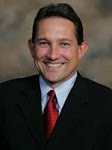
"Sponsored research" continues to be controversial. The topic will be squarely addressed next spring in a Friday March 20, 2009 session of the Defense Research Institute's annual seminar on toxic tort litigation. The full DRI seminar agenda is here, and the session is as described as follows:
Meddling with Science—Is Scientific Research
Manipulated for Purposes of Litigation or Regulation?
Plaintiffs’ lawyers claim that corporations protect their profits
by suppressing or influencing scientific and medical research and
information. Defense lawyers fight what they call “junk science”
offered by plaintiffs’ experts and environmental activists. Do
scientists who participate as experts in litigation tamper with
or improperly influence scientific investigation to bolster the
prosecution or defense of claims in litigation? Do corporations
underwrite research simply to cast doubt on the claims of
environmental advocates and the plaintiffs’ bar, or are they
interested in legitimate research that may rebut unwarranted
claims? Two scientists at the center of this contentious dialogue
will engage in a lively debate.
Speakers are:
David Michaels, Ph.D., MPH, George Washington University
School of Public Health and Health Services, Washington, D.C.
Dennis J. Paustenbach, Ph.D., CIH, DABT, ChemRisk Inc.,
San Francisco, California
Friday, December 12, 2008


Thursday, December 11, 2008
Future Seminar Session on Science Driving Changes in Tort Law
A continuing topic of this blog is exploration of the ways that advances in science will change tort litigation tactics and may change tort law rules. The topic will be squarely addressed next spring in a Friday March 20, 2009 session of the Defense Research Institute's annual seminar on toxic tort litigation. The speaker is the well-known and always interesting Dennis Paustenbach. The full DRI seminar agenda is here, and the session is as described as follows:
Toxicogenetics and Toxicogenomics—Science
Fiction or the Future of Toxic Torts?
The genetic revolution is here and has the potential to transform
toxic tort law as we know it. From biomarkers
to DNA microarrays to individualized genetic testing, there
are technical and scientific advances being made that have
the potential to alter the way in which toxic tort causation
is established. Dr. Paustenbach will dispel the myths and
explain the realities about genomics and toxic torts.
Dennis J. Paustenbach, Ph.D., CIH, DABT, ChemRisk Inc.,
San Francisco, California
Toxicogenetics and Toxicogenomics—Science
Fiction or the Future of Toxic Torts?
The genetic revolution is here and has the potential to transform
toxic tort law as we know it. From biomarkers
to DNA microarrays to individualized genetic testing, there
are technical and scientific advances being made that have
the potential to alter the way in which toxic tort causation
is established. Dr. Paustenbach will dispel the myths and
explain the realities about genomics and toxic torts.
Dennis J. Paustenbach, Ph.D., CIH, DABT, ChemRisk Inc.,
San Francisco, California
Tuesday, December 2, 2008
Sponsored Research - The Conundrum
What to do with sponsored research - take it at face value, disregard it completely, or use it subject to considering whether to reduce its weight due to the sponsorship (assuming the sponsorship is disclosed). The debate today ranges across a wide spectrum of information sources and decision-makers.
Of note yesterday, an NYT article by Reed Abelson reports that the Cleveland Clinic announced plans to make disclosure of all payments from drug companies and other sources. According to the article:
"It appears to be the first such step by a major medical center to disclose the industry relationships of individual doctors. And it comes as the nation’s doctors and hospitals are under mounting pressure to address potential financial conflicts of interest that can occur when they work closely with companies to develop and research new drugs and devices.
The Cleveland Clinic’s Web postings are the most recent part of a conflict-of-interest effort at the clinic after some of its leading doctors came under fire several years ago when the news media disclosed some of their financial links."
On the topic more generally, one good source for general reading is a cogent New York Times article by Adam Liptak regarding the Exxon Valdez case and its footnote 17 regarding the Court's refusal to rely on research sponsored by Exxon. Titled From One Footnote, a Debate Over the Tangles of Law, Science and Money," the article also details a like ruling by Judge Weinstein in a drug class action.
The sponsored research topic also is being aired through symposia, such as Cornell sponsoring a symposium on Empirical Legal Studies (agenda here). There also is a good blog devoted to Empirical Legal Studies.
Of note yesterday, an NYT article by Reed Abelson reports that the Cleveland Clinic announced plans to make disclosure of all payments from drug companies and other sources. According to the article:
"It appears to be the first such step by a major medical center to disclose the industry relationships of individual doctors. And it comes as the nation’s doctors and hospitals are under mounting pressure to address potential financial conflicts of interest that can occur when they work closely with companies to develop and research new drugs and devices.
The Cleveland Clinic’s Web postings are the most recent part of a conflict-of-interest effort at the clinic after some of its leading doctors came under fire several years ago when the news media disclosed some of their financial links."
On the topic more generally, one good source for general reading is a cogent New York Times article by Adam Liptak regarding the Exxon Valdez case and its footnote 17 regarding the Court's refusal to rely on research sponsored by Exxon. Titled From One Footnote, a Debate Over the Tangles of Law, Science and Money," the article also details a like ruling by Judge Weinstein in a drug class action.
The sponsored research topic also is being aired through symposia, such as Cornell sponsoring a symposium on Empirical Legal Studies (agenda here). There also is a good blog devoted to Empirical Legal Studies.
Monday, December 1, 2008
Tort Law & Insurance - How Much CGL Insurance Still Really Exists for Novel Risks ???
Much of the strict liability theory taught in law school in 1980-1983, and still today, invoked a rationale of risk-spreading, and assumed that manufacturers could and would purchase CGL insurance to spread the risk of loss. Risk-spreading of course makes sense, and most individuals will acknowledge that there it is difficult to articulate a moral and rationale basis for insisting that some limited number of unfortunate individuals should alone bear the physical, financial and emotional harms caused by defective products (at least when there is real harm and a real defect).
That said, tort theory needs to reflect the reality that the actual availability of CGL insurance does not always exist, and seems to continue to shrink. Non-availability of coverage dates back to the so-called "pollution exclusions" inserted in the 1970s and 1980s, and then the "asbestos exclusions" that became common in the mid-1980s.
Two recent articles highlight the further shrinkage of CGL coverage. The first is an article by David Lenckus in the December 1, 2008 issue of Business Insurance. Its gist is that CGL insurance is now being significantly limited by some insurers by using terms that preclude coverage for later-acquired operations, at least when the operations are not exactly the same as the current operations. Terms of this sort may well may life tougher for the M & A world.
The second is a blog article from PorterWright regarding insurers starting to issue exclusions that preclude coverage for harms arising from nano particles. Exclusions are being issued because some studies indicate that the risks associated with nano particles may equal or exceed the risks associated with the various types of asbestos fibers.
Article 1
Curb on CGL coverage creeping into market
By DAVE LENCKUS
Dec. 01, 2008
Restrictive commercial general liability insurance policies that are moving into the admitted market worry some experts that more policyholders with tough risks—particularly construction contractors—could unexpectedly find themselves with limited CGL coverage.
Experts also are concerned about the coverage the policies provide, because some critical coverage terms are linked to an insurance industry database that is modified periodically and is not directly accessible by risk managers.
Unlike traditional CGL policies, which provide broad coverage for claims arising from a policyholder's operations—except for excluded risks—the restrictive policies contain an endorsement with a "classification limitation" of operations that underwriters will cover.
Those endorsements are contained in the declaration pages of policies, which otherwise follow the traditional CGL policy language developed by the Insurance Services Office Inc. of Jersey City, N.J. However, ISO did not develop the classification endorsement, a spokeswoman said.
Under the policies, if a policyholder adds operations without notifying its underwriter, or if the policyholder's current operations do not fit squarely within the classification limitations, then related losses would not be covered, experts said.
Policyholders also could not expect insurers to provide a defense against those claims, noted Joe Underwood, a senior consultant with Albert Risk Management Consultants in Needham, Mass.
Such policies are common in the surplus lines market but have now begun to creep into admitted coverage, potentially leaving some buyers with less coverage than they thought they had, experts say.
Nonadmitted insurers have been writing the restrictive CGL coverage for construction risks for a few years, said Bruce MacDonald, also a senior consultant with Albert Risk Management.
And John DiBiasi, president, excess and surplus lines for XL America Inc. in Exton, Pa., said XL America writes the restrictive coverage for many other tough risks, including real estate ventures.
But policyholder attorney Kevin Connolly, a partner with Anderson Kill & Olick P.C. in New York, said he first saw policies from more than one insurer with the endorsements in the past few months and that the policies have not "carried the stamp of a nonadmitted carrier."
An XL America standard lines market subsidiary, Greenwich Insurance Co. in Stamford, Conn., writes CGL policies with the restrictive coverage, according to documents that Business Insurance obtained. Greenwich is admitted in all 50 states.
An XL America spokeswoman did not know how long Greenwich had been writing the coverage.
But several brokers at major brokerages said they had seen the restrictive coverage only in the surplus lines market.
Major change
The classification endorsement "turns the CGL policy upside down," Mr. Connolly asserted.
A CGL policy "should be covering everything you do, unless there's fraud in the policy application," said John Lubatti, an Atlanta-based senior vp in the casualty practice at Willis HRH, a unit of Willis Group Holdings Ltd.
XL America's Mr. DiBiasi disagreed. The classification limitations include all of the typical operations in which a policyholder would be involved, he said. But the limitations protect an insurer from being drawn into covering operations it never wanted to insure, he said.
Mr. Connolly said the endorsement is so unusual that policyholders were unaware of it until after he had conducted routine policy reviews at the outset of construction projects.
"That's 100% true," Mr. MacDonald said. "That's the principal part of the concern of this type of endorsement." He said he has encountered the endorsement when construction project owners have retained him to review contractors' coverage that would name the owners as additional insureds. Contractors often did not realize their coverage was restricted, he said.
Buyers of surplus lines coverage typically have their "antennae up" for unusual endorsements, but risk managers do not expect such coverage limitations from admitted market insurers, Willis HRH's Mr. Lubatti said.
XL America's Mr. DiBiasi asserted that buyers should either carefully read all of their policies or hold their brokers accountable for explaining their coverage.
Experts say another problem with the restrictive policies is that they do not give policyholders the flexibility to adjust their insurance to cover all operations.
With traditional CGL policies, an insurer typically conducts a premium audit and then requires a policyholder that adds operations during its policy period to pay additional premium to cover those operations, risk experts say.
Under the more restrictive policies, however, a policyholder with operations not covered by its policy is not given that opportunity, Mr. DiBiasi and other experts explained.
Mr. DiBiasi said the premium audit process should not force insurers to cover any risk.
But understanding what operations are and are not covered is somewhat challenging for policyholders, experts said. The policies do not clearly spell out which operations are covered in the "classification limitation," they said.
Instead, the policies refer policyholders to an ISO database for additional information, but that database is not open to policyholders. Policyholders could ask their brokers for that information, because brokers have access to the database, experts noted.
Still, experts raised concerns about insurers linking policyholder coverage to a database in which definitions of covered operations could be modified between a policy's inception date and the time a claim is filed. A modification could leave a policyholder with no coverage for operations that originally were covered, they said.
"We have to trust the insurance company to do the right thing when a claim comes in," said Mr. Connolly, the policyholder attorney.
XL America's Mr. DiBiasi said, "The policy stands as it was issued and will be handled for claims on the basis as it was issued even years after the fact."
He added that "ISO changes apply only to policies going forward and only if a specific company adopts the change."
That said, tort theory needs to reflect the reality that the actual availability of CGL insurance does not always exist, and seems to continue to shrink. Non-availability of coverage dates back to the so-called "pollution exclusions" inserted in the 1970s and 1980s, and then the "asbestos exclusions" that became common in the mid-1980s.
Two recent articles highlight the further shrinkage of CGL coverage. The first is an article by David Lenckus in the December 1, 2008 issue of Business Insurance. Its gist is that CGL insurance is now being significantly limited by some insurers by using terms that preclude coverage for later-acquired operations, at least when the operations are not exactly the same as the current operations. Terms of this sort may well may life tougher for the M & A world.
The second is a blog article from PorterWright regarding insurers starting to issue exclusions that preclude coverage for harms arising from nano particles. Exclusions are being issued because some studies indicate that the risks associated with nano particles may equal or exceed the risks associated with the various types of asbestos fibers.
Article 1
Curb on CGL coverage creeping into market
By DAVE LENCKUS
Dec. 01, 2008
Restrictive commercial general liability insurance policies that are moving into the admitted market worry some experts that more policyholders with tough risks—particularly construction contractors—could unexpectedly find themselves with limited CGL coverage.
Experts also are concerned about the coverage the policies provide, because some critical coverage terms are linked to an insurance industry database that is modified periodically and is not directly accessible by risk managers.
Unlike traditional CGL policies, which provide broad coverage for claims arising from a policyholder's operations—except for excluded risks—the restrictive policies contain an endorsement with a "classification limitation" of operations that underwriters will cover.
Those endorsements are contained in the declaration pages of policies, which otherwise follow the traditional CGL policy language developed by the Insurance Services Office Inc. of Jersey City, N.J. However, ISO did not develop the classification endorsement, a spokeswoman said.
Under the policies, if a policyholder adds operations without notifying its underwriter, or if the policyholder's current operations do not fit squarely within the classification limitations, then related losses would not be covered, experts said.
Policyholders also could not expect insurers to provide a defense against those claims, noted Joe Underwood, a senior consultant with Albert Risk Management Consultants in Needham, Mass.
Such policies are common in the surplus lines market but have now begun to creep into admitted coverage, potentially leaving some buyers with less coverage than they thought they had, experts say.
Nonadmitted insurers have been writing the restrictive CGL coverage for construction risks for a few years, said Bruce MacDonald, also a senior consultant with Albert Risk Management.
And John DiBiasi, president, excess and surplus lines for XL America Inc. in Exton, Pa., said XL America writes the restrictive coverage for many other tough risks, including real estate ventures.
But policyholder attorney Kevin Connolly, a partner with Anderson Kill & Olick P.C. in New York, said he first saw policies from more than one insurer with the endorsements in the past few months and that the policies have not "carried the stamp of a nonadmitted carrier."
An XL America standard lines market subsidiary, Greenwich Insurance Co. in Stamford, Conn., writes CGL policies with the restrictive coverage, according to documents that Business Insurance obtained. Greenwich is admitted in all 50 states.
An XL America spokeswoman did not know how long Greenwich had been writing the coverage.
But several brokers at major brokerages said they had seen the restrictive coverage only in the surplus lines market.
Major change
The classification endorsement "turns the CGL policy upside down," Mr. Connolly asserted.
A CGL policy "should be covering everything you do, unless there's fraud in the policy application," said John Lubatti, an Atlanta-based senior vp in the casualty practice at Willis HRH, a unit of Willis Group Holdings Ltd.
XL America's Mr. DiBiasi disagreed. The classification limitations include all of the typical operations in which a policyholder would be involved, he said. But the limitations protect an insurer from being drawn into covering operations it never wanted to insure, he said.
Mr. Connolly said the endorsement is so unusual that policyholders were unaware of it until after he had conducted routine policy reviews at the outset of construction projects.
"That's 100% true," Mr. MacDonald said. "That's the principal part of the concern of this type of endorsement." He said he has encountered the endorsement when construction project owners have retained him to review contractors' coverage that would name the owners as additional insureds. Contractors often did not realize their coverage was restricted, he said.
Buyers of surplus lines coverage typically have their "antennae up" for unusual endorsements, but risk managers do not expect such coverage limitations from admitted market insurers, Willis HRH's Mr. Lubatti said.
XL America's Mr. DiBiasi asserted that buyers should either carefully read all of their policies or hold their brokers accountable for explaining their coverage.
Experts say another problem with the restrictive policies is that they do not give policyholders the flexibility to adjust their insurance to cover all operations.
With traditional CGL policies, an insurer typically conducts a premium audit and then requires a policyholder that adds operations during its policy period to pay additional premium to cover those operations, risk experts say.
Under the more restrictive policies, however, a policyholder with operations not covered by its policy is not given that opportunity, Mr. DiBiasi and other experts explained.
Mr. DiBiasi said the premium audit process should not force insurers to cover any risk.
But understanding what operations are and are not covered is somewhat challenging for policyholders, experts said. The policies do not clearly spell out which operations are covered in the "classification limitation," they said.
Instead, the policies refer policyholders to an ISO database for additional information, but that database is not open to policyholders. Policyholders could ask their brokers for that information, because brokers have access to the database, experts noted.
Still, experts raised concerns about insurers linking policyholder coverage to a database in which definitions of covered operations could be modified between a policy's inception date and the time a claim is filed. A modification could leave a policyholder with no coverage for operations that originally were covered, they said.
"We have to trust the insurance company to do the right thing when a claim comes in," said Mr. Connolly, the policyholder attorney.
XL America's Mr. DiBiasi said, "The policy stands as it was issued and will be handled for claims on the basis as it was issued even years after the fact."
He added that "ISO changes apply only to policies going forward and only if a specific company adopts the change."
Tuesday, November 18, 2008
New Asbestos Claims - in Korea
Popular wisdom has it that that the types of tort litigation we have in the US are abhorred by the rest of the world. The reality, however, is that the world is changing, as is evidenced by today's news including an article from the Mainiachi Daily News regarding the filing of two new asbestos claims in Korea. The full text is set out below.
_________________________________________________________________
Bereaved families of 2 South Koreans sue firms over asbestos deaths
SEOUL -- The bereaved families of two South Korean residents who died from mesothelioma after living near a factory producing asbestos have filed a damages suit against three parties including Nichias Corp., it has emerged.
In the suit filed at the Busan district court, plaintiffs demanded companies including Tokyo-based Nichias Corp. pay 200 million won (about 14 million yen) each in compensation.
It is the first time that local residents near an asbestos factory have filed a damages suit in South Korea. Local environmentalist groups and former residents near the factory have also joined hands in seeking relief measures.
The plant -- an asbestos spinning factory -- was run by Jeil Asbestos (present-day Jeil E&S), which was jointly established by Nippon Asbestos (forerunner of Nichias) and a South Korean company near Busan city hall in 1971. The plant continued to operate until 1992.
One of the male victims was living 900 meters away from the factory for seven years in the 1980s and subsequently died in 2006 from mesothelioma at age 44. The other victim was living 2.1 kilometers away from the factory for four years during the 1970s and died in 2002 from mesothelioma at age 62.
On Nov. 13 this year, their bereaved families sued Nippon Asbestos and Jeil E&S, as well as the South Korean government for "failing to take measures to improve the factory."
According to the complaint, the plaintiffs claim that Nichias established the joint venture while knowing the toxicity of asbestos but concealed it from the public.
"Nichias moved (its operations) to Busan after regulations against asbestos particulates were strengthened in Japan and it became difficult to produce asbestos in the country. The company now also operates plants in Indonesia and other Third World countries. We want to prevent the spread of pollution exports through the suit," said a representative of a Busan-based environmental group supporting the plaintiffs.
A representative of Nichias said, "We have not received the complaint and have not confirmed the suit. Those involved in the joint venture have already retired and we do not know the details."
In a related development in December last year, the Daegu district court in South Korea ordered Jeil E&S to pay 158 million won in compensation to a female former employee of its Busan factory who died from mesothelioma. The court case has subsequently prompted a series of damages suits against the company by its former employees.
Click here for the original Japanese story
(Mainichi Japan) November 18, 2008
_________________________________________________________________
Bereaved families of 2 South Koreans sue firms over asbestos deaths
SEOUL -- The bereaved families of two South Korean residents who died from mesothelioma after living near a factory producing asbestos have filed a damages suit against three parties including Nichias Corp., it has emerged.
In the suit filed at the Busan district court, plaintiffs demanded companies including Tokyo-based Nichias Corp. pay 200 million won (about 14 million yen) each in compensation.
It is the first time that local residents near an asbestos factory have filed a damages suit in South Korea. Local environmentalist groups and former residents near the factory have also joined hands in seeking relief measures.
The plant -- an asbestos spinning factory -- was run by Jeil Asbestos (present-day Jeil E&S), which was jointly established by Nippon Asbestos (forerunner of Nichias) and a South Korean company near Busan city hall in 1971. The plant continued to operate until 1992.
One of the male victims was living 900 meters away from the factory for seven years in the 1980s and subsequently died in 2006 from mesothelioma at age 44. The other victim was living 2.1 kilometers away from the factory for four years during the 1970s and died in 2002 from mesothelioma at age 62.
On Nov. 13 this year, their bereaved families sued Nippon Asbestos and Jeil E&S, as well as the South Korean government for "failing to take measures to improve the factory."
According to the complaint, the plaintiffs claim that Nichias established the joint venture while knowing the toxicity of asbestos but concealed it from the public.
"Nichias moved (its operations) to Busan after regulations against asbestos particulates were strengthened in Japan and it became difficult to produce asbestos in the country. The company now also operates plants in Indonesia and other Third World countries. We want to prevent the spread of pollution exports through the suit," said a representative of a Busan-based environmental group supporting the plaintiffs.
A representative of Nichias said, "We have not received the complaint and have not confirmed the suit. Those involved in the joint venture have already retired and we do not know the details."
In a related development in December last year, the Daegu district court in South Korea ordered Jeil E&S to pay 158 million won in compensation to a female former employee of its Busan factory who died from mesothelioma. The court case has subsequently prompted a series of damages suits against the company by its former employees.
Click here for the original Japanese story
(Mainichi Japan) November 18, 2008
Wednesday, November 12, 2008
Asbestos Litigation - Will the UK Reinstate Compensation for Pleural Plaques ?
How should governments and courts decide/define when persons have a condition that should warrant payment of compensation through tort claims or through government agency programs ? The question is relevant in many settings, but the issues I know best relate to asbestos litigation. The question is presently the subject of discussion in a variety of jurisdictions and contexts.
Issues of this sort are under discussion in the UK. There, asbestos-related cancers are increasing significantly, and so are lawsuits seeking damages for the cancers. Paying compensation for cancer is easy to understand in many instances. However, some groups want to go further. Thus, some constituencies are urging the UK government (Britain and Wales, for this purpose) to use legislation to change recent case law so that payments may or will be paid to persons who can be deemed to have a condition known as "pleural plaques." Plaques are marks on a lining outside the lung, and the plaques are markers of past asbestos inhalation, but do not cause any impairment except, perhaps, in unique circumstances.
These issues arise because the House of Lords issued an opinion holding that common law compensation was not payable, concluding in essene that plaques do not constitute an injury. Subsequently, the UK Ministry of Justice issued a 9 July 2008 "Consultation" paper asking for views on whether the UK government should use legislation to allow or facilitate payment of compensation to persons with pleural plaques. The UK Consultation paper is a lengthy document setting out information about the issues, and five possible alternatives for government action, with a cost estimate for each of the five proposals. The government's Consultation paper is available online at: http://www.justice.gov.uk/publications/cp1408.htm.
Many papers were submitted on both sides of the issues, and the collection will be posted here as time permits. For now, I've posted online an image of the paper I submitted in opposition to the two most extreme aspects of the proposals set out in the Consultation paper.
The UK Government is expected to submit a reply to all the papers, and the reply is expected during November 2008.
Issues of this sort are under discussion in the UK. There, asbestos-related cancers are increasing significantly, and so are lawsuits seeking damages for the cancers. Paying compensation for cancer is easy to understand in many instances. However, some groups want to go further. Thus, some constituencies are urging the UK government (Britain and Wales, for this purpose) to use legislation to change recent case law so that payments may or will be paid to persons who can be deemed to have a condition known as "pleural plaques." Plaques are marks on a lining outside the lung, and the plaques are markers of past asbestos inhalation, but do not cause any impairment except, perhaps, in unique circumstances.
These issues arise because the House of Lords issued an opinion holding that common law compensation was not payable, concluding in essene that plaques do not constitute an injury. Subsequently, the UK Ministry of Justice issued a 9 July 2008 "Consultation" paper asking for views on whether the UK government should use legislation to allow or facilitate payment of compensation to persons with pleural plaques. The UK Consultation paper is a lengthy document setting out information about the issues, and five possible alternatives for government action, with a cost estimate for each of the five proposals. The government's Consultation paper is available online at: http://www.justice.gov.uk/publications/cp1408.htm.
Many papers were submitted on both sides of the issues, and the collection will be posted here as time permits. For now, I've posted online an image of the paper I submitted in opposition to the two most extreme aspects of the proposals set out in the Consultation paper.
The UK Government is expected to submit a reply to all the papers, and the reply is expected during November 2008.
Monday, November 3, 2008
Europe's REACH Regulations for Chemicals - Small and Mid-Sized US Companies Should Avoid Missing the December 1, 2008 Deadline for Registration
Lawyer friends from Europe (Hans-Josef Vogel) and the States (Dan Hull) tell me that many small and mid-sized American companies are not paying enough attention to the vast impact of Europe's new REACH regulations that apply to entities that send or import "substances" into the EU. "Substances" mainly means "chemicals" but is much broader in application since it applies to items such as incense or candles that involve chemical reactions produced by fire. So, in an article just published in Corporate Counsel magazine, I touched on the topic to try to help get the word out for those not yet paying attention to REACH and its important December 1 deadline to "register." The benefit of registering now is that it gives registered companies a chance to save potentially a lot of money down the line by avoiding regulatory hoops and instead being allowed to "piggyback" on information submitted by the large chemical companies and other.
For more specifics, go to the link above for "Hanjo's" law firm and search on REACH (yes, they have English versions), or click on the following link for a summary article explaining REACH and the rules regarding registration. Messrs. Gerhold and Roeder of the firm are the resident experts.
http://www.avocado-law.com/index.php?id=199&tx_ttnews[backPid]=119&tx_ttnews[day]=25&tx_ttnews[month]=10&tx_ttnews[tt_news]=705&tx_ttnews[year]=2007&cHash=97edacf350
For more specifics, go to the link above for "Hanjo's" law firm and search on REACH (yes, they have English versions), or click on the following link for a summary article explaining REACH and the rules regarding registration. Messrs. Gerhold and Roeder of the firm are the resident experts.
http://www.avocado-law.com/index.php?id=199&tx_ttnews[backPid]=119&tx_ttnews[day]=25&tx_ttnews[month]=10&tx_ttnews[tt_news]=705&tx_ttnews[year]=2007&cHash=97edacf350
Subscribe to:
Posts (Atom)

 Posts
Posts