Friday, July 31, 2009
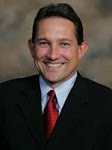
Judge Delaughter Pleads Guilty to Putting Justice on Sale for Dickie Scruggs
This NYT article notes the guilty plea of Judge DeLaughter for obstruction of justice for tipping the scales in favor of asbestos and tobacco maven Dickie Scruggs. Stories of this sort are unfortunate reminders that John Grisham will never run out of grist for his novels exploring the many seamy sides of trying to dance on both sides of the many sharp edges in our legal system .


Thursday, July 30, 2009
The Next Asbestos Still Is More Asbestos
For years, many have posed the question: what is the next "asbestos" ?
The answer usually has been: more asbestos.
Here is one recent example of why the answer remains largely true. The example is a plaintiff's firm press release urging the need to treat taconite as if it is asbestos even though its never before been classified as asbestos. There are some real health issues as to taconite, which you can see from this University of Minnesota web page addressing an ongoing study. The point here though is that the next asbestos is more asbestos. The second point is that the underlying JOEH article it cites purports to find a medical link between the presence of pleural plaques and pain in this particular person. The plaintiff's bar no doubt will continue to use this article as part of the always ongoing campaign to find reasons why money should be paid to persons without actual impairment of their day to day activities.
The answer usually has been: more asbestos.
Here is one recent example of why the answer remains largely true. The example is a plaintiff's firm press release urging the need to treat taconite as if it is asbestos even though its never before been classified as asbestos. There are some real health issues as to taconite, which you can see from this University of Minnesota web page addressing an ongoing study. The point here though is that the next asbestos is more asbestos. The second point is that the underlying JOEH article it cites purports to find a medical link between the presence of pleural plaques and pain in this particular person. The plaintiff's bar no doubt will continue to use this article as part of the always ongoing campaign to find reasons why money should be paid to persons without actual impairment of their day to day activities.
Monday, July 27, 2009
Tort Settlement Secrecy - Can Government Lawyers Ethically Use Settlement Agreement Terms That Purport to Limit Future Use of The Settlement ?
Is it ethical for government lawyers to demand, or a plaintiff's lawyer to sign, a tort claim settlement agreement that includes terms that purport to limit the use of the settlement agreement in future litigation? "No" is the answer provided in this article addressing the issue in the context of government and private lawyers involved in tort and civil rights claims against the City of Chicago. The article is:
SETTLEMENTS YOU CAN’T SIGN: ETHICAL
IMPLICATIONS OF CHICAGO’S MACHINERY OF DENIAL
By Craig B. Futterman, Jason E. Huber, and Pier Petersen
The article is interesting and valuable in multiple ways. One is its discussion of the settlement secrecy actics formerly used by the City of Chicago, but now apparently abandoned. More value lies in its footnote 32 citation to laws around the US that in one way or another require public access to most settlement agreements arising from tort claims against the government. Also valuable is its closing reminder/discussion of the many cases in which courts have enforced similar unethical settlement agreement terms despite the seeming perversity of that result.
Hat tip to Jerry Crimmins for reporting on the existence of the article and other related background facts in a July 17 , 2009 article in the Chicago Daily Law Bulletin.
SETTLEMENTS YOU CAN’T SIGN: ETHICAL
IMPLICATIONS OF CHICAGO’S MACHINERY OF DENIAL
By Craig B. Futterman, Jason E. Huber, and Pier Petersen
The article is interesting and valuable in multiple ways. One is its discussion of the settlement secrecy actics formerly used by the City of Chicago, but now apparently abandoned. More value lies in its footnote 32 citation to laws around the US that in one way or another require public access to most settlement agreements arising from tort claims against the government. Also valuable is its closing reminder/discussion of the many cases in which courts have enforced similar unethical settlement agreement terms despite the seeming perversity of that result.
Hat tip to Jerry Crimmins for reporting on the existence of the article and other related background facts in a July 17 , 2009 article in the Chicago Daily Law Bulletin.
Thursday, July 23, 2009
Eternit Asbestos Defendants Set for Criminal Trial in Italy in December 2009
News articles here (best one), here and here are out with news from Italy that the criminal and civil trial for the Eternit asbestos defendants is to start December 10, 2009. The date was set after the trial court denied objections by the defendants, including objections to the location of the trial. The trial will not end quickly - Italian trials in some ways move slowly and include a variety of procedures not directly comparable to American trials.
The criminal and civil claims arise from something around 2,500 injuries and deaths alleged to arise from Italian manufacturing operations of the global Eternit businesses. For more background, a prior post here described the criminal and civil claims being pursued in Italy against former officers of Eternit, and includes links to background articles. There are myriad Eternit entities around the world, and they are not all part of one corporate family. However, most have some roots in manufacturing asbestos-cement products.
The claims and attendant publicity are noteworthy for a variety of reasons. One is that the US media now has company with other global media that devote articles, blogs and websites to "asbestos exposure" and "the dangers of asbestos. " To test the point, try Google searches on "eternit," "schmidheiny" (the last name of one of the defendants) or "amiante" (asbestos). Publicity and fear tend to lead to increased tort litigation.
Another point is that it is increasingly easy for claimant's group to disseminate information that may damage corporate reputation in general and reduce the overall enterprise value. Consider, for example, this website that provides a basic account of the Eternit proceedings and seeks to heap shame on Eternit. Considered in the light of the events of the past year, and this type of an event, one can readily grasp why the SEC has made statements to the media and proposed new rules (go here) regarding public disclosure of the board's role in risk management and the overall corporate risk management strategy.
The criminal and civil claims arise from something around 2,500 injuries and deaths alleged to arise from Italian manufacturing operations of the global Eternit businesses. For more background, a prior post here described the criminal and civil claims being pursued in Italy against former officers of Eternit, and includes links to background articles. There are myriad Eternit entities around the world, and they are not all part of one corporate family. However, most have some roots in manufacturing asbestos-cement products.
The claims and attendant publicity are noteworthy for a variety of reasons. One is that the US media now has company with other global media that devote articles, blogs and websites to "asbestos exposure" and "the dangers of asbestos. " To test the point, try Google searches on "eternit," "schmidheiny" (the last name of one of the defendants) or "amiante" (asbestos). Publicity and fear tend to lead to increased tort litigation.
Another point is that it is increasingly easy for claimant's group to disseminate information that may damage corporate reputation in general and reduce the overall enterprise value. Consider, for example, this website that provides a basic account of the Eternit proceedings and seeks to heap shame on Eternit. Considered in the light of the events of the past year, and this type of an event, one can readily grasp why the SEC has made statements to the media and proposed new rules (go here) regarding public disclosure of the board's role in risk management and the overall corporate risk management strategy.
Wednesday, July 22, 2009
Asbestos - London Delays (Again) On Providing a Formal Position on Pleural Plaques Compensation But Offers Some Hints as to What's Ahead
Contrary to prior statements, Lord Chancellor Jack Straw of the Ministry of Justice said yesterday in Parliament that the government's formal follow up on the pleural plaques consultation will be provided "after" the summer recess. He indicated the response will include steps aimed at improving tracking of records that will assist plaintiffs, which are records regarding employment locations and employer insurance. He also intimated plans to have the UK lead the way on asbestos-related medical research. Specifically, he said:
"Jack Straw (Lord Chancellor, Ministry of Justice; Blackburn, Labour)
On 30 June, the Government published to the House two reports on the medical aspects of pleural plaques, one from the chief medical officer's expert adviser and a second from the Industrial Injuries Advisory Council. The Government will give further consideration to the issue of compensation for people diagnosed with pleural plaques before publishing a final response after the recess.
In addition, we are actively considering measures to make the United Kingdom a global leader in research on the alleviation, prevention and cure of asbestos-related diseases, and to help speed up compensation claims for those who develop serious asbestos-related diseases such as mesothelioma. The latter includes examination of the process for tracking and tracing employment and insurance records, as well as looking into the support given to individuals who are unable to trace such records." (emphasis added)
Further discussion was as follows, or read it online here at the website of "They Work for You."
Stephen Hepburn (Jarrow, Labour)
Will the Secretary of State assure us today that pleural plaques sufferers will not be treated any differently in terms of compensation regardless of whether they lodged their claim prior to the 2007 Law Lords judgment or after it and of whether live in Scotland, England, Wales or Northern Ireland?
Jack Straw (Lord Chancellor, Ministry of Justice; Blackburn, Labour)
As I said, we are giving active consideration to that. I understand my hon. Friend's concern, but we have to make our own decisions in this jurisdiction. I am sure that, in turn, my hon. Friend will wish to pay very careful attention to the conclusions of the expert appointed by the chief medical officer and to IIAC; they came to unanimous conclusions, including those backed by the three trade union representatives.
Nigel Dodds (Belfast North, DUP)
Following on from the Scottish Government's decision to legislate in this area, did the Secretary of State note the recommendation of the relevant Department in the Northern Ireland Assembly that there should be a change in legislation to allow those with pleural plaques to sue in the courts and get compensation? Also, following on from what Mr. Hepburn said, whereas the regions of devolved government will have taken action to redress this terrible injustice to those who suffer from pleural plaques, will it not be perverse if the only area where people cannot claim is England and Wales?
Jack Straw (Lord Chancellor, Ministry of Justice; Blackburn, Labour)
As I said, or implied, in answer to my hon. Friend, it is the essence of devolution that different decisions can be made. It would be very curious indeed if the result of devolution was that each jurisdiction had to follow the decisions of the other. We are seeking to consider the evidence very carefully, and I commend the evidence of the chief medical officer's expert's report and IIAC to all hon. Members, whichever constituency they represent.
"Jack Straw (Lord Chancellor, Ministry of Justice; Blackburn, Labour)
On 30 June, the Government published to the House two reports on the medical aspects of pleural plaques, one from the chief medical officer's expert adviser and a second from the Industrial Injuries Advisory Council. The Government will give further consideration to the issue of compensation for people diagnosed with pleural plaques before publishing a final response after the recess.
In addition, we are actively considering measures to make the United Kingdom a global leader in research on the alleviation, prevention and cure of asbestos-related diseases, and to help speed up compensation claims for those who develop serious asbestos-related diseases such as mesothelioma. The latter includes examination of the process for tracking and tracing employment and insurance records, as well as looking into the support given to individuals who are unable to trace such records." (emphasis added)
Further discussion was as follows, or read it online here at the website of "They Work for You."
Stephen Hepburn (Jarrow, Labour)
Will the Secretary of State assure us today that pleural plaques sufferers will not be treated any differently in terms of compensation regardless of whether they lodged their claim prior to the 2007 Law Lords judgment or after it and of whether live in Scotland, England, Wales or Northern Ireland?
Jack Straw (Lord Chancellor, Ministry of Justice; Blackburn, Labour)
As I said, we are giving active consideration to that. I understand my hon. Friend's concern, but we have to make our own decisions in this jurisdiction. I am sure that, in turn, my hon. Friend will wish to pay very careful attention to the conclusions of the expert appointed by the chief medical officer and to IIAC; they came to unanimous conclusions, including those backed by the three trade union representatives.
Nigel Dodds (Belfast North, DUP)
Following on from the Scottish Government's decision to legislate in this area, did the Secretary of State note the recommendation of the relevant Department in the Northern Ireland Assembly that there should be a change in legislation to allow those with pleural plaques to sue in the courts and get compensation? Also, following on from what Mr. Hepburn said, whereas the regions of devolved government will have taken action to redress this terrible injustice to those who suffer from pleural plaques, will it not be perverse if the only area where people cannot claim is England and Wales?
Jack Straw (Lord Chancellor, Ministry of Justice; Blackburn, Labour)
As I said, or implied, in answer to my hon. Friend, it is the essence of devolution that different decisions can be made. It would be very curious indeed if the result of devolution was that each jurisdiction had to follow the decisions of the other. We are seeking to consider the evidence very carefully, and I commend the evidence of the chief medical officer's expert's report and IIAC to all hon. Members, whichever constituency they represent.
Sunday, July 19, 2009
China Cracking Down on Civil Rights Lawyers
This article reports that China is taking away law licenses from and fining lawyers who have been filing civil rights claims and claims for victims of the "tainted milk" scandal. Reading this type of news certainly provides a moment to pause and reflect on how lucky we are in the US, and the great value of a free press able to report on developments and occurrences in our legal system.
Saturday, July 18, 2009
Corruption Statutes - Are They Bad Policy and Trade Sanctions ?
Are anti-bribery statutes actually trade sanctions that discourage investment, and should such statues be modifed? For more on that topic, see this post at Conglomerate and its link to a scholarly article on the topic.
Subscribe to:
Posts (Atom)

 Posts
Posts