Friday, December 25, 2009


Tuesday, December 22, 2009
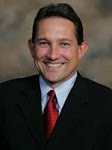
Pursuing Passions and Dreams By Joining a New Law Firm and Expanding My Practice
With some regrets but also great excitement, I’ve decided to leave Butler Rubin Saltarelli & Boyd as of the end of the year. It’s been a great 10 years at BRS & B. The firm is full of great people and lawyers who’ve been very good to me, and that support continues even now. But, serendipity and other forces are at work, so I’ve decided to start 2010 by becoming a partner at Childress Duffy Goldblatt. Known as CDG, the firm is composed of 20 or so lawyers, with the main office in Chicago and significant offices in Florida. Further expansion is envisioned.
Like BRS & B, my new firm is mainly a litigation boutique, but happily also includes a small but strong transactional practice. CDG, however, will be different for me because the firm includes two long-time friends with some shared dreams, and CDG sues insurers instead of representing them. CDG also is very creative and open to new ideas and approaches. Thus, the partners are involved in litigation-related consultancies and prefer to share risks and rewards with clients and others through contingent fees, joint ventures, and other creative approaches.
Here’s the situation in a nutshell. I’m making this move:
• To pursue dreams in partnership with two great lawyers and friends I’ve known since law school and the first years of practice
• To continue my current commercial, mass tort and legacy liability work, but with materially greater flexibility to handle cases through alternative fee arrangements
• To help expand CDG’s practice representing both corporations and individuals with issues regarding insurance policies, including CGL, D & O, property, business interruption, health and other types of insurance policies
• To help expand the business of a related consulting company known as Risk Assessment & Transfer International, which provides pre-loss creation and archiving of critical evidence and documents, and consults on risk-related issues, including identifying emerging risks, spotting unseen risks inherent in old and new business structures, and negotiating specific policy language to avoid issues
• To help expand CDG’s contingent fee and/or pro bono practice suing insurers and others when insurance policies are illegally rescinded via “post-claim underwriting” or other unfair practices after submission of claims for expensive treatments for cancer or other diseases
• To use my passion for science and law to help expand CDG’s contingent fee and/or pro bono practice suing insurance companies or health care plans for individuals when they are denied medical treatments such as bone marrow transplants
As of January 3, the cell phone number stays the same, but my new office information will be:
Kirk T. Hartley
Childress Duffy Goldblatt
515 N. State Street – Suite 2200
Chicago, IL 60654
(Direct) 312-494-0206
(Fax) 312-494-0202
(Cell) 312-802-4471
khartley@cdglawyers.com
For those who may be interested, the following text further explains the reasons for my move to CDG, and explains more about its practices and our plans.
Creativity and Flexibility: The opportunity to join CDG is irresistible because it offers the opportunity to pursue dreams in partnership with two long-time friends, TJ Loucks and Mike Childress. TJ and I became friends in law school and were roommates for several years. TJ introduced me to Mike, and various adventures were shared during our younger days. Both TJ and Mike are great people and lawyers. Perhaps better yet, both like to dream, and are highly creative and flexible. Those characteristics are embedded in the firm’s DNA due to Mike founding the firm, and TJ being the Managing Partner.
CDG’s litigation focus of course meshes well with my twenty-five years in commercial, mass tort and legacy liability litigation. For commercial litigation, CDG’s flexibility is great because its lawyers have tried a wide range of commercial cases, and CDG offers greater flexibility to share risks through contingent fee and other alternative fee arrangements.
Insurance and Corporate Legacy Liability Issues: During the 25 years I’ve spent representing manufacturing conglomerates and individual corporations, a dominant factor always has been obtaining insurance monies or other sources of payment for defense and indemnity expenses for underlying “long tail torts.” I’ve also spent much time in negotiations, arbitrations and trials to resolve myriad “shared insurance” issues that arise from conglomerates, environmental claims and other long-tail tort claims. CDG offers significant new opportunities to more effectively pursue insurance-related issues for clients because CDG’s lawyers already are involved in a wide range of insurance coverage litigation against insurers, including obtaining coverage under CGL, D&O, property, business interruption, and other insurance policies. The firm’s lawyers also have great depth in pursuing bad faith claims. The expectation is that I will add value to CDG with my experience in and knowledge of “shared insurance” issues, coverage in place agreements, and issues regarding whether underlying defense counsel are allowed to exercise their independent judgment in defending underlying cases. We also expect to build on our mutual experiences with insurance insolvencies, run-offs, and solvent and insolvent schemes of arrangement.
We also expect to further build CDG’s significant national presence bringing claims for property owners that suffer heavy losses but are unable to obtain fair compensation through the insurance adjustment process. CDG’s clients are nationwide, and include Fortune 500 companies, commercial and residential property owners of buildings (e.g. condominiums, hotels) damaged by weather, as well as processing facilities and factories damaged by explosions, fires or other problems that interrupt business operations. CDG takes on these and other claims on a contingent fee or hourly fee basis. Named partner Mike Duffy loves to try cases anywhere, anytime, and I’m looking forward to teaming with Mike and the rest of the trial lawyers.
Risk Management and Consulting: CDG’s lawyers are well ahead of the curve in understanding the importance of risk management, and providing consulting services aimed at spotting and avoiding problems, as well as maximizing insurance recoveries when losses do occur. The consulting business, Risk Assessment & Transfer International, includes both non-lawyers and lawyers who advise on a wide range of risk management issues. For example, Risk’s consultants help identify risks that ordinarily might be missed, and help negotiate better language for some aspects of some insurance policies. Risk’s consultants also work with clients on pre-litigation record-creation and record-keeping needed in order to be prepared for disasters by already having built a file of trial-ready evidence. “Risk” also undertakes joint venture risk management programs with significant engineering and mechanical firms and other lawyers. The entire approach is broad in scope, which is refreshing and seems especially key in light today’s vastly increased focus on active, wide-ranging risk management. Hopefully, I will add value to Risk through my years of experience with issues arising from mass tort claims, m & a transactions, indemnification rights and obligations, conglomerates, and “shared insurance” issues, among other legacy liability issues. Risk consultants also will seek to educate clients about their rights with respect to insurance run-offs, insolvencies and schemes of arrangement.
Science and Disease: CDG also offers the opportunity to do more with my passion for science and law through advocacy for persons confronting cancer or other serious diseases. CDG already is involved in contingency fee and/or pro bono work for disease and disability victims when insurers rescind health care or other insurance policies, or refuse to approve or pay for needed therapy. CDG also is supporting new, related pro bono initiatives that will start in 2010. Although there are of course responsible insurers, I’m excited to join in asserting claims against irresponsible insurers and their actions because I’ve personally observed the physical and mental anguish caused by irresponsible actions blocking timely and proper care for individuals facing diseases such as cancer and Alzheimer’s. This area also is exciting because it’s plain there are enormous changes ahead for both health care and science, and it’s inevitable that new issues will divide insureds, hospitals, doctors and insurers, regardless of exactly how the effort ends with respect to federal health care legislation. To say the least, I’m enthusiastic about joining CDG’s teams working on existing and future cases for cancer patients and others, and look forward to involvement in new issues as science and law push forward.
Mass Torts, Due Process, Bankruptcies and Future Claimants: CDG’s practice areas also align with my personal focus on mass tort bankruptcy and mass tort settlement issues, including RAND’s important new study on asbestos bankruptcy trusts. The flexibility of CDG will provide additional opportunities to pursue my interests in working towards bankruptcies, class actions and insurance schemes and runoffs that actually achieve a fair and constitutional balancing of the rights and interests of all concerned, including the rights of current and future corporate and individual claimants against bankruptcy estates and related entities and insurers. In my view, today’s various types of proceedings too often proceed down unconstitutional paths that deprive current and future claimants of their property and due process rights.
Transactional Opportunities: CDG’s Joel Goldblatt is an excellent transactional lawyer with significant complimentary experience in related business litigation. It will be enjoyable to work with Joel and his team since that offers new possibilities for work with lawyers around the globe who are part of the International Business Law Consortium. The IBLC, as its known, is a global group of medium and small law firms around the world. I’ve been active in the IBLC for about 4 years, and very much enjoy working with lawyers around the world.
Thank You: I appreciate you taking the time to understand what’s ahead. In some ways, I’ll be the same lawyer staying heavily involved in areas I’ve enjoyed for 25 years. It’s exciting, though, to also look forward to adding new skills and hopefully finding new ways to assist a broader range of clients in new and emerging issues that keep tying back to the myriad intersections between corporate law, tort law, science, insurance, and bankruptcy law.
Saturday, December 19, 2009
Drug and Device Law - Top 10 Worst Cases from a Defense Perspective
The post is here. Well worth reading.
Wednesday, December 16, 2009
UK Government Still Pondering Whether to Reinstate Claiming for Pleural Plaques
The UK government continues to ponder a consultation posing questions including whether to reinstate tort claiming for pleural plaques and/or whether the government should make payments to all persons with plaques. The latest pronouncement from the UK government was made yesterday (12/15/09) and is here. The statement does not commit to a decision date. The original planned answer date was over a year ago.
For eight detailed, prior posts on the UK pleural plaques topic, look to the left for the category "pleural plaques." Here is a detailed opposition paper (37 pages) I submitted to the UK government outlining my view opposing payments for pleural plaques. The gist of the argument is that money and time is best spent supporting research to prevent, manage, or full cure cancer instead of making payments because of the presence of a marker (a pleural plaque) of past inhalation of asbestos fibers. Making payments for "markers" is unwise social policy because today's exploding science almost daily generates new data and finds new "markers" for past exposures. The markers include, for example, genetic changes caused by past exposures to various substances. The following two paragraphs from my submission provide specific examples of the growing prevalence of "markers."
"10.3 Scientific Journals Regarding Markers: Markers of past events and/or future risks
are now common enough that scientific journals are devoted specifically to the
discussion of markers for conditions and risks. Indeed, two of these journals are
sensibly known as Disease Markers and Cancer Biomarkers. See generally
http://www.iospress.nl/loadtop/load.php?isbn=02780240.
10.4 Exponential Increase In Genomic Testing: Thanks to continuing and
exponentially increasing advances in science, literally hundreds of tests are now
available to identify persons with genomic patterns that include a particular set of
characteristics that may mark a risk of future disease. According to one legal
commentator, “[a]s of August, 2007, there were 1300 facilities performing tests
relating to more than 700 genetic conditions, compared to 110 facilities and 111
conditions in 1993.” See generally Robert Milligan, Coverage and
Reimbursement for Pharmacogenomic Testing, 48 Jurimetrics The Journal of
Law, Science & Technology, No. 2, 137, 142 (Winter 2008) (Symposium: Law
and the New Era of Personalized Medicine). Thus, there is truly an exponential
rate to the increase in methods for and facilities involved in identifying “markers”
for potential risks.
For eight detailed, prior posts on the UK pleural plaques topic, look to the left for the category "pleural plaques." Here is a detailed opposition paper (37 pages) I submitted to the UK government outlining my view opposing payments for pleural plaques. The gist of the argument is that money and time is best spent supporting research to prevent, manage, or full cure cancer instead of making payments because of the presence of a marker (a pleural plaque) of past inhalation of asbestos fibers. Making payments for "markers" is unwise social policy because today's exploding science almost daily generates new data and finds new "markers" for past exposures. The markers include, for example, genetic changes caused by past exposures to various substances. The following two paragraphs from my submission provide specific examples of the growing prevalence of "markers."
"10.3 Scientific Journals Regarding Markers: Markers of past events and/or future risks
are now common enough that scientific journals are devoted specifically to the
discussion of markers for conditions and risks. Indeed, two of these journals are
sensibly known as Disease Markers and Cancer Biomarkers. See generally
http://www.iospress.nl/loadtop/load.php?isbn=02780240.
10.4 Exponential Increase In Genomic Testing: Thanks to continuing and
exponentially increasing advances in science, literally hundreds of tests are now
available to identify persons with genomic patterns that include a particular set of
characteristics that may mark a risk of future disease. According to one legal
commentator, “[a]s of August, 2007, there were 1300 facilities performing tests
relating to more than 700 genetic conditions, compared to 110 facilities and 111
conditions in 1993.” See generally Robert Milligan, Coverage and
Reimbursement for Pharmacogenomic Testing, 48 Jurimetrics The Journal of
Law, Science & Technology, No. 2, 137, 142 (Winter 2008) (Symposium: Law
and the New Era of Personalized Medicine). Thus, there is truly an exponential
rate to the increase in methods for and facilities involved in identifying “markers”
for potential risks.
Tuesday, December 15, 2009
The Supreme Court Takes Unusual Action on Chrysler - Future Tort Impact Requires Some Thought
The Supreme Court acted in unusual fashion yesterday on Chrysler, and the actions create some issues that need further thought as to their implications for underlying tort claimants and for due process. Specifically, in this order, the Court granted certiorari, but then immediately vacated the judgment and AND vacated as moot the Second Circuit's opinion that explained its reasons for affirming the district court. The Second Circuit's opinion was germane to mass tort claims and due process because of its language to the effect that future tort claimants would not be bound by the bankruptcy court rulings. See below for the exact wording of the order.
I'll readily admit that I'm not a Supreme Court scholar. That said, this all seems rather odd, and makes one wonder about the motivations and thoughts behind these actions. Are these actions unique to the odd facts and pressures of Chrysler? Are the actions related to Justice Robert's avowed interest in making a name for this Court by taking and resolving more "business issues" ? Do these actions in any way reflect hat the Court thinks it learned or held about bankruptcy court finality in its Travelers/Manville bankruptcy case ruling that remanded the Manville case back to the Second Circuit for further proceedings (which have been briefed and argued)?
I look forward to learning what others think. I think this means that everyone is now back to lower court orders which also include language suggesting that future claimants are not bound. For now, with a hat tip, here are excerpts from the commentary on LAW360, with quotes from Chrysler's counsel:
“The order makes clear the case is over,” attorney Todd R. Geremia of Jones Day, which represents the Chrysler debtors, said Monday. “There's nothing for another day.”
The high court's ruling vacated a 53-page ruling in the Second Circuit affirming the sale as legal under the Bankruptcy Code but declining “to delineate the scope of the bankruptcy court’s authority to extinguish future claims” until a claim for injury caused by Old Chrysler could be brought under successor liability law.
While the court vacated the Second Circuit ruling, it did not necessarily disagree with it. The court invoked a precedent from a case known as United States v. Munsingwear Inc. that allows it simply to vacate and remand cases that become moot on their way up.
“Nothing in this order today reflects any disagreement with the Second Circuit,” Geremia said. “It's an order that arises from the application of Munsingwear.”
_________________________________________________________________________________
The Supreme Court's order states:
" IN POLICE PENSION TRUST, ET AL. V. CHRYSLER LLC, ET AL.
The motion of Washington Legal Foundation, et al. for leave
to file a brief as amici curiae is granted. The petition for a
writ of certiorari is granted. The judgment is vacated, and the
case is remanded to the United States Court of Appeals for the
Second Circuit with instructions to dismiss the appeal as moot.
See United States v. Munsingwear, Inc., 340 U.S. 36 (1950).
I'll readily admit that I'm not a Supreme Court scholar. That said, this all seems rather odd, and makes one wonder about the motivations and thoughts behind these actions. Are these actions unique to the odd facts and pressures of Chrysler? Are the actions related to Justice Robert's avowed interest in making a name for this Court by taking and resolving more "business issues" ? Do these actions in any way reflect hat the Court thinks it learned or held about bankruptcy court finality in its Travelers/Manville bankruptcy case ruling that remanded the Manville case back to the Second Circuit for further proceedings (which have been briefed and argued)?
I look forward to learning what others think. I think this means that everyone is now back to lower court orders which also include language suggesting that future claimants are not bound. For now, with a hat tip, here are excerpts from the commentary on LAW360, with quotes from Chrysler's counsel:
“The order makes clear the case is over,” attorney Todd R. Geremia of Jones Day, which represents the Chrysler debtors, said Monday. “There's nothing for another day.”
The high court's ruling vacated a 53-page ruling in the Second Circuit affirming the sale as legal under the Bankruptcy Code but declining “to delineate the scope of the bankruptcy court’s authority to extinguish future claims” until a claim for injury caused by Old Chrysler could be brought under successor liability law.
While the court vacated the Second Circuit ruling, it did not necessarily disagree with it. The court invoked a precedent from a case known as United States v. Munsingwear Inc. that allows it simply to vacate and remand cases that become moot on their way up.
“Nothing in this order today reflects any disagreement with the Second Circuit,” Geremia said. “It's an order that arises from the application of Munsingwear.”
_________________________________________________________________________________
The Supreme Court's order states:
" IN POLICE PENSION TRUST, ET AL. V. CHRYSLER LLC, ET AL.
The motion of Washington Legal Foundation, et al. for leave
to file a brief as amici curiae is granted. The petition for a
writ of certiorari is granted. The judgment is vacated, and the
case is remanded to the United States Court of Appeals for the
Second Circuit with instructions to dismiss the appeal as moot.
See United States v. Munsingwear, Inc., 340 U.S. 36 (1950).
Saturday, December 12, 2009
Mass Tort Claiming and Resolution - Lots of Great Posts and Links at the Mass Tort Litigation Blog
At the blog, you will find lots of interesting thinking and writing, including open-minded thinking on where we are and what's ahead. Specifically, lots of defense side people today are busy praising and/or asking for the demise of tort-related class actions. That may be a great outcome to preclude "greenmail" settlements forced simply by the size of an aggregated risk, as Judge Posner explained years ago in the Rhone-Poulenc litigation. But as a couple of the posts point out, the world outside class actions may be worse as companies take repeated, major hits in individual cases. Thus, smoking verdicts post-Engle and two recent Prempro verdicts are examples presented in recent posts. On the human side, real people face horrible diseases that can bring intense suffering, mental and physical disability, and death.
What about individual trials - is that the answer ? Not really, for many reasons for both sides. Indeed, the individual trial process drives Wall Street and companies crazy because they want predictable cash flow, but they cannot obtain consistency with myriad trials. The result ? Stock price goes way down, and so management looks for a way to get back to cash flow certainty. Chapter 11 often becomes the answer, and that's a mixed bag at best. Today, all sides (plaintiffs, futures representatives, defendants, and insurers, plus judges) are involved in creating some real public policy travesties in chapter 11 asbestos bankruptcies. Why ?Because for many reasons, the various sides mainly take short-term views and do what's expedient to get to a resolution "for this case."
Huge new issues are ahead. Why ? For one, tort litigation is exploding around the globe, and will continue to do so as nations develop. Meanwhile, as science continues to move at a blistering pace, more and more causes and effects can be proven at the cellular level. Tragically, many cancer rates (not cancer death rates, but rates of disease) are soaring here in the US and around the globe. In addition, scientists are finding more problems, such as chemical-induced endocrine system disruption, and chemical-induced genomic changes that cause harms across multiple generations of humans and animals. Over time, there will be many more succesful claims for medical monitoring. And, now that science is exploding with new tools and new answers, the monitoring claims will result in requests for funds to pay for new research, and/or to pay for individual genomic therapy. Those payments will be large, but may less expensive than paying for intense suffering followed by disability or death. In short, over the next 20 years, there will be massive claims for massive injuries, and courts will be asked to resolve issues regarding whether there is "liability" (however that is defined), and will be asked to decide what to do when liability is proven or claims are settled.
So, that takes this all back to where this post started. If you want to look ahead in the world of mass torts, spend some time pondering some of the great posts and links at the Mass Tort blog. The blog is here. Enjoy.
Friday, December 11, 2009
Eternit Trial Has Opened in Italy - Civil and Criminal Charges Related to Asbestos-Cement Manufacturing
Trial is now underway in Italy on combined civil and criminal charges regarding senior corporate officials of Eternit allegedly having recklessly disregarded health risks related to asbestos. The charges and claims involve injuries or premature deaths suffered by about 2.200 employees or former employees. Eternit entities manufactured a range of asbestos-cement products.
A BBC article is here. Swiss articles are here and here.
For prior posts on the topic, look to the left to the topic line for "Eternit."
A BBC article is here. Swiss articles are here and here.
For prior posts on the topic, look to the left to the topic line for "Eternit."
Subscribe to:
Posts (Atom)

 Posts
Posts