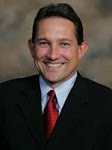
A bit of shameless self-promotion today for my new law firm. One of my new partners, Mike Childress, had an interesting interview this past week with Larry Smith on the BulletProof Blog. The blog is written by the Levick Strategic Communications firm that focuses on crisis management issues, usually for corporations. As part of the work, the principals of Levick continually reach out to and ask questions of firms that do significant amounts of plaintiff's work. CDG fits that model because we represent so many corporation and associations in battles with insurers. Mike has spent 30 years suing insurers in a variety of cases, so he brings tremendous experience and insight to the topic.
The interview is online here, and provides Mike's insights on some of the current behavior of insurers. Here's my favorite part of the interview:
"We tried a seven-figure case last year after the insurance lawyer said that, if he could not win that particular trial, he should just return the rest of the files involving claims against that insurer. We have twelve cases against that same insurer, all of which involve the same type of loss. Our client won full damages at trial, but the insurer is still refusing to settle the remaining cases. In fact, it is the second case we have tried against this insurer and won. So, we will try the rest of the cases."
Sunday, January 31, 2010


Saturday, January 30, 2010
Drs. Frank and Lemen Part of Global Plaintiff's Advocacy Session for April 10 Asbestos Disease Awareness Conference in Chicago
Here is the entire press release (which includes links) regarding an April 10, 2010 asbestos disease awareness conference set for April 10 in beautiful Chicago. The conference is organized by, among others, the Asbestos Disease Awareness Organization and Laurie Kazan-Allen, who is the sister of American plaintiff's lawyer, Steve Kazan. Through an entity commonly known as IBAS, Ms. Kazan-Allen has devoted well more than 15 years trying to ban the use of asbestos around the globe, and has achieved some signficant success.
Unlike many current and future defendants/corporations/makers/users, and their lawyers, the advocacy groups for victims/plaintiffs are thinking globally. Indeed, well-known plaintiff's experts are part of the advocacy effort. Thus, during the conference, Dr Arthur Frank and Dr. Richard Lemen are part of a panel session on global advocacy, as is set out below from the conference agenda. Also set out below is a summary of all speakers, except the keynote speaker, who is to be designated later.
______________________________________________________________________________
Session IV Global Advocacy and the Continuing Crisis - Chairperson: Arthur L. Frank, MD, PhD
3:15 - 3:35 Latin America’s Asbestos Struggle!, Fernanda Giannasi, Brazil
3:35 - 3:50 Canadian Asbestos: A Global Concern, Canadian Member of Parliament, Pat Martin
3:50 - 4:05 Governmental Agencies Role in Protecting Public Health, Richard Lemen, PhD, MSPH
4:05 - 4:20 Progress Update: The Americas, Barry Castleman, ScD
4:20 - 4:35 A Victims’ Call to Action!, Laurie Kazan-Allen, International Ban Asbestos Secretariat (IBAS)
4:35 - 4:45 Panel Q & A, Moderator Arthur: L. Frank, MD, PhD
"ADAO's 6th Annual International Asbestos Awareness Conference
REDONDO BEACH, Calif.--(BUSINESS WIRE)--The Asbestos Disease Awareness Organization (ADAO) will host its 6th Annual International Asbestos Awareness Conference in Chicago, IL, on Saturday, April 10, 2010, with activities throughout the weekend. The international conference will provide education and outreach to families, employers/employees, and scientists throughout the world as part of ADAO's continuing effort to educate the public about the dangers of asbestos, ban its use, and encourage research efforts to improve treatment options. Prominent physicians, scientists, and safety and health care professionals who are experts in the area of asbestos representing the United States, Canada, England, Brazil, and Germany will present current information regarding the status and impact of asbestos in the United States and globally. Discussion will include facts on exposure, asbestos-related diseases and how to prevent them, and where to turn for help. The international conference is made possible by ADAO, the Barbara Ann Karmanos Cancer Institute, and the International Ban Asbestos Secretariat.
WHERE: Marriott Renaissance Hotel
1 Wacker Drive , Chicago, Illinois
WHY: To share information and provide support to those affected by asbestos-related diseases, including survivors, families, and physicians. Prominent physicians, scientists, safety and health directors, and survivors will present current and up-to-date information regarding the status of asbestos in the United States and worldwide.
WHO: Brad Black, M.D., medical director, Center for Asbestos Related Disease; Barry Castleman, ScD, environmental consultant; Jeff Camplin, CSP, CPEA; Sean Fitzgerald, PG; Arthur Frank, M.D., Ph.D., chair, Department of Environmental and Occupational Medicine, Drexel University’s School of Public Health; Patrick Gerkin, Ph.D., assistant professor, Grand Valley State University; Fernanda Giannasi, ABREA; Michael Harbut, M.D., MPH, FCCP, co-director, National Center for Vermiculite and Asbestos-Related Cancers, Karmanos Cancer Institute; Tanis Hernandez, LCSW, Center of Asbestos Related Disease; Laurie Kazan-Allen, founder and coordinator, IBAS; Hedy Lee Kindler, M.D., University of Chicago, and president, International Mesothelioma Interest Group; Richard Lemen, Ph.D., MSPH, former Assistant Surgeon General; Terry Lynch, International Vice President, Insulators Union; The Honorable Patrick Martin, member, Canadian Parliament; Linda Reinstein, executive director and co-founder, ADAO; Kimberly Rowse, RN, Center for Asbestos Related Disease; Jordan Summer, musician; James Webber, Ph.D., research scientist, Wadsworth Center; Jordan Zevon, ADAO national spokesman and musician."
Unlike many current and future defendants/corporations/makers/users, and their lawyers, the advocacy groups for victims/plaintiffs are thinking globally. Indeed, well-known plaintiff's experts are part of the advocacy effort. Thus, during the conference, Dr Arthur Frank and Dr. Richard Lemen are part of a panel session on global advocacy, as is set out below from the conference agenda. Also set out below is a summary of all speakers, except the keynote speaker, who is to be designated later.
______________________________________________________________________________
Session IV Global Advocacy and the Continuing Crisis - Chairperson: Arthur L. Frank, MD, PhD
3:15 - 3:35 Latin America’s Asbestos Struggle!, Fernanda Giannasi, Brazil
3:35 - 3:50 Canadian Asbestos: A Global Concern, Canadian Member of Parliament, Pat Martin
3:50 - 4:05 Governmental Agencies Role in Protecting Public Health, Richard Lemen, PhD, MSPH
4:05 - 4:20 Progress Update: The Americas, Barry Castleman, ScD
4:20 - 4:35 A Victims’ Call to Action!, Laurie Kazan-Allen, International Ban Asbestos Secretariat (IBAS)
4:35 - 4:45 Panel Q & A, Moderator Arthur: L. Frank, MD, PhD
"ADAO's 6th Annual International Asbestos Awareness Conference
REDONDO BEACH, Calif.--(BUSINESS WIRE)--The Asbestos Disease Awareness Organization (ADAO) will host its 6th Annual International Asbestos Awareness Conference in Chicago, IL, on Saturday, April 10, 2010, with activities throughout the weekend. The international conference will provide education and outreach to families, employers/employees, and scientists throughout the world as part of ADAO's continuing effort to educate the public about the dangers of asbestos, ban its use, and encourage research efforts to improve treatment options. Prominent physicians, scientists, and safety and health care professionals who are experts in the area of asbestos representing the United States, Canada, England, Brazil, and Germany will present current information regarding the status and impact of asbestos in the United States and globally. Discussion will include facts on exposure, asbestos-related diseases and how to prevent them, and where to turn for help. The international conference is made possible by ADAO, the Barbara Ann Karmanos Cancer Institute, and the International Ban Asbestos Secretariat.
WHERE: Marriott Renaissance Hotel
1 Wacker Drive , Chicago, Illinois
WHY: To share information and provide support to those affected by asbestos-related diseases, including survivors, families, and physicians. Prominent physicians, scientists, safety and health directors, and survivors will present current and up-to-date information regarding the status of asbestos in the United States and worldwide.
WHO: Brad Black, M.D., medical director, Center for Asbestos Related Disease; Barry Castleman, ScD, environmental consultant; Jeff Camplin, CSP, CPEA; Sean Fitzgerald, PG; Arthur Frank, M.D., Ph.D., chair, Department of Environmental and Occupational Medicine, Drexel University’s School of Public Health; Patrick Gerkin, Ph.D., assistant professor, Grand Valley State University; Fernanda Giannasi, ABREA; Michael Harbut, M.D., MPH, FCCP, co-director, National Center for Vermiculite and Asbestos-Related Cancers, Karmanos Cancer Institute; Tanis Hernandez, LCSW, Center of Asbestos Related Disease; Laurie Kazan-Allen, founder and coordinator, IBAS; Hedy Lee Kindler, M.D., University of Chicago, and president, International Mesothelioma Interest Group; Richard Lemen, Ph.D., MSPH, former Assistant Surgeon General; Terry Lynch, International Vice President, Insulators Union; The Honorable Patrick Martin, member, Canadian Parliament; Linda Reinstein, executive director and co-founder, ADAO; Kimberly Rowse, RN, Center for Asbestos Related Disease; Jordan Summer, musician; James Webber, Ph.D., research scientist, Wadsworth Center; Jordan Zevon, ADAO national spokesman and musician."
Friday, January 29, 2010
Trial Proceeding Ahead, Slowly, for Former Eternit Officials
Please look to the left under the heading "Eternit" for prior articles on the combined civil and criminal trial in Italy involving former executives of Eternit. The charges - more or less - are reckless endangerment of employees via unsafe conditions in facilities manufacturing asbestos-containing products. The coverage this month has been light as only one hearing was held, and apparently was limited to argument on motions. Go here for a summary from advocates for the sick.
Plaques Discussion Ahead in the House of Commons
Back to Europe for the day.
The House of Commons is anticipating discussions on pleural plaques vis a vis the apparent path of Scotland affirmatively acting to permit plaques claiming via legislation, but England and Wales not allowing compensation and other European countries taking divergent various views. The following remarks are from January 28, and are courtesy of They Work for You.
Stephen Hepburn (Jarrow, Labour)
Will the Leader of the House give us an early debate on pleural plaques? We need to be able to lay down a marker on any Government proposal that might allow future victims of pleural plaques in Scotland to be compensated by the British taxpayer, when future English victims will get nothing at all.
Harriet Harman (Lord Privy Seal, House of Commons; Camberwell & Peckham, Labour)
I thank my hon. Friend for raising this important issue. We are aware of the strength of feeling on this matter, and are firmly committed to ensuring that people suffering from asbestos-related diseases receive the help and support that they need. We hope to be in a position to give the Government's response on pleural plaques soon.
The House of Commons is anticipating discussions on pleural plaques vis a vis the apparent path of Scotland affirmatively acting to permit plaques claiming via legislation, but England and Wales not allowing compensation and other European countries taking divergent various views. The following remarks are from January 28, and are courtesy of They Work for You.
Stephen Hepburn (Jarrow, Labour)
Will the Leader of the House give us an early debate on pleural plaques? We need to be able to lay down a marker on any Government proposal that might allow future victims of pleural plaques in Scotland to be compensated by the British taxpayer, when future English victims will get nothing at all.
Harriet Harman (Lord Privy Seal, House of Commons; Camberwell & Peckham, Labour)
I thank my hon. Friend for raising this important issue. We are aware of the strength of feeling on this matter, and are firmly committed to ensuring that people suffering from asbestos-related diseases receive the help and support that they need. We hope to be in a position to give the Government's response on pleural plaques soon.
Thursday, January 28, 2010
Non-Dry Looks at Business History, Including James Hardie - A New Book: "Killer Company"
Back to Australia, asbestos and James Hardie.
As described in this prior post, a rather dry paper by KPMG describes the history of James Hardie and its many intersections with asbestos and asbestos-containing products. That dry look is of course needed and appropriate in the sense that decisions need to be made based on technical information.
There are other sides to the story. A new expose/investigative journalism book is out regarding James Hardie. A book review is set out below from the Ban Asbestos web site run by Laurie Kazan-Allen, sister of an American plaintiff's lawyer, Steve Kazan. The review is by Jock McCulloch, who also has written books on "asbestos companies." The words of the book review are worth reading as a counterweight to the dry story told by KPMG.
_____________________________________________________________________________________
Book Review: Killer Company – James Hardie Exposed
Matt Peacock. Sydney: ABC Books, 2009
Reviewed by Jock McCulloch
Australia has the highest recorded incidence of mesothelioma in the world because in the period from 1945 until the mid 1970s Australia was one of the highest users of asbestos based products. The local market was dominated by a single firm James Hardie Asbestos and to a large degree the Australian asbestos story is the story of James Hardie.
James Hardie shares much in common with Johns Manville, Eternit and Turner & Newall. Hardie was a vertically integrated company which enjoyed great commercial success in the decades after 1945. That success was built on an ever widening range of building and insulation materials. Hardie owned asbestos mines in Australia, Canada and briefly in Zimbabwe and manufacturing plants in Australia, New Zealand, Malaysia and Indonesia. Like Johns Manville, it has survived the asbestos scandal to re-invent itself as a non-asbestos building materials manufacturer. Like Johns Manville, James Hardie has used a variety of strategies to inure itself from the people it has injured.
Killer Company is a major contribution to the literature on the asbestos industry. The book has grown out of Matt Peacock's sustained engagement with the issue of asbestos and health. It is based on long hours of archival work sorting through Hardie's internal correspondence. Peacock has also interviewed many of the key players. The result is an insight into the mentality and behaviour of an important asbestos company.
Matt Peacock has played a major role in publicising the risks of asbestos in Australia. In his work as a journalist he has helped to expose the behaviour of the asbestos industry toward its employees, and the consumers of its products. In 1977 Peacock broke the story of Baryulgil, a small chrysotile mine which Hardie operated in northern New South Wales. The work force at Baryulgil was drawn from the indigenous Bundjalung people who lived and worked under conditions every bit as severe as those endured by black workers in South Africa. It was Matt Peacock not James Hardie who warned the community of the risks of asbestos disease. He was also instrumental in forcing a Parliamentary enquiry into the operation of the Baryulgil mine.
In Killer Company Peacock reviews the extent to which Hardie's senior management engaged in the same kind of behaviour that has been documented in British and US courts about Cape Asbestos, T&N and Johns Manville. Hardie knew far more about the risks of asbestosis, lung cancer and mesothelioma than did regulatory authorities or trade unions. Armed with that knowledge it refused over a period of decades to reduce the risks faced by its employees or the users of its products. When a flood of litigation began in the mid 1970s Hardie avoided bad publicity by settling cases out of court. When that failed it sought to move its assets out of the reach of potential claimants. The bad publicity surrounding a move of assets to The Netherlands in 2004 has seen James Hardie become probably the most reviled corporation in Australia. Peacock shows that such a reputation is well deserved.
The health risk of asbestos has taken many forms from workplace exposure, to the dumping of waste and the use of fibre in the most unlikely of products such dental amalgam and children's play dough. Until the 1970s it was common for waste from Hardie's Adelaide factory to be used to dress domestic driveways, pathways and garage floors. In New South Wales thousands of tonnes of waste was dumped into rivers and creeks and on roadways and football ovals. Such waste is virtually indestructible but at least when deposited outdoors by-stander exposure to airborne fibre is sporadic.
Each year thousands of tonnes of crocidolite, amosite and chrysotile arrived at Hardie factories which resulted in the accumulation of hundreds of thousands of hessian bags. In Sydney and Melbourne the bags were recycled by market gardeners to carry potatoes, carrots and onions. In Western Australia wheat farmers received fertiliser in the same bags. Over the period from 1944 to 1966 the Wittenoom crocidolite mine in Western Australia produced 160,000 tonnes of fibre. That fibre was transported in 45 kilograms hessian bags. Matt Peacock has discovered that hundreds of thousands of those bags ended up in domestic dwellings as carpet underlay. Consequently, an unknown number of Australian homes have been contaminated and an unknown number of residents continue to live at risk, every hour of every day.
There is no easy way to estimate the human and commercial cost of the asbestos industry. That is because in parts of Asia and SE Asia the industry is alive and well. It is also because as Matt Peacock has shown the extent of by-stander exposure in the OECD states is still unfolding.
Killer Company is an important book.
Jock McCulloch
School of Global Studies
RMIT University,
Melbourne, Australia.
January 21, 2010
_________________________________________________________________________________
There are several other "business history" books related to "asbestos companies." Most of them include significant footnotes and bibliographies:
Blue Murder, by Ben Hills, describes in detail the situation related to the Wittenoom crocidolite mine in Australia, a mine owned for decades by CSR. The book discusses many things, including corporate fiber purchasers and uses.
Asbestos House - The Secret History of James Hardie Industries, by Gideon Harris, is a comprehensive account of that company. Numerous mentions are made of relationships between James Hardie, Turner & Newall, Cape Industries, Johns-Manville, and CSR.
The Way From Dusty Death, by Peter Bartrip, is a comprehensive discussion of Turner & Newall and asbestos regulations in the UK from the 1890s through 1970. This book also discusses interactions between various industry titans, including Cape Industries.
Jock McCulloch has written two books on asbestos, focused primarily on mines in South Africa that were the sources for all of the world’s amosite fiber, and much of the world’s crocidolite fiber. The mines were owned by Cape Industries entities and various other entities. One book is: Asbestos: It’s Human Cost, and was published in 1986. McCulloch’s second book was published in 2002, and is titled: Asbestos Blues, Labour, Capital, Physicians and the State in South Africa.
Mr. McCulloch and Geofrey Tweedale combined to write a 2008 book, Defending the Indefensible, the Global Asbestos Industry and It’s Fight for Survival.
In addition, Mr. Tweedale also has written extensively regarding Cape Industries and Turner & Newall/T & N. One of his publications is the book titled Magic Mineral to Killer Dust, Turner & Newall and the Asbestos Hazard.
As described in this prior post, a rather dry paper by KPMG describes the history of James Hardie and its many intersections with asbestos and asbestos-containing products. That dry look is of course needed and appropriate in the sense that decisions need to be made based on technical information.
There are other sides to the story. A new expose/investigative journalism book is out regarding James Hardie. A book review is set out below from the Ban Asbestos web site run by Laurie Kazan-Allen, sister of an American plaintiff's lawyer, Steve Kazan. The review is by Jock McCulloch, who also has written books on "asbestos companies." The words of the book review are worth reading as a counterweight to the dry story told by KPMG.
_____________________________________________________________________________________
Book Review: Killer Company – James Hardie Exposed
Matt Peacock. Sydney: ABC Books, 2009
Reviewed by Jock McCulloch
Australia has the highest recorded incidence of mesothelioma in the world because in the period from 1945 until the mid 1970s Australia was one of the highest users of asbestos based products. The local market was dominated by a single firm James Hardie Asbestos and to a large degree the Australian asbestos story is the story of James Hardie.
James Hardie shares much in common with Johns Manville, Eternit and Turner & Newall. Hardie was a vertically integrated company which enjoyed great commercial success in the decades after 1945. That success was built on an ever widening range of building and insulation materials. Hardie owned asbestos mines in Australia, Canada and briefly in Zimbabwe and manufacturing plants in Australia, New Zealand, Malaysia and Indonesia. Like Johns Manville, it has survived the asbestos scandal to re-invent itself as a non-asbestos building materials manufacturer. Like Johns Manville, James Hardie has used a variety of strategies to inure itself from the people it has injured.
Killer Company is a major contribution to the literature on the asbestos industry. The book has grown out of Matt Peacock's sustained engagement with the issue of asbestos and health. It is based on long hours of archival work sorting through Hardie's internal correspondence. Peacock has also interviewed many of the key players. The result is an insight into the mentality and behaviour of an important asbestos company.
Matt Peacock has played a major role in publicising the risks of asbestos in Australia. In his work as a journalist he has helped to expose the behaviour of the asbestos industry toward its employees, and the consumers of its products. In 1977 Peacock broke the story of Baryulgil, a small chrysotile mine which Hardie operated in northern New South Wales. The work force at Baryulgil was drawn from the indigenous Bundjalung people who lived and worked under conditions every bit as severe as those endured by black workers in South Africa. It was Matt Peacock not James Hardie who warned the community of the risks of asbestos disease. He was also instrumental in forcing a Parliamentary enquiry into the operation of the Baryulgil mine.
In Killer Company Peacock reviews the extent to which Hardie's senior management engaged in the same kind of behaviour that has been documented in British and US courts about Cape Asbestos, T&N and Johns Manville. Hardie knew far more about the risks of asbestosis, lung cancer and mesothelioma than did regulatory authorities or trade unions. Armed with that knowledge it refused over a period of decades to reduce the risks faced by its employees or the users of its products. When a flood of litigation began in the mid 1970s Hardie avoided bad publicity by settling cases out of court. When that failed it sought to move its assets out of the reach of potential claimants. The bad publicity surrounding a move of assets to The Netherlands in 2004 has seen James Hardie become probably the most reviled corporation in Australia. Peacock shows that such a reputation is well deserved.
The health risk of asbestos has taken many forms from workplace exposure, to the dumping of waste and the use of fibre in the most unlikely of products such dental amalgam and children's play dough. Until the 1970s it was common for waste from Hardie's Adelaide factory to be used to dress domestic driveways, pathways and garage floors. In New South Wales thousands of tonnes of waste was dumped into rivers and creeks and on roadways and football ovals. Such waste is virtually indestructible but at least when deposited outdoors by-stander exposure to airborne fibre is sporadic.
Each year thousands of tonnes of crocidolite, amosite and chrysotile arrived at Hardie factories which resulted in the accumulation of hundreds of thousands of hessian bags. In Sydney and Melbourne the bags were recycled by market gardeners to carry potatoes, carrots and onions. In Western Australia wheat farmers received fertiliser in the same bags. Over the period from 1944 to 1966 the Wittenoom crocidolite mine in Western Australia produced 160,000 tonnes of fibre. That fibre was transported in 45 kilograms hessian bags. Matt Peacock has discovered that hundreds of thousands of those bags ended up in domestic dwellings as carpet underlay. Consequently, an unknown number of Australian homes have been contaminated and an unknown number of residents continue to live at risk, every hour of every day.
There is no easy way to estimate the human and commercial cost of the asbestos industry. That is because in parts of Asia and SE Asia the industry is alive and well. It is also because as Matt Peacock has shown the extent of by-stander exposure in the OECD states is still unfolding.
Killer Company is an important book.
Jock McCulloch
School of Global Studies
RMIT University,
Melbourne, Australia.
January 21, 2010
_________________________________________________________________________________
There are several other "business history" books related to "asbestos companies." Most of them include significant footnotes and bibliographies:
Blue Murder, by Ben Hills, describes in detail the situation related to the Wittenoom crocidolite mine in Australia, a mine owned for decades by CSR. The book discusses many things, including corporate fiber purchasers and uses.
Asbestos House - The Secret History of James Hardie Industries, by Gideon Harris, is a comprehensive account of that company. Numerous mentions are made of relationships between James Hardie, Turner & Newall, Cape Industries, Johns-Manville, and CSR.
The Way From Dusty Death, by Peter Bartrip, is a comprehensive discussion of Turner & Newall and asbestos regulations in the UK from the 1890s through 1970. This book also discusses interactions between various industry titans, including Cape Industries.
Jock McCulloch has written two books on asbestos, focused primarily on mines in South Africa that were the sources for all of the world’s amosite fiber, and much of the world’s crocidolite fiber. The mines were owned by Cape Industries entities and various other entities. One book is: Asbestos: It’s Human Cost, and was published in 1986. McCulloch’s second book was published in 2002, and is titled: Asbestos Blues, Labour, Capital, Physicians and the State in South Africa.
Mr. McCulloch and Geofrey Tweedale combined to write a 2008 book, Defending the Indefensible, the Global Asbestos Industry and It’s Fight for Survival.
In addition, Mr. Tweedale also has written extensively regarding Cape Industries and Turner & Newall/T & N. One of his publications is the book titled Magic Mineral to Killer Dust, Turner & Newall and the Asbestos Hazard.
Wednesday, January 27, 2010
UK Asbestos Working Party More Than Doubles Estimate to 11 Billion Euros
A summary article from Insurance Business Review is online here, and is pasted below.
____________________________________________________________________________
UK Asbestos-Related Claims To Be Around £11bn For 2009 To 2050
Published:26-January-2010
By Staff Reporter
Total undiscounted cost of UK asbestos-related claims to the insurance market is expected to be around £11bn for the period 2009 to 2050, according to a research by Actuarial Profession’s UK Asbestos Working Party.
The research identified that the proportion of people suffering from mesothelioma that subsequently make a claim for compensation has almost doubled between 2004 and 2008.
Of £11bn figure, 90% relates to mesothelioma and over £9bn relates to the period 2009 to 2040, compared to £4.7bn of the working party’s 2004 estimate for the same period.
According to Actuarial Profession, the proportion of mesothelioma sufferers that have made a claim for compensation has increased from around one-third in 2004 to nearly two-thirds. This change, which was not expected in 2004, has become evident in recent years and explains most of the increase in total costs.
In addition, the working party has taken into account the Health and Safety Executive’s statisticians’ revised projections of the number of future deaths from mesothelioma in Great Britain, released in 2009, in conjunction with other projection models.
Brian Gravelsons, chairman of UK Asbestos Working Party, said: “Insurers will of course have already noticed the increased number of claims from mesothelioma sufferers, so these developments won’t be a surprise to them. However, the working party’s projections will provide the insurance industry with a consistent reference point to help it assess its asbestos liabilities.
“There is still considerable uncertainty surrounding the future cost of asbestos claims, as the number of people that will be diagnosed with mesothelioma many years into the future cannot be accurately predicted. The working party will continue to monitor the emerging experience and update its projections accordingly.”
____________________________________________________________________________
UK Asbestos-Related Claims To Be Around £11bn For 2009 To 2050
Published:26-January-2010
By Staff Reporter
Total undiscounted cost of UK asbestos-related claims to the insurance market is expected to be around £11bn for the period 2009 to 2050, according to a research by Actuarial Profession’s UK Asbestos Working Party.
The research identified that the proportion of people suffering from mesothelioma that subsequently make a claim for compensation has almost doubled between 2004 and 2008.
Of £11bn figure, 90% relates to mesothelioma and over £9bn relates to the period 2009 to 2040, compared to £4.7bn of the working party’s 2004 estimate for the same period.
According to Actuarial Profession, the proportion of mesothelioma sufferers that have made a claim for compensation has increased from around one-third in 2004 to nearly two-thirds. This change, which was not expected in 2004, has become evident in recent years and explains most of the increase in total costs.
In addition, the working party has taken into account the Health and Safety Executive’s statisticians’ revised projections of the number of future deaths from mesothelioma in Great Britain, released in 2009, in conjunction with other projection models.
Brian Gravelsons, chairman of UK Asbestos Working Party, said: “Insurers will of course have already noticed the increased number of claims from mesothelioma sufferers, so these developments won’t be a surprise to them. However, the working party’s projections will provide the insurance industry with a consistent reference point to help it assess its asbestos liabilities.
“There is still considerable uncertainty surrounding the future cost of asbestos claims, as the number of people that will be diagnosed with mesothelioma many years into the future cannot be accurately predicted. The working party will continue to monitor the emerging experience and update its projections accordingly.”
New Science - Sequencing Genomes of 600 Children With Cancer - " ...the largest and most powerful single initiative in the 50-year history of St. Jude"
From the January 26, 2010 NCI Cancer Bulletin is a story that provides the latest example of the dawning age of new science brought about by committed doctors, brilliant scientists, your donations, high speed computers and software, and the desire to save lives.
Recall that the Humane Genome project was announced in 1990 and completed in 2003. Now, less than seven years lateer, genomes are sequences in days.
Note that the results all will be made public at no expense.
This project illustrates why patents should not be allowed for gene sequences, a battle the ACLU and others are fighting right now.
_____________________________________________________________________________
St. Jude, Washington University Launch Genome Project for Childhood Cancers
Researchers at St. Jude Children’s Research Hospital and the Washington University School of Medicine in St. Louis have launched the Pediatric Cancer Genome Project 1 to sequence the genomes of at least 600 children with cancer over the next 3 years. The collaboration marks the first time that whole-genome sequencing will be used on a large scale to discover genetic changes driving pediatric cancers.
“This is the largest and most powerful single initiative in the 50-year history of St. Jude,” the research hospital’s director, Dr. William E. Evans, said at a press briefing announcing the project yesterday. “DNA is being sequenced as we speak,” he added.
St. Jude has a repository of biological samples and clinical information from children who have been treated there since the 1970s. The collection represents a treasure trove of information about cancer, and it can now be scrutinized using the latest genomic technologies at a cost that continues to decline substantially over time.
“This is a new era for pediatric cancers,” NIH Director Dr. Francis Collins said at the briefing. “The study represents an opportunity to discover all the ways that a good cell in an innocent child goes wrong.”
The project—estimated to cost $65 million and funded by St. Jude—aims to discover the genetic origins of pediatric cancers while creating knowledge that can be used to improve the care of young people with these rare diseases. Early results could reveal new uses for available drugs, and, over the long term, lead to targeted agents for these cancers, the researchers said.
New genetic signatures for classifying and treating patients are also anticipated. Knowing that a child has a subtype with a poor prognosis would allow physicians to select aggressive treatments early in the course of the disease. Similarly, doctors could safely withhold treatments from a patient who has a better prognosis, based on a genetic profile.
“These two great NCI-designated comprehensive cancer centers are demonstrating yet again their commitment to making a difference for kids with cancer,” said NCI Director Dr. John Niederhuber.
Dr. Larry J. Shapiro, dean of the Washington University School of Medicine and a pediatric geneticist, said at the briefing: “This project will provide a detailed and complete picture of the mutations in the cancer cells.”
In 2008, researchers at Washington University and their colleagues published 2 the first genome sequence of a person with cancer—a woman with leukemia. They have since published 3 the genome of a second person with leukemia, and they have also sequenced dozens of additional cancer genomes using the same whole-genome approach.
The new effort will focus on leukemias, brain tumors, and sarcomas (tumors of bone, muscle, and other connective tissues). To identify genetic changes associated with cancer, the researchers will sequence DNA from both the tumor cells and normal cells of each patient.
The project complements in every way the efforts of The Cancer Genome Atlas 4 (TCGA) Research Network, which focuses on adult cancers, noted Dr. Collins. Just last week, TCGA investigators identified new subtypes 5 of brain cancer using genomic and clinical data—an example of the kind of knowledge Dr. Collins expects to come from the pediatric project.
Another genome effort in pediatric cancer is the NCI-supported childhood cancer TARGET 6 initiative, which includes St. Jude investigators as well as other childhood cancer researchers. The initial discoveries from this project are being translated to the clinic through an early stage clinical trial that is in development for a newly described 7 type of acute lymphoblastic leukemia.
What distinguishes the new project from past efforts, said Dr. Richard Wilson, director of the Genome Center at Washington University, is that this one will be “all whole-genomes all the time.” Most genome studies have been limited to sets of genes or genetic markers because of the costs of sequencing DNA. Those costs have now fallen to below $100,000 for a tumor-normal combination, and the sequencing can be done in about a week, Dr. Wilson said. (See “A Conversation with Dr. Elaine Mardis 8” in this issue.)
“There is a sense of urgency to make progress here, and it has now become affordable,” said Dr. Evans. “We see this effort as a marathon, and the first 3 years are really just the beginning. I am certain there will be lots of unanswered questions at the end of this period, and there will be much more work to be done.”
He acknowledged the enormous challenge of managing and making sense of as much as 100 trillion pieces of data (600 cases, 2 genomes per case, and each genome will be sequenced 30 times to ensure that nothing is missed). To meet this challenge, Washington University is adding new instruments and computational power, and the researchers are confident that they are ready.
“The data storage, management, and analysis problems are substantial,” Dr. Wilson said in an interview. “But this project is coming along at just the right time in terms of our technical capabilities. We’ve really come a long way in just the last 6 months in terms of our data production technology.”
St. Jude has, in effect, been preparing for this project for 45 years by creating the tissue repository and developing a capacity for preclinical research studies. The infrastructure and resources required for follow-up studies of the genomic data, such as mouse models, already exist at St. Jude, noted Dr. Elaine Mardis, co-director of the Genome Center at Washington University. “The genome project will fill these pipelines with new information to be analyzed.”
In the future, the project will include other types of alterations in cancer, such as those involving RNA and epigenetic changes, which alter the activity of genes without causing a change in DNA sequence, the researchers said.
They stressed that the results will be made publicly available through a Web site once the information has been validated. The hope is that other investigators will bring their own expertise and perspectives to the data and help move the science forward.
“We view this as creating a resource not just for our efforts but for the world,” said Dr. Evans. He quoted the founder of St. Jude, the entertainer Danny Thomas, who liked to say, “To cure one child in Memphis is to cure a thousand worldwide.”
“It is always a good thing if our discoveries can be amplified and leveraged elsewhere,” Dr. Evans added, “and that’s what has to happen.” (emphasis added)
—Edward R. Winstead
Recall that the Humane Genome project was announced in 1990 and completed in 2003. Now, less than seven years lateer, genomes are sequences in days.
Note that the results all will be made public at no expense.
This project illustrates why patents should not be allowed for gene sequences, a battle the ACLU and others are fighting right now.
_____________________________________________________________________________
St. Jude, Washington University Launch Genome Project for Childhood Cancers
Researchers at St. Jude Children’s Research Hospital and the Washington University School of Medicine in St. Louis have launched the Pediatric Cancer Genome Project 1 to sequence the genomes of at least 600 children with cancer over the next 3 years. The collaboration marks the first time that whole-genome sequencing will be used on a large scale to discover genetic changes driving pediatric cancers.
“This is the largest and most powerful single initiative in the 50-year history of St. Jude,” the research hospital’s director, Dr. William E. Evans, said at a press briefing announcing the project yesterday. “DNA is being sequenced as we speak,” he added.
St. Jude has a repository of biological samples and clinical information from children who have been treated there since the 1970s. The collection represents a treasure trove of information about cancer, and it can now be scrutinized using the latest genomic technologies at a cost that continues to decline substantially over time.
“This is a new era for pediatric cancers,” NIH Director Dr. Francis Collins said at the briefing. “The study represents an opportunity to discover all the ways that a good cell in an innocent child goes wrong.”
The project—estimated to cost $65 million and funded by St. Jude—aims to discover the genetic origins of pediatric cancers while creating knowledge that can be used to improve the care of young people with these rare diseases. Early results could reveal new uses for available drugs, and, over the long term, lead to targeted agents for these cancers, the researchers said.
New genetic signatures for classifying and treating patients are also anticipated. Knowing that a child has a subtype with a poor prognosis would allow physicians to select aggressive treatments early in the course of the disease. Similarly, doctors could safely withhold treatments from a patient who has a better prognosis, based on a genetic profile.
“These two great NCI-designated comprehensive cancer centers are demonstrating yet again their commitment to making a difference for kids with cancer,” said NCI Director Dr. John Niederhuber.
Dr. Larry J. Shapiro, dean of the Washington University School of Medicine and a pediatric geneticist, said at the briefing: “This project will provide a detailed and complete picture of the mutations in the cancer cells.”
In 2008, researchers at Washington University and their colleagues published 2 the first genome sequence of a person with cancer—a woman with leukemia. They have since published 3 the genome of a second person with leukemia, and they have also sequenced dozens of additional cancer genomes using the same whole-genome approach.
The new effort will focus on leukemias, brain tumors, and sarcomas (tumors of bone, muscle, and other connective tissues). To identify genetic changes associated with cancer, the researchers will sequence DNA from both the tumor cells and normal cells of each patient.
The project complements in every way the efforts of The Cancer Genome Atlas 4 (TCGA) Research Network, which focuses on adult cancers, noted Dr. Collins. Just last week, TCGA investigators identified new subtypes 5 of brain cancer using genomic and clinical data—an example of the kind of knowledge Dr. Collins expects to come from the pediatric project.
Another genome effort in pediatric cancer is the NCI-supported childhood cancer TARGET 6 initiative, which includes St. Jude investigators as well as other childhood cancer researchers. The initial discoveries from this project are being translated to the clinic through an early stage clinical trial that is in development for a newly described 7 type of acute lymphoblastic leukemia.
What distinguishes the new project from past efforts, said Dr. Richard Wilson, director of the Genome Center at Washington University, is that this one will be “all whole-genomes all the time.” Most genome studies have been limited to sets of genes or genetic markers because of the costs of sequencing DNA. Those costs have now fallen to below $100,000 for a tumor-normal combination, and the sequencing can be done in about a week, Dr. Wilson said. (See “A Conversation with Dr. Elaine Mardis 8” in this issue.)
“There is a sense of urgency to make progress here, and it has now become affordable,” said Dr. Evans. “We see this effort as a marathon, and the first 3 years are really just the beginning. I am certain there will be lots of unanswered questions at the end of this period, and there will be much more work to be done.”
He acknowledged the enormous challenge of managing and making sense of as much as 100 trillion pieces of data (600 cases, 2 genomes per case, and each genome will be sequenced 30 times to ensure that nothing is missed). To meet this challenge, Washington University is adding new instruments and computational power, and the researchers are confident that they are ready.
“The data storage, management, and analysis problems are substantial,” Dr. Wilson said in an interview. “But this project is coming along at just the right time in terms of our technical capabilities. We’ve really come a long way in just the last 6 months in terms of our data production technology.”
St. Jude has, in effect, been preparing for this project for 45 years by creating the tissue repository and developing a capacity for preclinical research studies. The infrastructure and resources required for follow-up studies of the genomic data, such as mouse models, already exist at St. Jude, noted Dr. Elaine Mardis, co-director of the Genome Center at Washington University. “The genome project will fill these pipelines with new information to be analyzed.”
In the future, the project will include other types of alterations in cancer, such as those involving RNA and epigenetic changes, which alter the activity of genes without causing a change in DNA sequence, the researchers said.
They stressed that the results will be made publicly available through a Web site once the information has been validated. The hope is that other investigators will bring their own expertise and perspectives to the data and help move the science forward.
“We view this as creating a resource not just for our efforts but for the world,” said Dr. Evans. He quoted the founder of St. Jude, the entertainer Danny Thomas, who liked to say, “To cure one child in Memphis is to cure a thousand worldwide.”
“It is always a good thing if our discoveries can be amplified and leveraged elsewhere,” Dr. Evans added, “and that’s what has to happen.” (emphasis added)
—Edward R. Winstead
Subscribe to:
Posts (Atom)

 Posts
Posts